Conveying
Pneumatic Conveying System
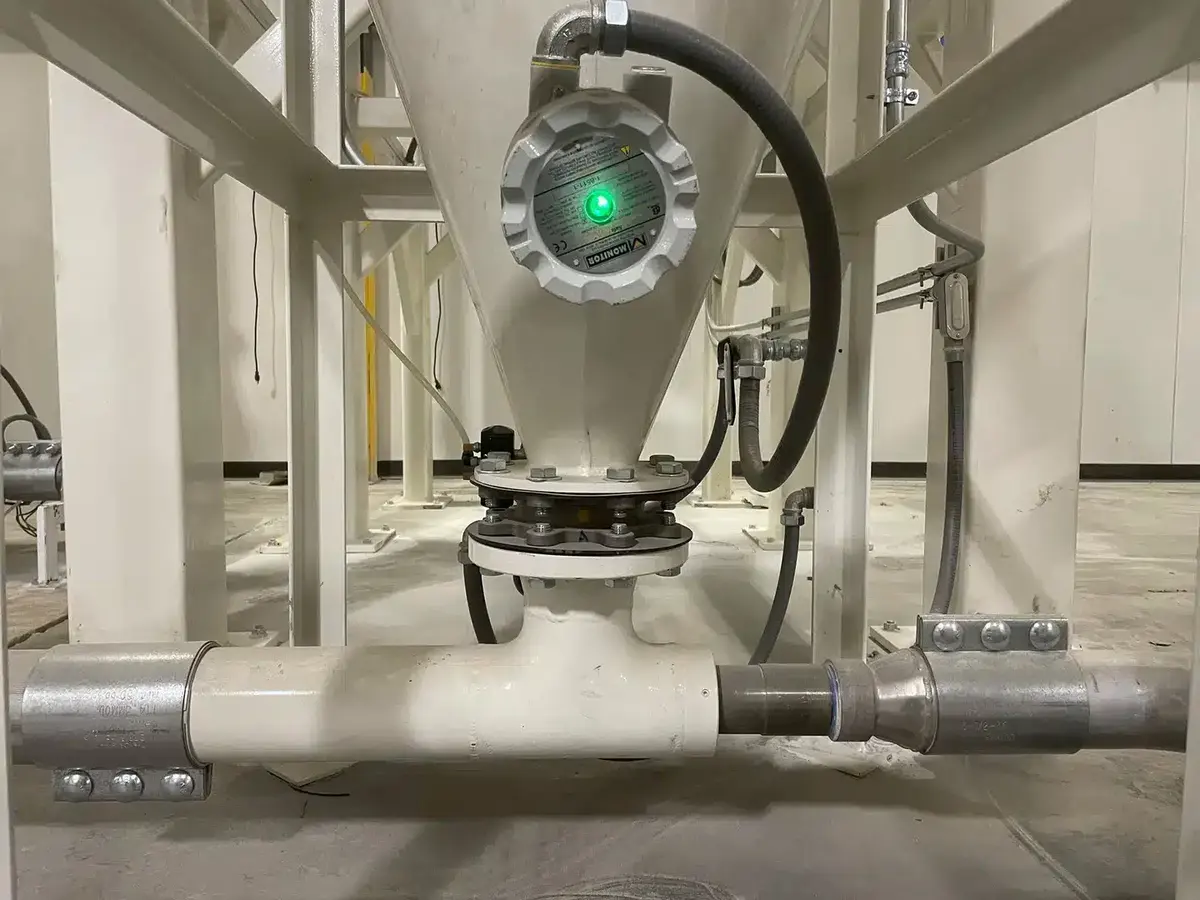
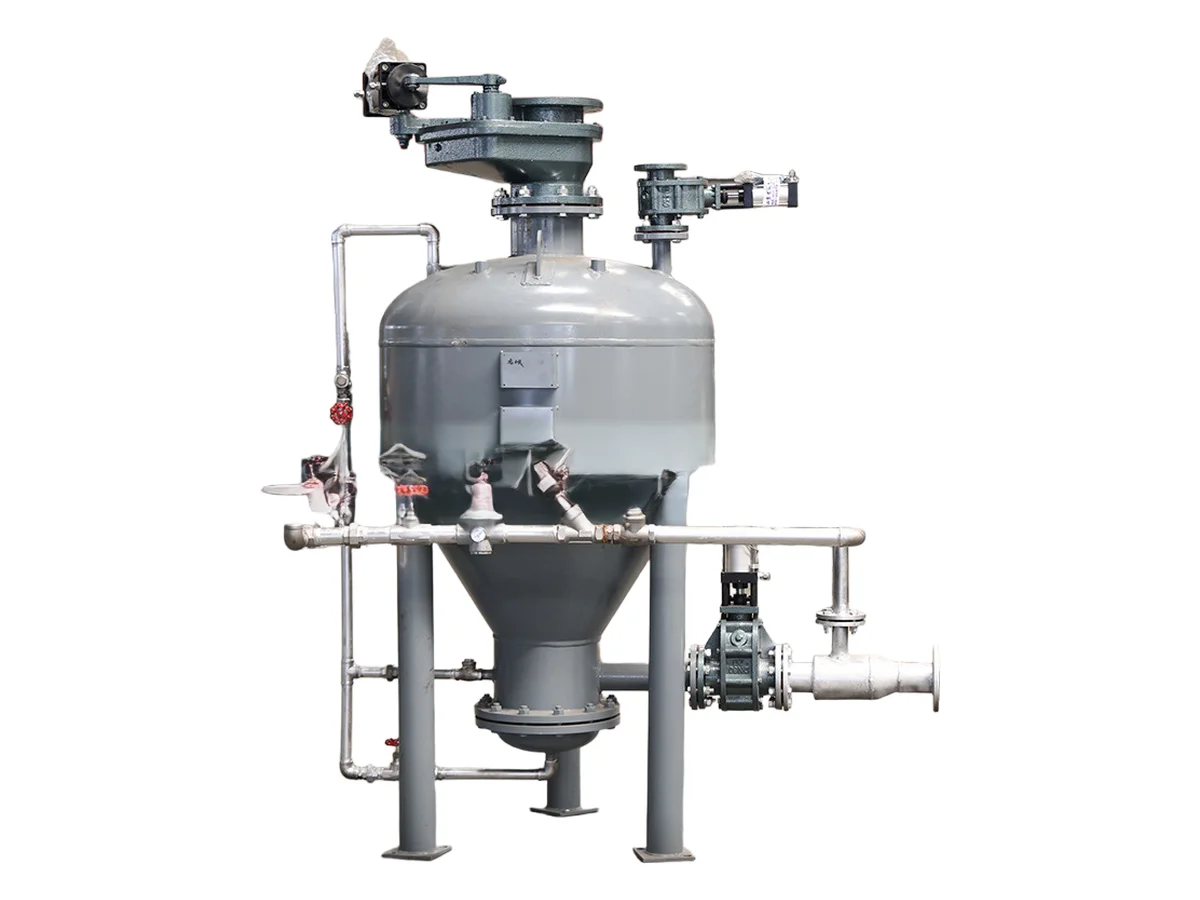
CYprocess pneumatic conveying systems — also called powder conveying systems or bulk solids transfer lines — move powders and granules through closed pipelines using air or inert gas. Dilute-phase and dense-phase designs cover short in-plant feeds through to long-distance silo transfer.
Shanghai-built. Drawings come with the quotation, and material certificates are available on request. Factory and documents
Overview
About Pneumatic Conveying System
How this equipment works in powder handling lines and what to consider when selecting it.
Dilute phase and dense phase
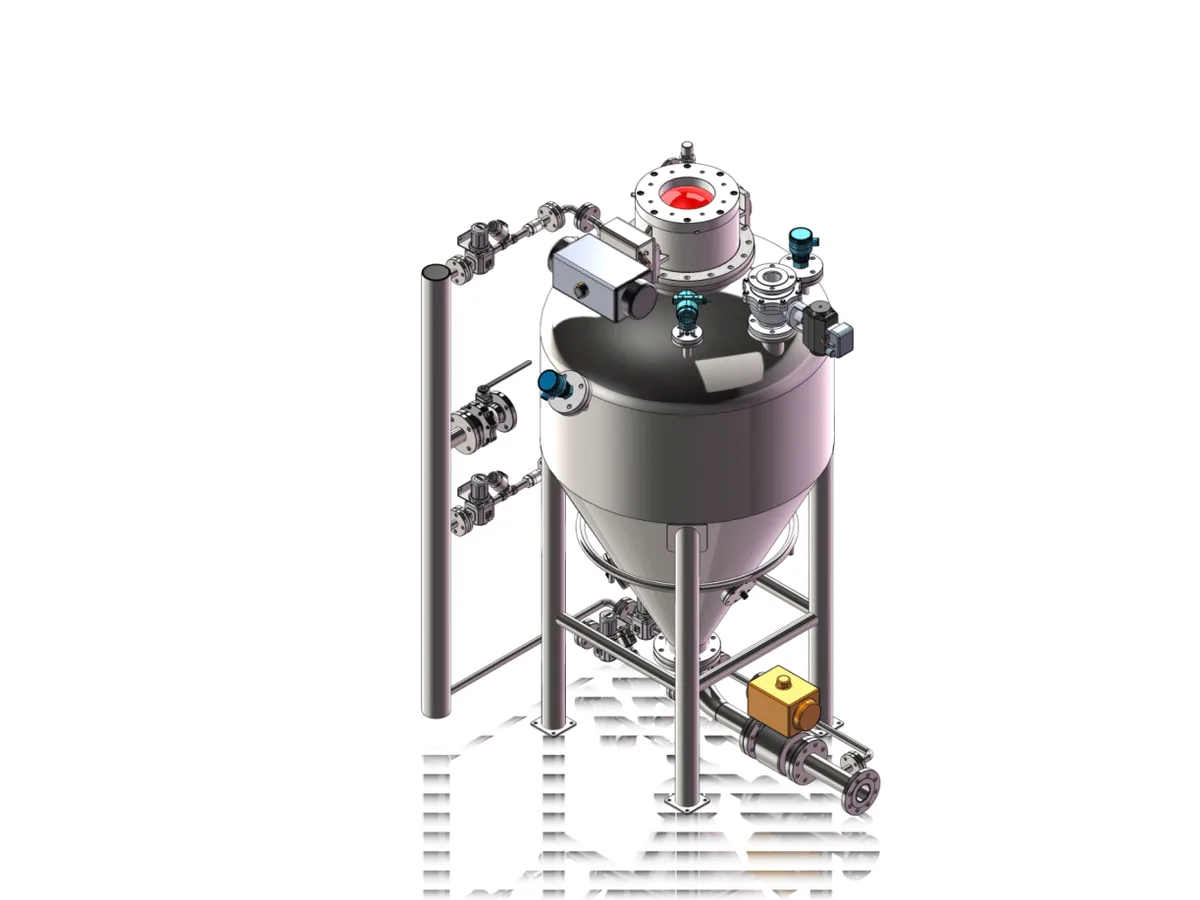
Dilute phase suspends product in a high-velocity air stream at low solids loading, which is cost-effective for shorter routes and multi-destination networks. Dense phase moves product as plugs or dunes at low velocity and high solids loading, so it suits abrasive or fragile powders and longer distances with less pipe wear. Many plants use both.
Pressure push and vacuum pull
A blower pushes product along a positive-pressure line for one-to-many distribution. A vacuum system pulls from many pick-up points into one receiver, which suits collecting powder from several machines into a central hopper. Both are sized from material tests, required rate and plant layout before fabrication.
Where it fits in the process
Features
Key Features
Design points that make the Pneumatic Conveying System practical for industrial powder plants.
Specifications
Typical Specifications
Final sizing depends on material properties, capacity and plant layout. Request a project review for a tailored proposal.
| System types | Dilute phase / dense phase; pressure or vacuum |
|---|---|
| Velocity | About 1 - 40 m/s depending on mode and tuning |
| Capacity | Up to about 100 t/h dilute; higher in dense phase |
| Distance | To about 200 m dilute; to about 2000 m dense-phase blow tank |
| Line pressure | About +100 kPa dilute; up to +700 kPa blow tank; -60 kPa vacuum |
| Pipework | Carbon steel / stainless / lined options |
| Receiving | Filtered hoppers, cyclones and silos |
| Design basis | Material test + layout engineering |
| Routing | Pressure: one feed point to one or more destinations. Vacuum: several pick-up points into one receiver. |
| Wear options | Carbon steel, stainless steel, or lined pipe and bends where the powder is abrasive |
| How the distance figures should be read | About 200 m is the dilute-phase class and about 2000 m is the dense-phase blow-tank class. Vertical lifts and extra bends reduce the practical distance. These are not guaranteed lengths for every powder. |
Materials
Suitable Materials
Powder and granule categories typically specified with a pneumatic conveying system. Suitability is confirmed per project from bulk density, particle size, moisture and process conditions.
Chemical powders
pigments, resins, fine chemicals, PVC
Food powders
flour, starch, sugar, salt, milk powder
Battery materials
cathode, anode, conductive carbon
Minerals & cement
limestone, quartz, cement, fly ash
Plastics & granules
PE, PP, PVC compound, masterbatch
Ash & by-products
coke fines, sludge ash, alternative fuels
Not sure whether your material will convey? Send us a sample description and we will confirm before quotation.
Industries
Industries Served
Sectors where pneumatic conveying system units are specified today.
Project experience
Where this equipment is running
Selected projects that include pneumatic conveying system.
Applications
Process Applications
Process points where this equipment is typically installed, from bulk intake through to packing.
Downloads
Catalogs & Datasheets
Technical documents related to this product and our powder handling range.
FAQ
Pneumatic Conveying System FAQ
Common questions about selection, integration and quotation.
For abrasive or fragile products, long routes, and sites where the air supply is limited. Dense phase runs at low velocity and high solids loading, so pipe wear and particle breakage are reduced. Dilute phase stays more economical for short routes and multi-destination networks.
Knowledge
Related Blogs
Articles that help with selection, layout and system design.
Pneumatic Conveying
Dense Phase vs Dilute Phase Pneumatic Conveying
Understand the differences between dense phase and dilute phase conveying systems.
Read article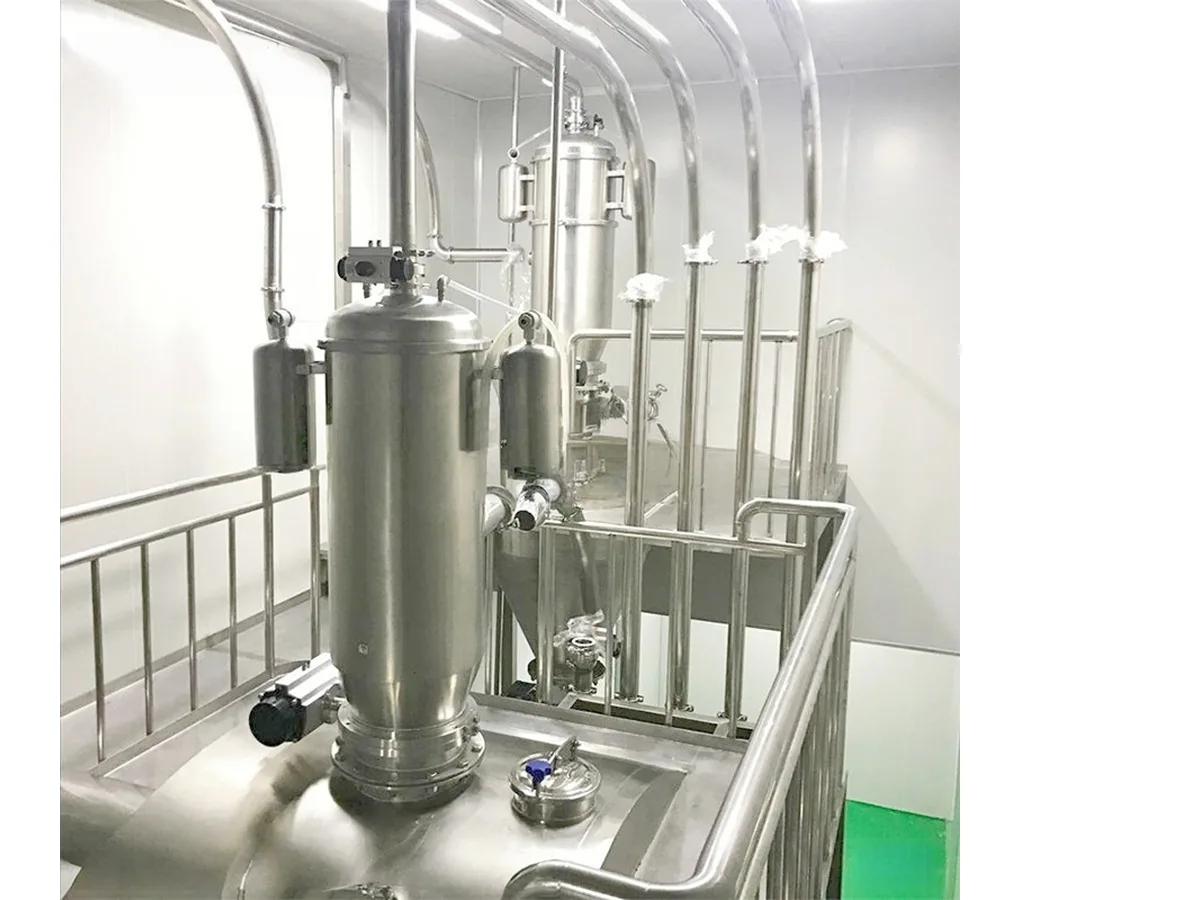
Vacuum Conveying
How Vacuum Conveyors Work
Learn how vacuum conveying systems transfer powders dust-free — from pickup to discharge — and how to specify the right system for your plant.
Read article
Food Industry
Powder Conveying Solutions for Food Industry
Explore hygienic powder conveying solutions for food processing applications.
Read articleSystem partners
Related Products
Equipment commonly paired with Pneumatic Conveying System in complete powder handling lines.
Engineering support
Enquire about Pneumatic Conveying System
Share your material, capacity and plant layout. Our engineers will confirm sizing and send a tailored proposal.