Food powder lines need hygienic stainless steel and cleanable design.
Dust control protects operators and prevents cross-contamination.
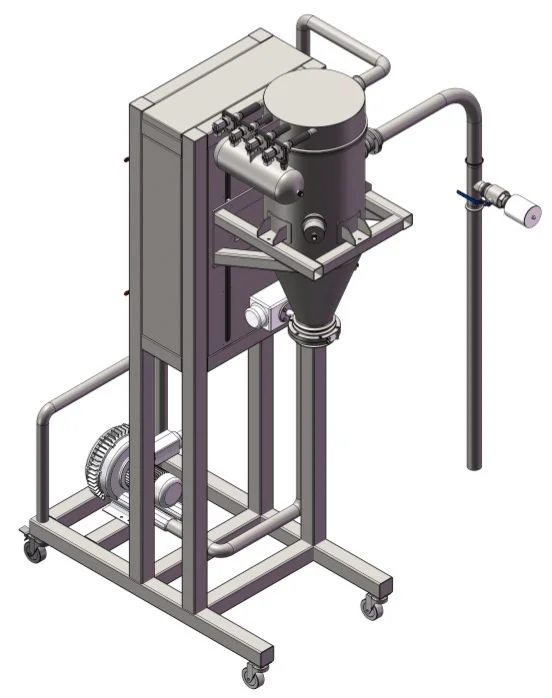
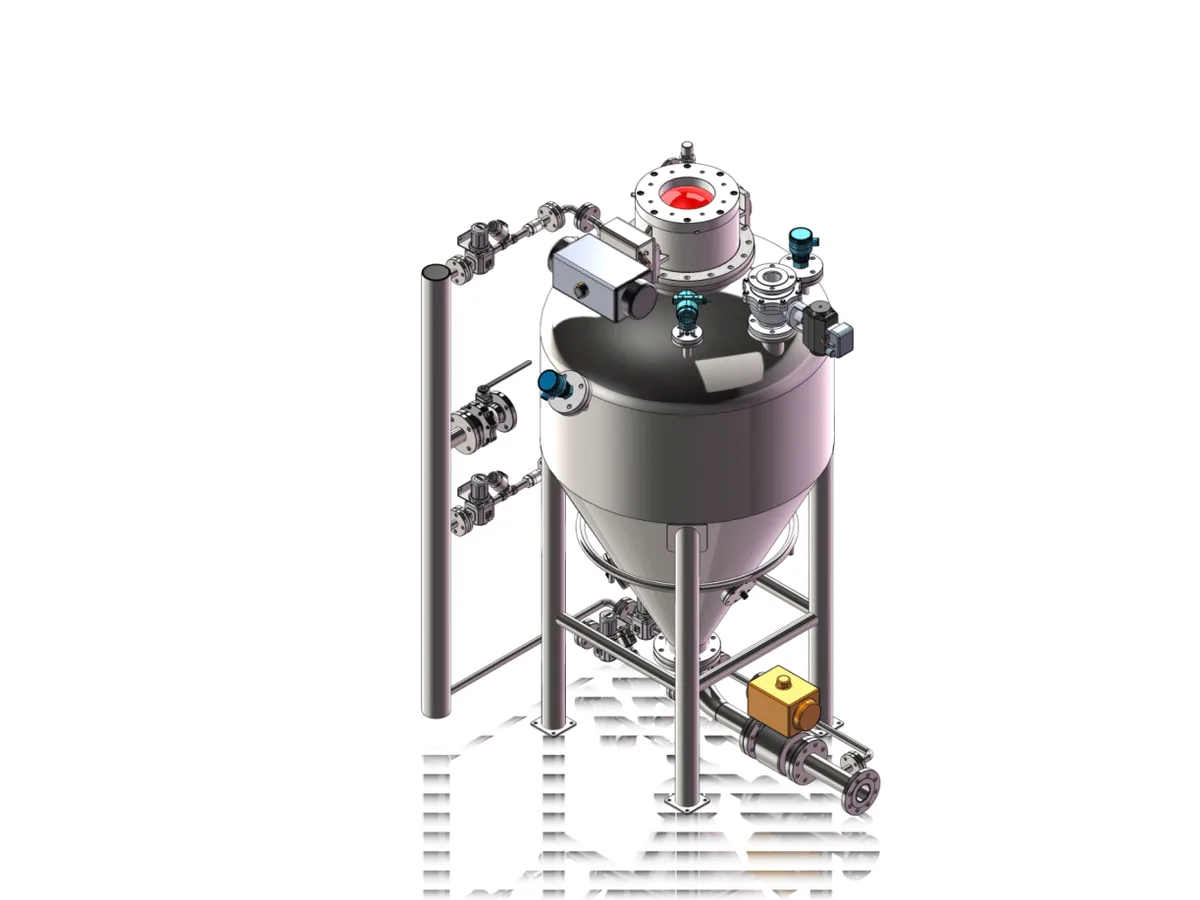
Vacuum conveying integrates well with dosing, mixing and packing.
Allergen changeover drives the design more than cleaning in general.
Hygroscopic and fragile ingredients set the conveying mode for the whole line.
Technical Overview
Hygienic conveying requirements
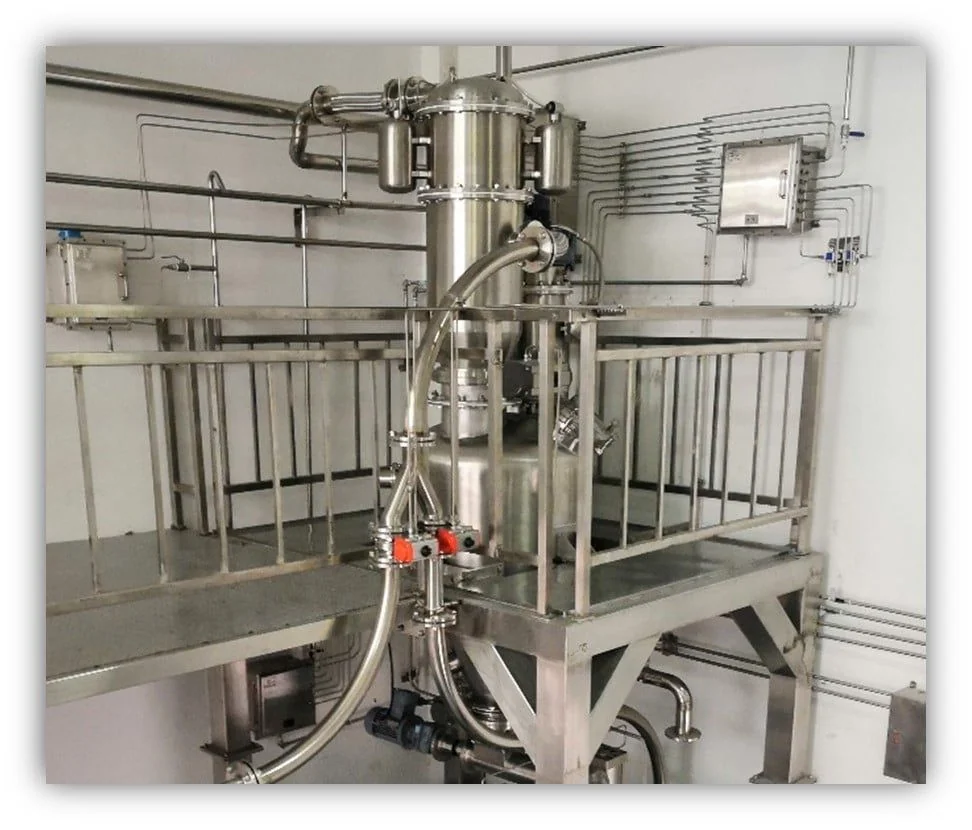
Food powder plants require enclosed transfer, stainless contact parts, smooth welds and designs that support cleaning between batches. Vacuum conveying keeps flour, sugar, milk powder and additives off the floor and out of the air while feeding mixers and packers.
Closed transfer keeps food powders out of the air and off the floor
Integration with food process lines
Typical layouts start at bag dump or FIBC stations, convey to loss-in-weight hoppers or batch weighers, then to mixers and packaging. Recipe control and traceability improve when conveying and dosing share one automation layer, because a single controller then knows both what was delivered and what was weighed — the two numbers that decide whether a batch is in specification. Planning the line as one system rather than a set of separately purchased machines also keeps the interfaces simple: one set of level signals, one recipe database, and one place to look when a batch comes up short.
One automation layer across conveying, dosing and packing keeps recipe data consistent
Hygienic design: what to specify
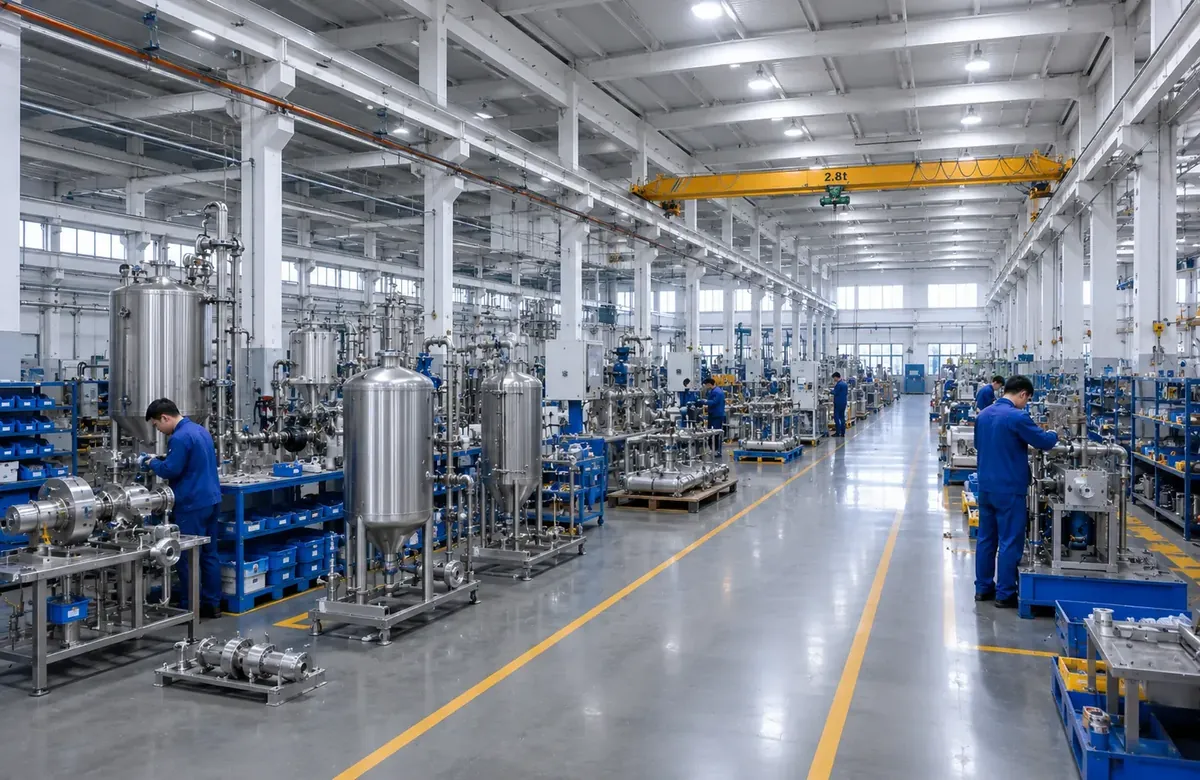
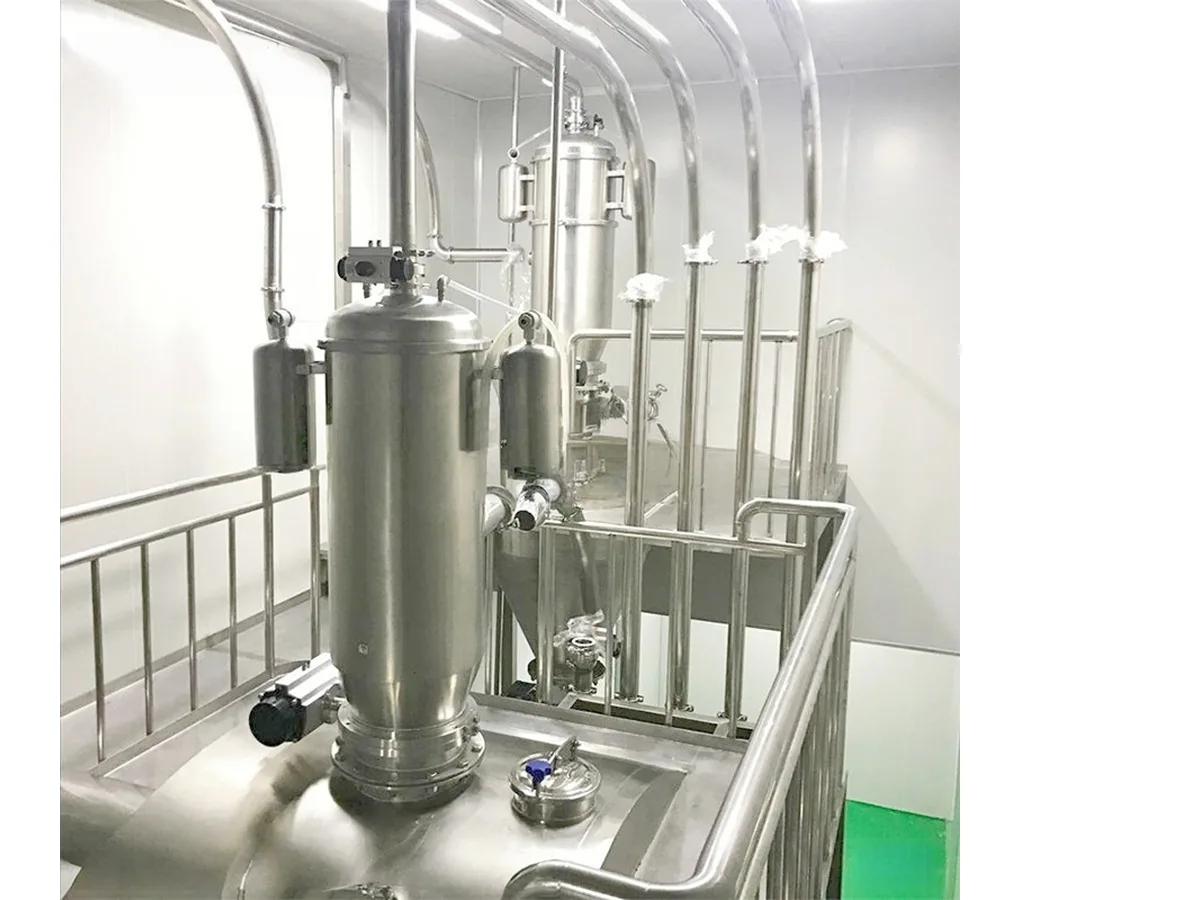
Food powders leave residues that support microbial growth, so the conveying line has to be cleanable rather than merely closed. Specify product-contact parts in SS304 as a minimum and SS316L where acidic or salty ingredients are handled, and ask for smooth welds and crevice-free joints. Receivers, hoppers and mixers built with quick-clamp assemblies come apart without tools, which turns cleaning from a maintenance task into something an operator can do at a changeover. Avoid horizontal dead legs in the pipeline where powder can sit undisturbed, and slope any run that has to be horizontal. Avoid painted or coated internals in the product path, because a coating that chips becomes a foreign-body risk. Where the process is audited, the material certificates and surface finish of contact parts should be documented rather than assumed.
Quick-clamp stainless construction lets operators clean at changeover, not only at shutdown
Allergen changeover in shared lines
The hardest cleaning problem in food powder handling is not dirt but allergens. When one line runs milk, then wheat, then nuts, the changeover has to remove residues that are invisible and chemically persistent. Three things make that tractable. Keep the number of product-contact surfaces small, so there is less to clean and fewer places for material to hide. Favour vertical or well-drained geometry over horizontal runs and pockets. And design the cleaning sequence deliberately — a dry-clean pass with a defined method, followed by verification — rather than relying on operators to improvise under production pressure. Where the product mix makes shared conveying impractical, duplicate small receivers at the critical points and press them into service only for the sensitive ingredients; that usually costs less than an unverifiable cleaning regime.
Fewer product-contact surfaces means a shorter and more verifiable changeover
Moisture, caking and fragile ingredients
Flour, starch, sugar, milk powder, cocoa and many additives are hygroscopic, and a small amount of moisture turns a free-flowing powder into a bridging, caking problem. Keep the line sealed from ambient air so humid factory conditions cannot reach the product, and avoid unnecessary air exchange at transfer points. Where a receiving hopper sits idle between batches, a vent filter rather than an open vent keeps the contents isolated without pressurising the hopper. Fragile ingredients — agglomerated instant powders, spray-dried products, coated particles — suffer from high conveying velocity, so specify a lower-speed regime and gentle discharge instead of sizing purely on throughput. As a rule of thumb, the most damage-sensitive ingredient in the recipe should set the conveying mode for the shared line, not the one that is easiest to move.
A sealed line and a vent filter keep hygroscopic ingredients from picking up moisture
A typical food powder line, end to end
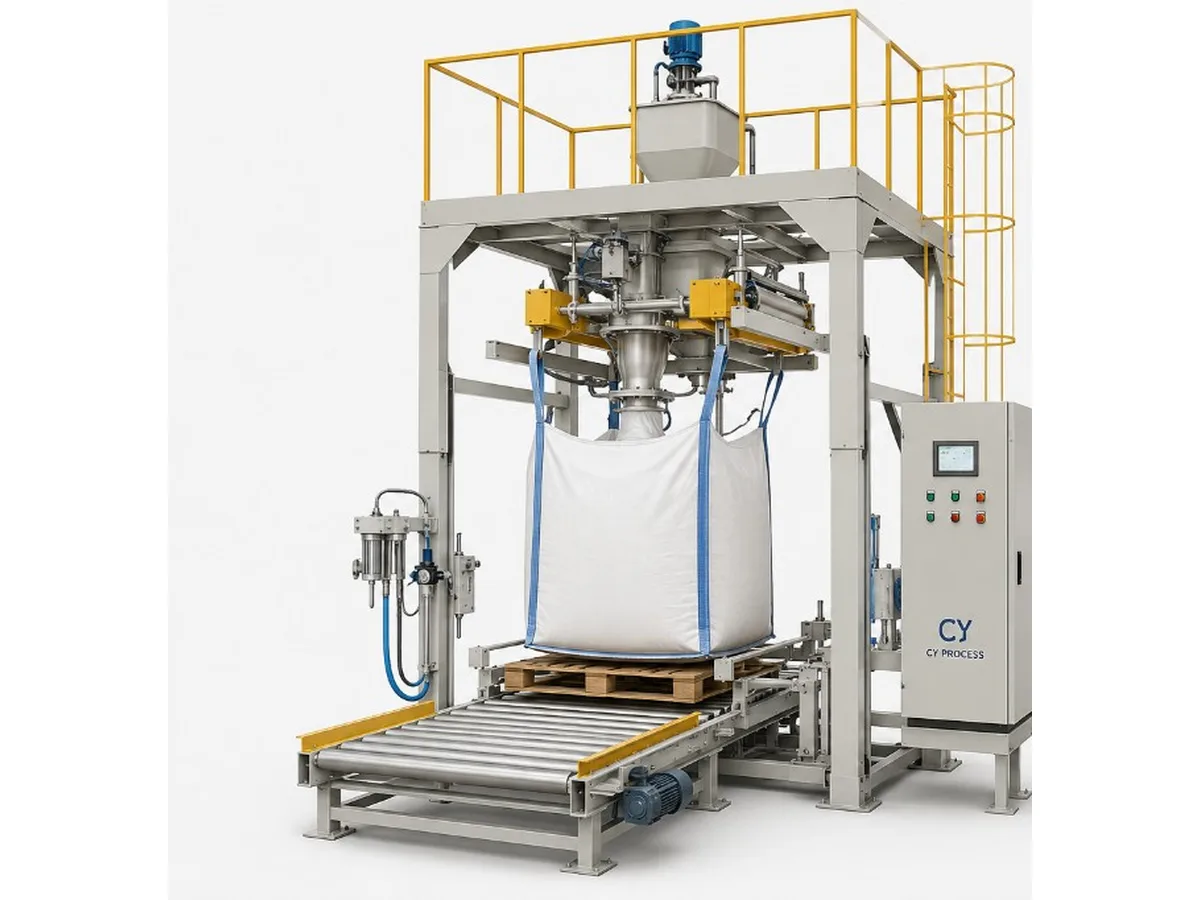
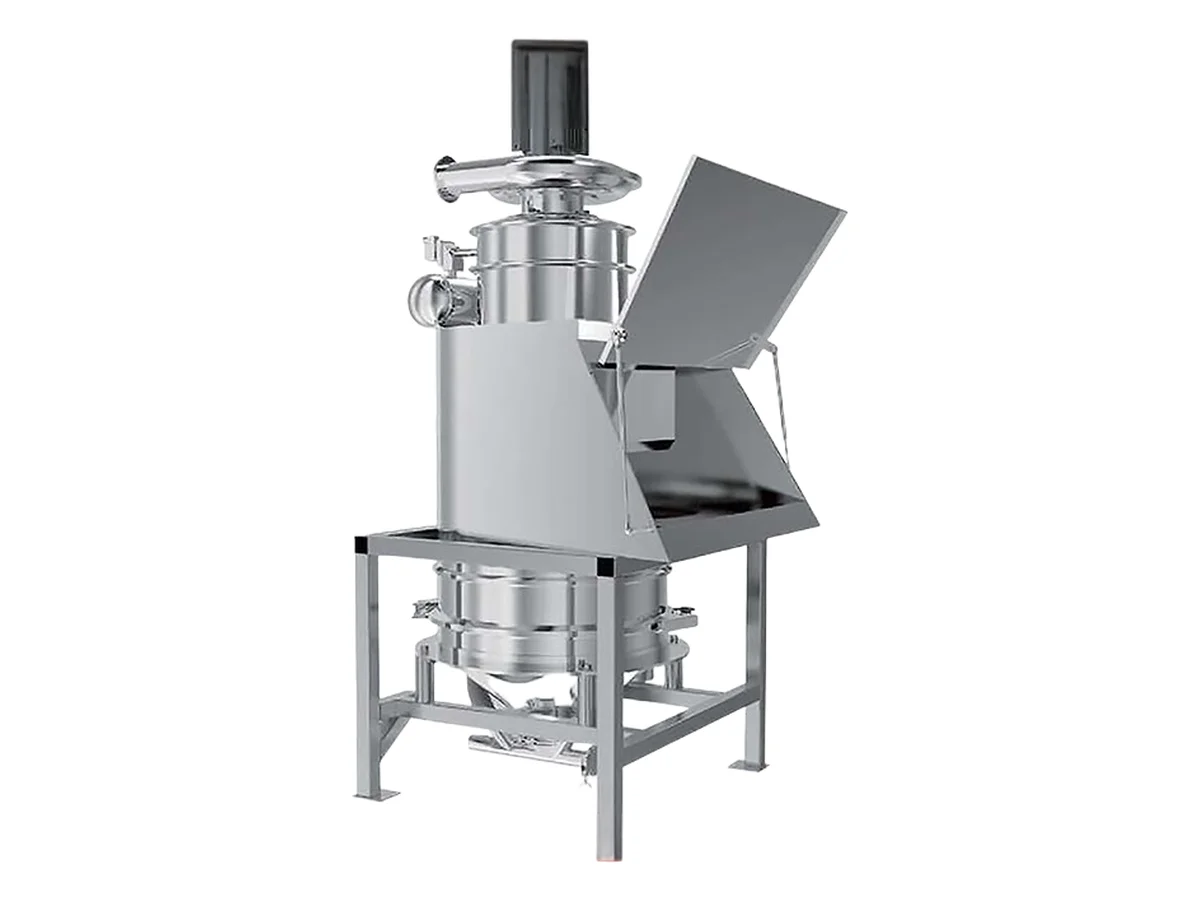
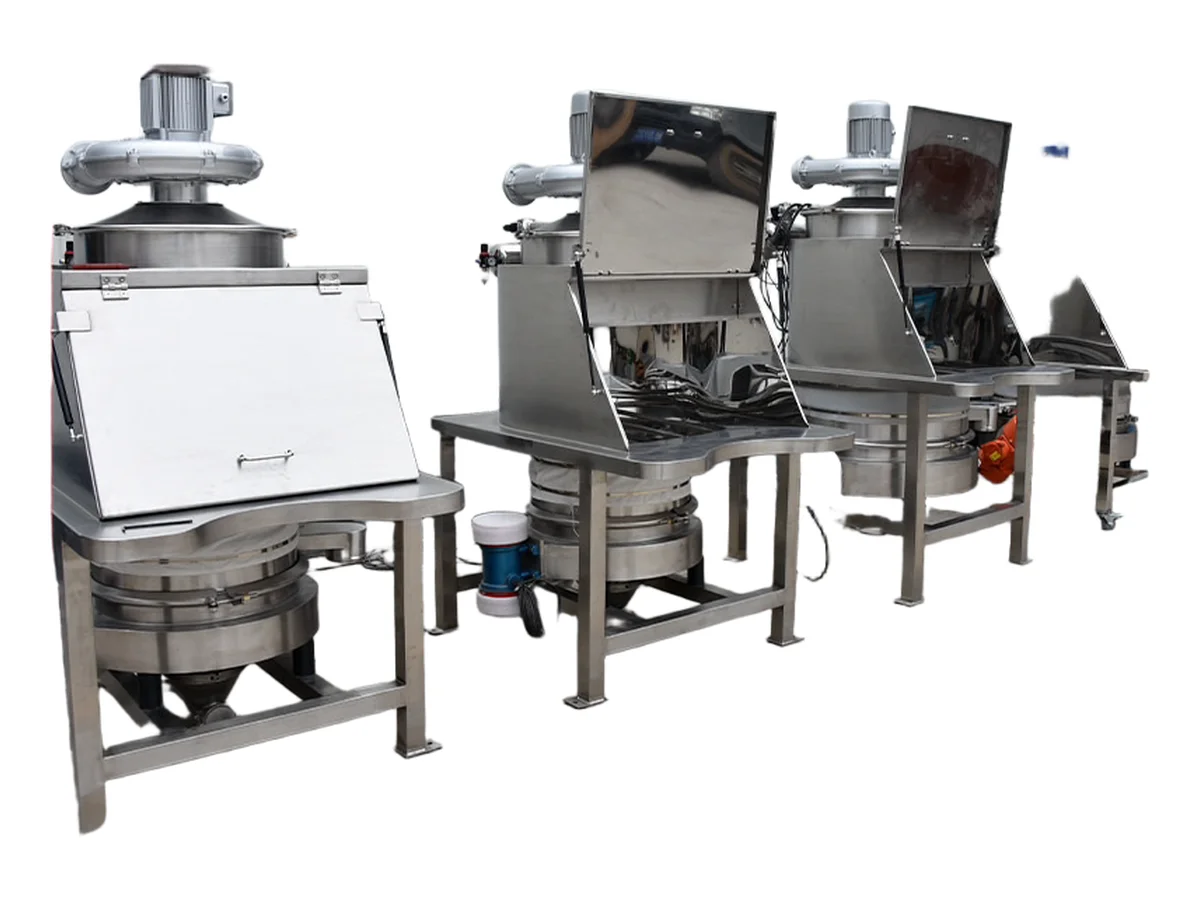
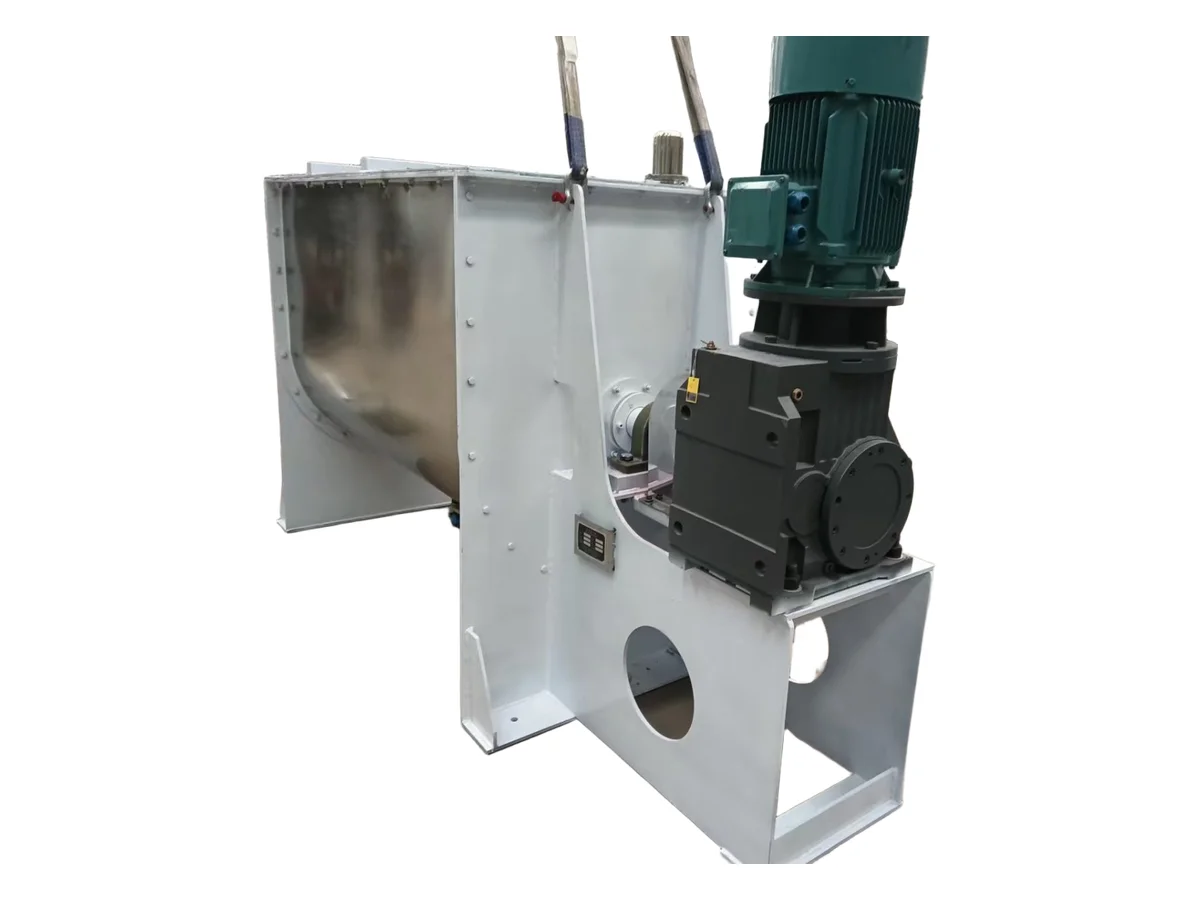
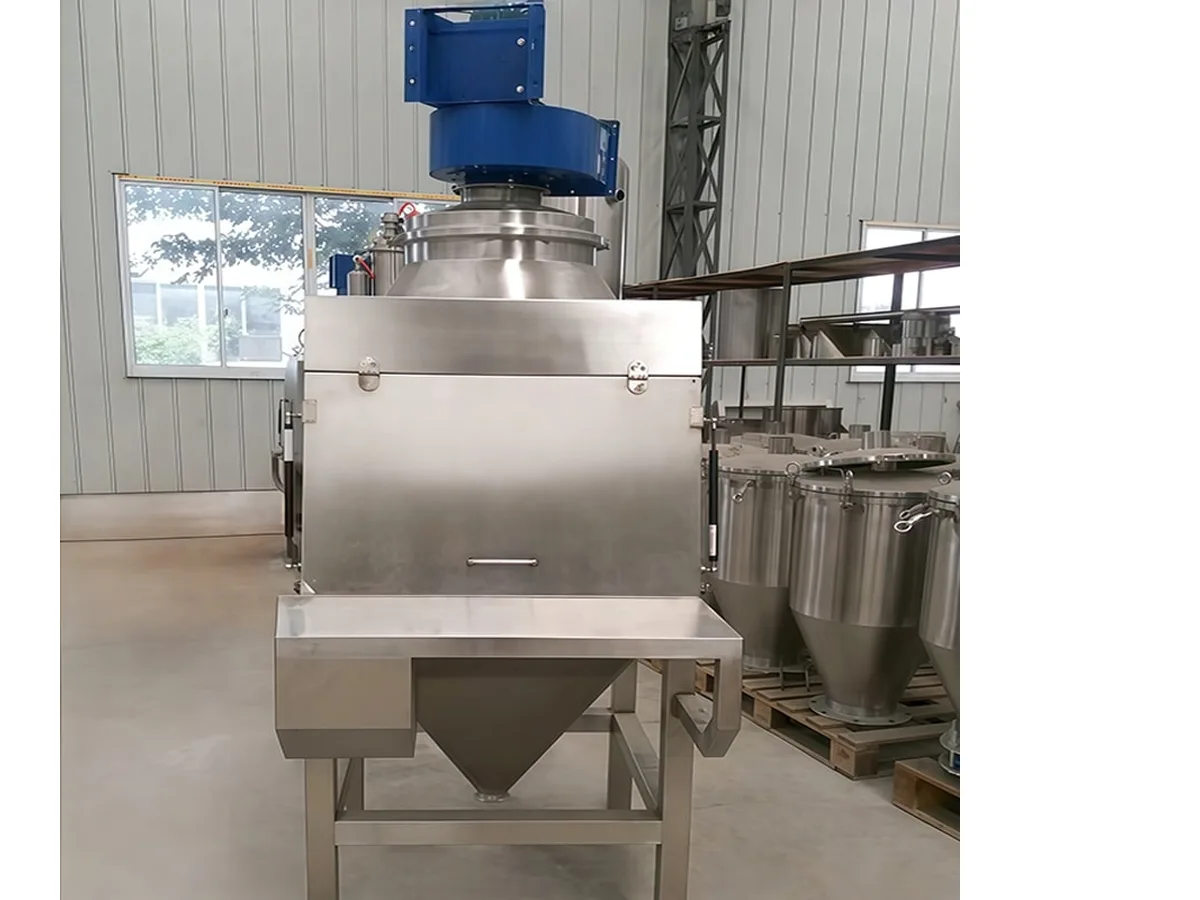
A representative line starts with intake. Manual sack tipping stations handle 10 – 50 kg bags behind a dust extraction hood, and the screened variant adds a safety screen that catches bag scraps, string and lumps before they reach the process. Bulk FIBC delivery uses a big bag unloader with a dust-tight spout clamp and massage paddles. From there, vacuum transfer moves material enclosed to the point of use. Major ingredients go to weigh hoppers; minor ingredients go to loss-in-weight feeders, which hold a set rate to within roughly half to one percent on a good installation, measured against the material actually delivered rather than the volume the screw displaces. The ribbon mixer then blends the batch, from a 200 kg unit up to production sizes in the tonnes, over a blending time that is typically minutes rather than hours. Finally the finished powder is packed into 25 kg sacks or FIBCs, with the big bag packer filling 300 – 1500 kg at about ±0.2% and 10 – 30 bags per hour. Every transfer point in that chain is a place where dust can escape, which is why extraction is designed with the line rather than added afterwards.
Intake, transfer, dosing, blending and packing form one enclosed chain
Dust control at the transfer points
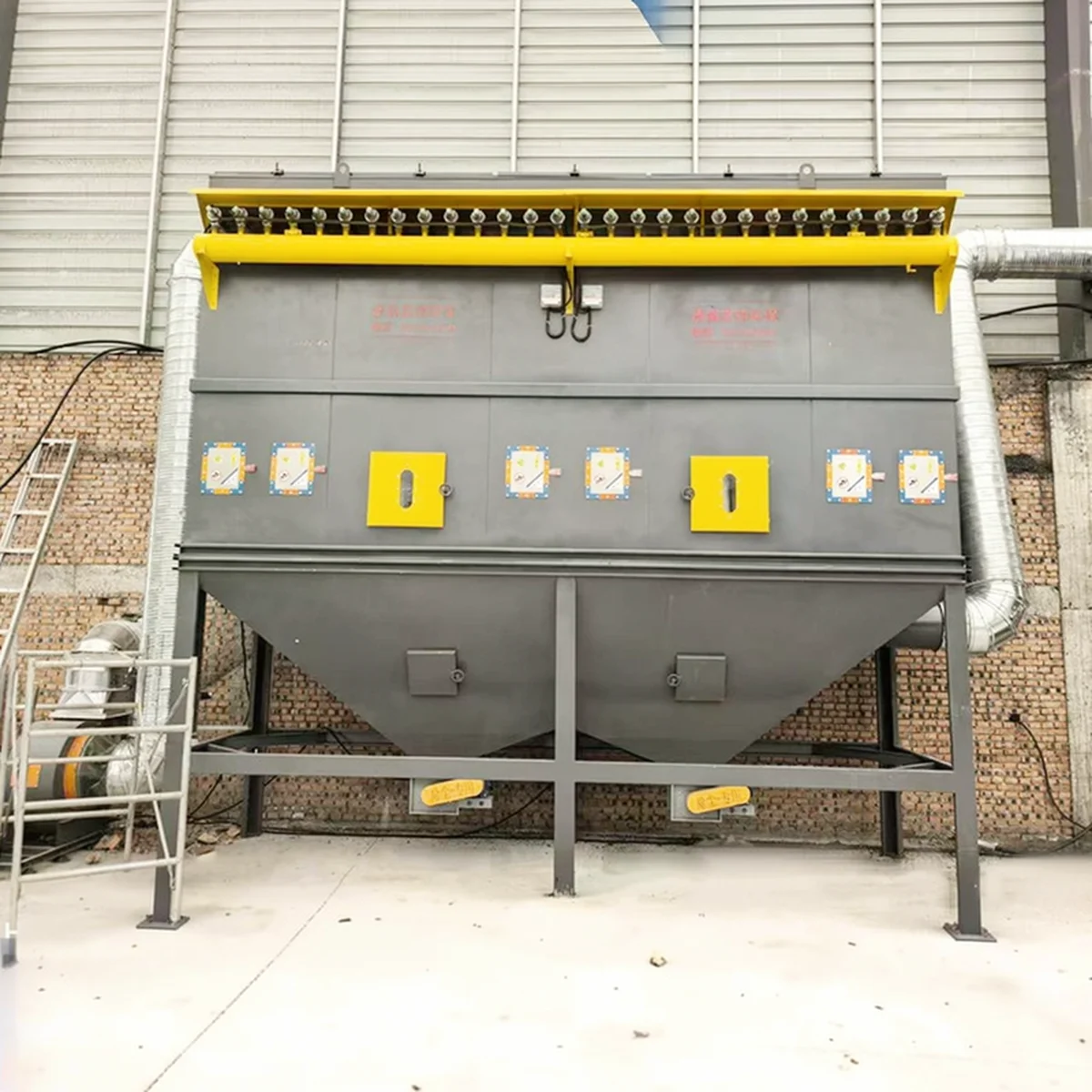
Even a well-sealed line has openings: sack tipping, sampling, mixer charging and bag filling. Local extraction at those points, ducted to a cartridge or pulse-bag collector, is what keeps the working area inside exposure limits. Collector sizing follows the openings and the material rather than the plant footprint — a pulse-bag unit spanning roughly 18 to 99 m² of filter area covers most single-station duties in a food plant, and collection efficiency of 99.5% and above is normal for that series while air-box designs do better still. Filtration velocity matters more than the headline airflow figure, because an overloaded bag blinds early and the extraction quietly stops working; when operators say the hood used to suck, the bags are usually the reason. Where fine food dust is combustible, the collector also needs explosion protection and correct earthing.
Extraction at sack tipping is what keeps exposure down at the open points
What to prepare before requesting a quotation
Conveying and dosing equipment is sized from the material, not from the layout. Before asking for a proposal, collect the ingredient list with approximate proportions, and for each ingredient the loose bulk density, particle size, moisture content and whether it cakes. Note which ingredients are allergens, which are fragile and which are abrasive. Then describe the process: batch size and cycle time, the number of intake points and destinations, the horizontal and vertical distances between them, and the equipment at each end. Finally, state the environment — the cleaning regime, whether the area is washed down, the dust explosion classification, and the surface finish or certification the plant requires. A supplier who quotes without asking for these is quoting a guess.
Sizing starts with measured material data, not with a layout drawing
Process Flow
Typical steps covered in this article.
Sack / Big Bag Intake
Vacuum Transfer
Dosing & Mixing
Packaging
Typical Applications
Milk powder
Flour & starch
Sugar & cocoa
Spices & additives
Equipment
Related Products
Explore equipment commonly used with the processes described in this article.