Dilute phase uses high air velocity and lower solids loading.
Dense phase uses lower velocity to reduce wear and product damage.
Material properties and distance drive the correct choice.
Dilute phase is typically quoted to about 200 m; dense phase reaches far beyond.
Vacuum suits many intake points; positive pressure suits long, heavy duties.
Technical Overview
Dilute-phase conveying
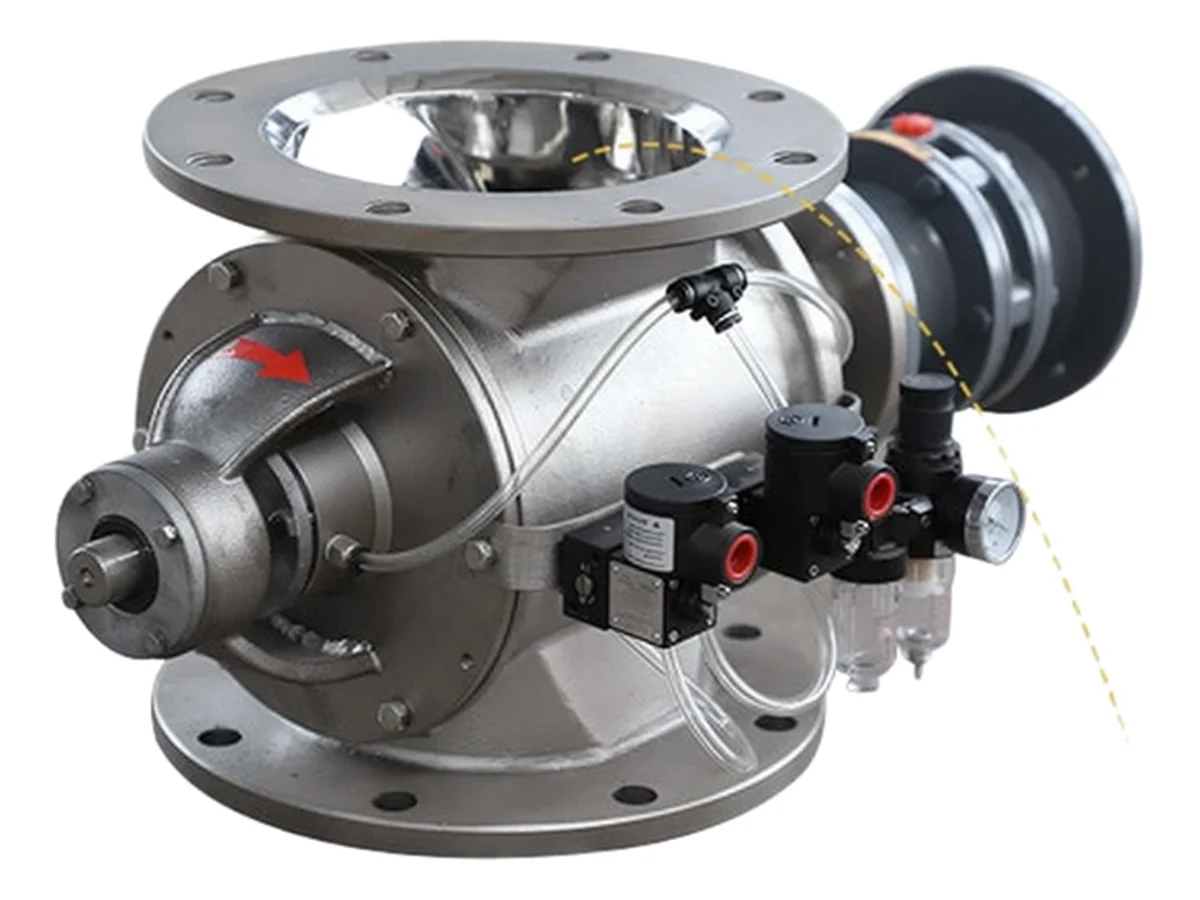
Dilute-phase systems suspend product in a high-velocity air stream. They are relatively simple and flexible for free-flowing powders over moderate distances, but can cause more pipe wear and particle breakage with abrasive or fragile materials. Velocities across the mode range from a gentle few metres per second up to the order of forty, and line pressure at the blower is typically modest — around +100 kPa on a positive-pressure design. The equipment is largely a blower, a rotary valve or venturi feeder, a pipeline and a receiving filter, which is why dilute phase is the default for indoor transfers and for materials that are neither abrasive nor friable.
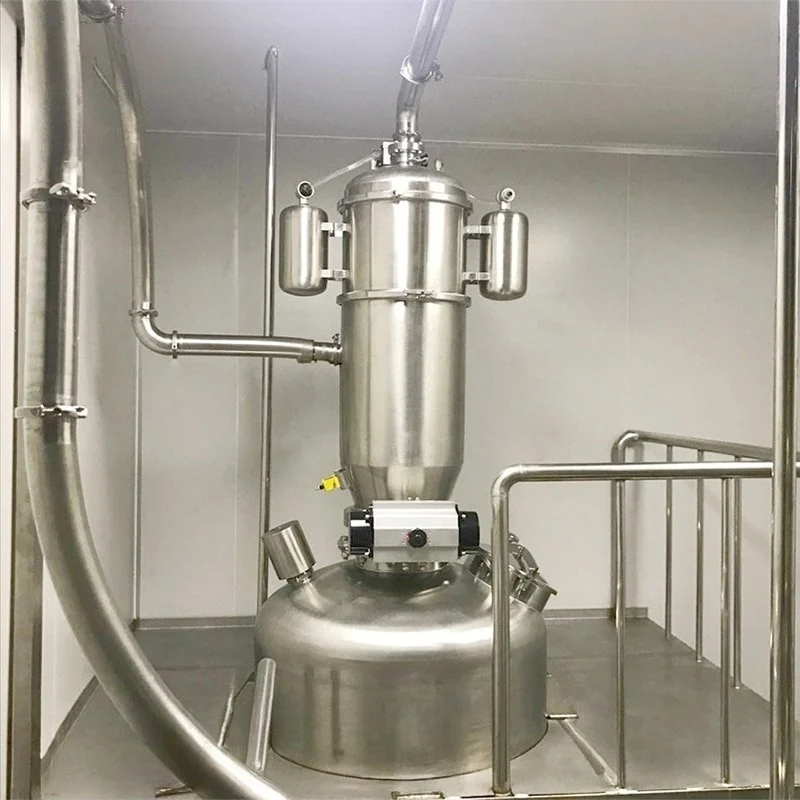
Dilute phase suspends the product in a fast air stream — simple, but hard on bends
Dense-phase conveying
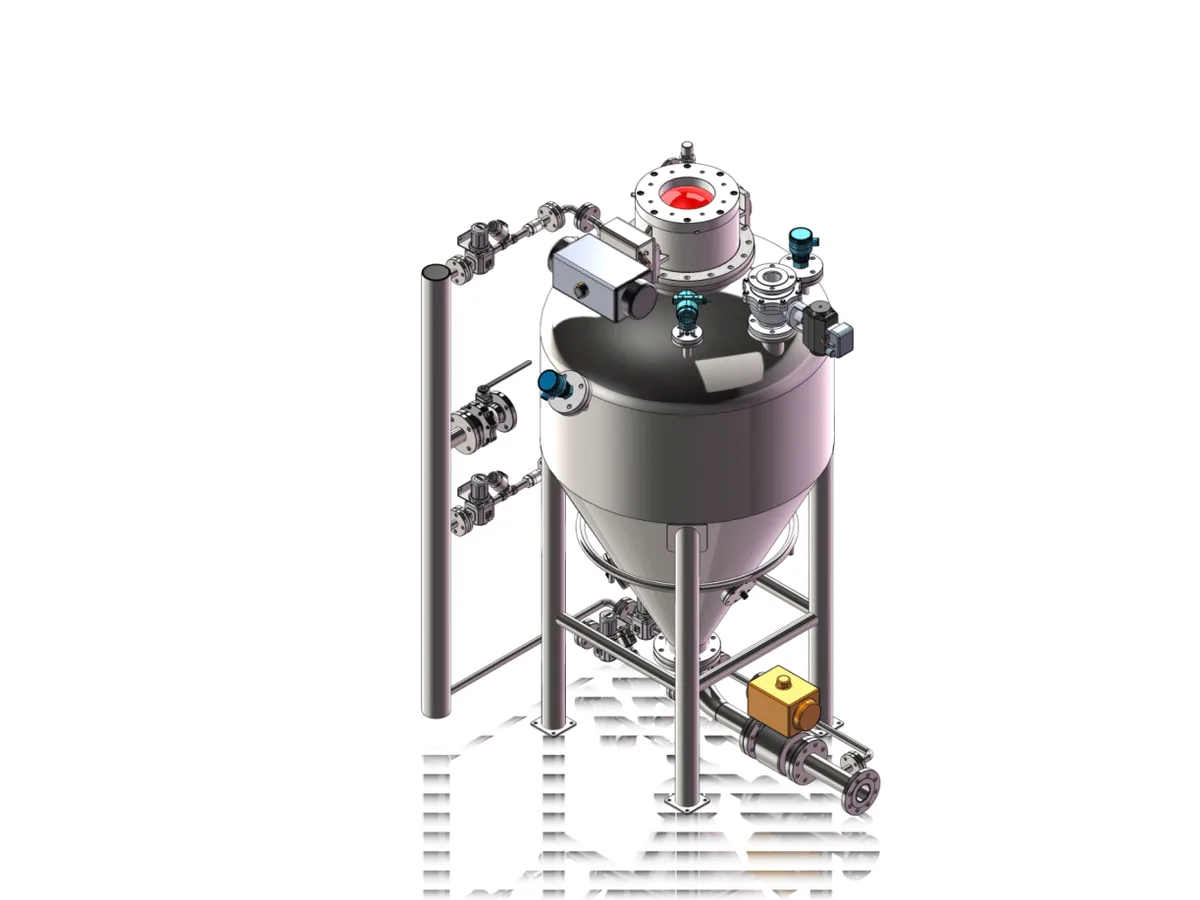
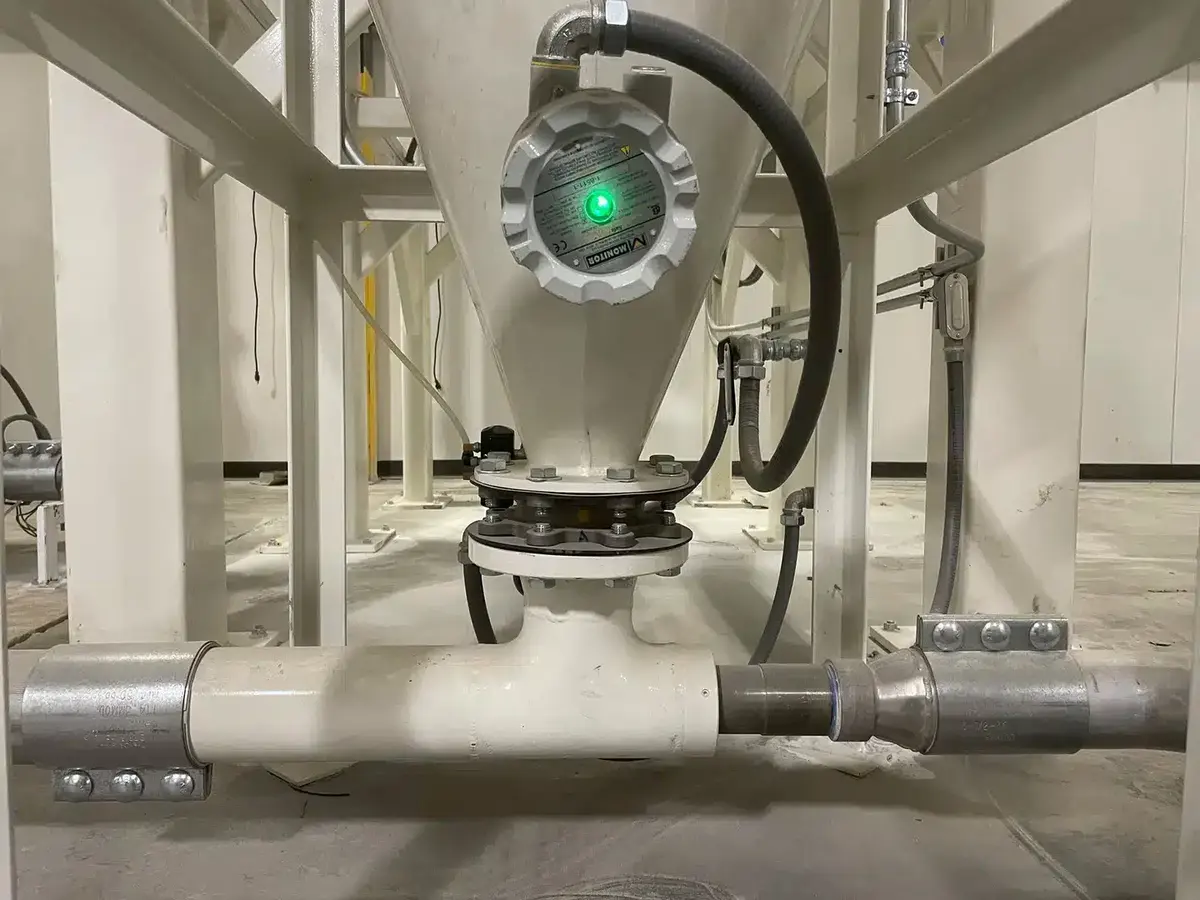
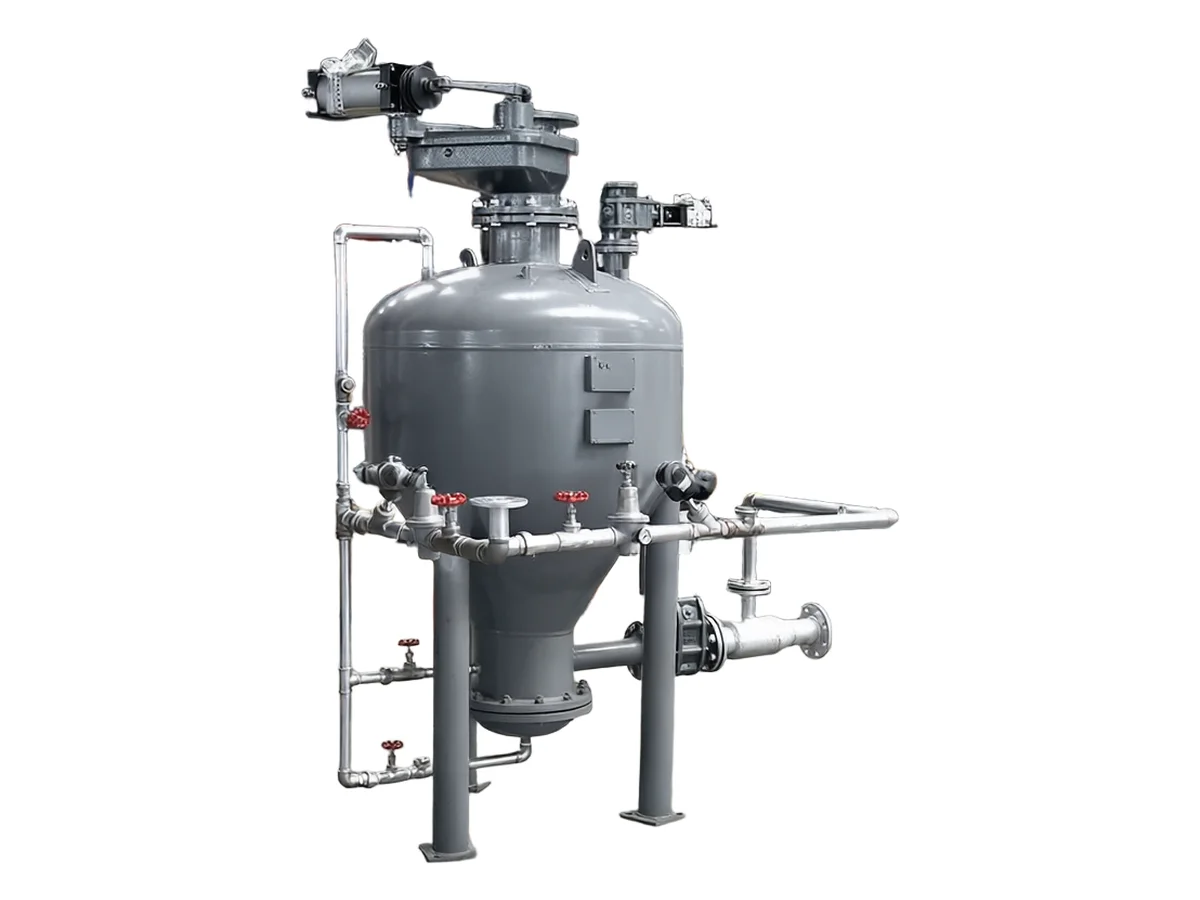
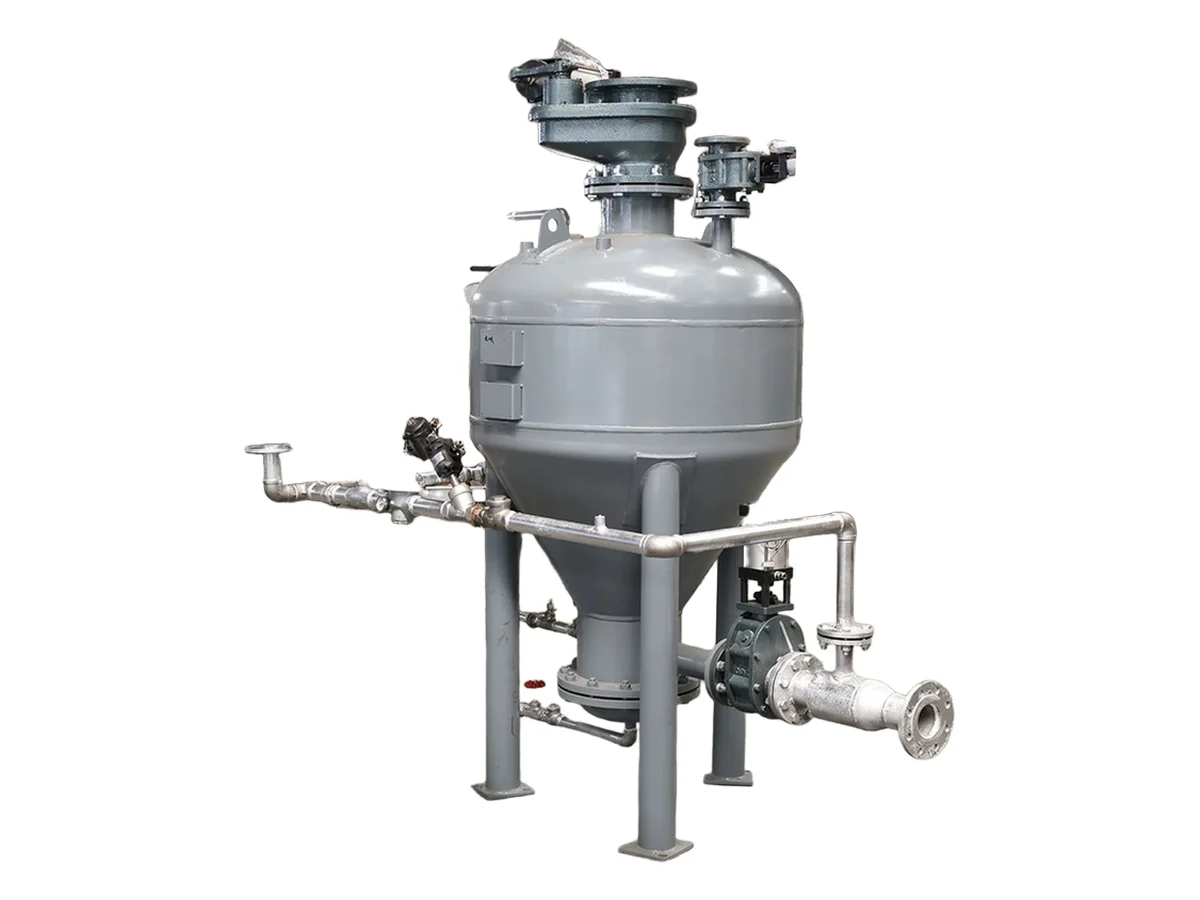
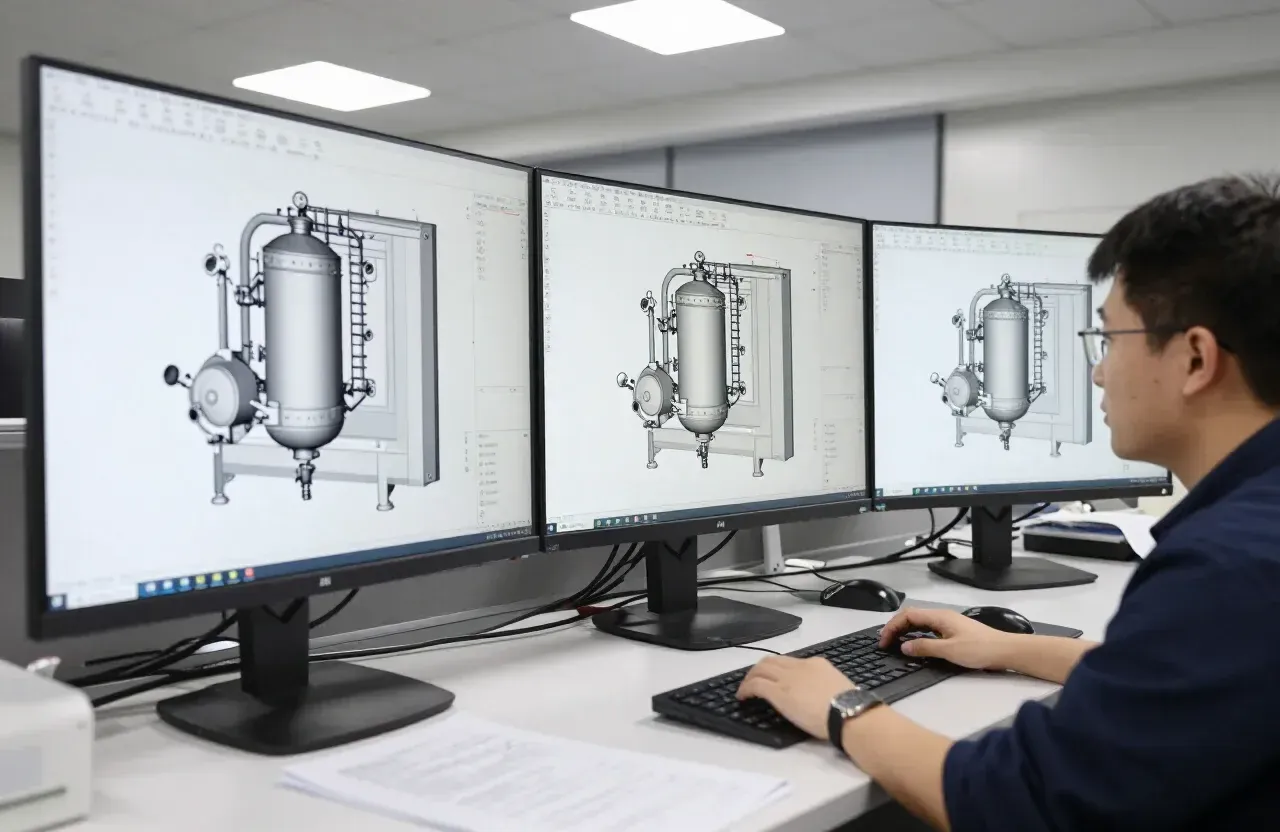
Dense-phase systems move plugs or dunes of product at lower velocity and higher concentration. They reduce degradation and elbow wear, and often suit longer routes — at the cost of more sophisticated pressure vessels, valves and controls. A blow-tank system operates at roughly two to six bar and transfers in batches: the vessel fills by gravity or under vacuum, seals, pressurises, discharges the batch as a slow-moving plug, then vents and repeats. Vessel volumes run from about 0.35 m³ to 9 m³ and beyond. The payoff is reach and gentleness — dense phase is the mode that makes transfers measured in kilometres practical, and it is the reason abrasive minerals and fragile granules can be conveyed at all.
A blow tank conveys in sealed batches, which is what keeps dense-phase velocity low
Comparing the two on the numbers
The two modes differ by an order of magnitude in almost every parameter. A dilute-phase line normally runs at air velocities in the range of ten to thirty metres per second and line pressures of the order of +100 kPa, carrying a modest solids-to-air ratio. A dense-phase blow tank runs at roughly two to six bar and velocities low enough that the material moves as plugs or dunes rather than suspended particles, with a much higher solids loading for the same pipe bore. The consequence is that dense phase reaches far longer distances — dilute-phase designs are typically quoted to around 200 m while a blow-tank system can be designed for transfers measured in kilometres — and consumes less air per tonne conveyed when the duty suits it. The cost is that a blow tank is inherently intermittent, because the vessel must fill and then empty, even when the downstream demand is perfectly continuous.
Longer reach and lower air consumption are what dense phase buys you
Choosing between the two
Phase selection follows from four questions. How far is the material going? If the route is inside a building between adjacent machines, dilute phase is simpler and cheaper. How abrasive or fragile is the product? High-velocity dilute phase wears bends and breaks friable granules, so if either matters, dense phase or a deliberately slow dilute design is the starting point. What solids loading does the rate require? At very high tonnages a dilute line becomes large and air-hungry, and dense phase turns into the economical answer. And how much air is available, or acceptable? Where inert gas is required, its cost scales with volume, which pushes the decision toward lower-velocity modes. A useful discipline is to characterise the material first and only then argue about phases, because the same powder can convey cleanly in one mode and block repeatedly in the other.
Four questions decide the phase before any equipment is selected
Pressure push or vacuum pull
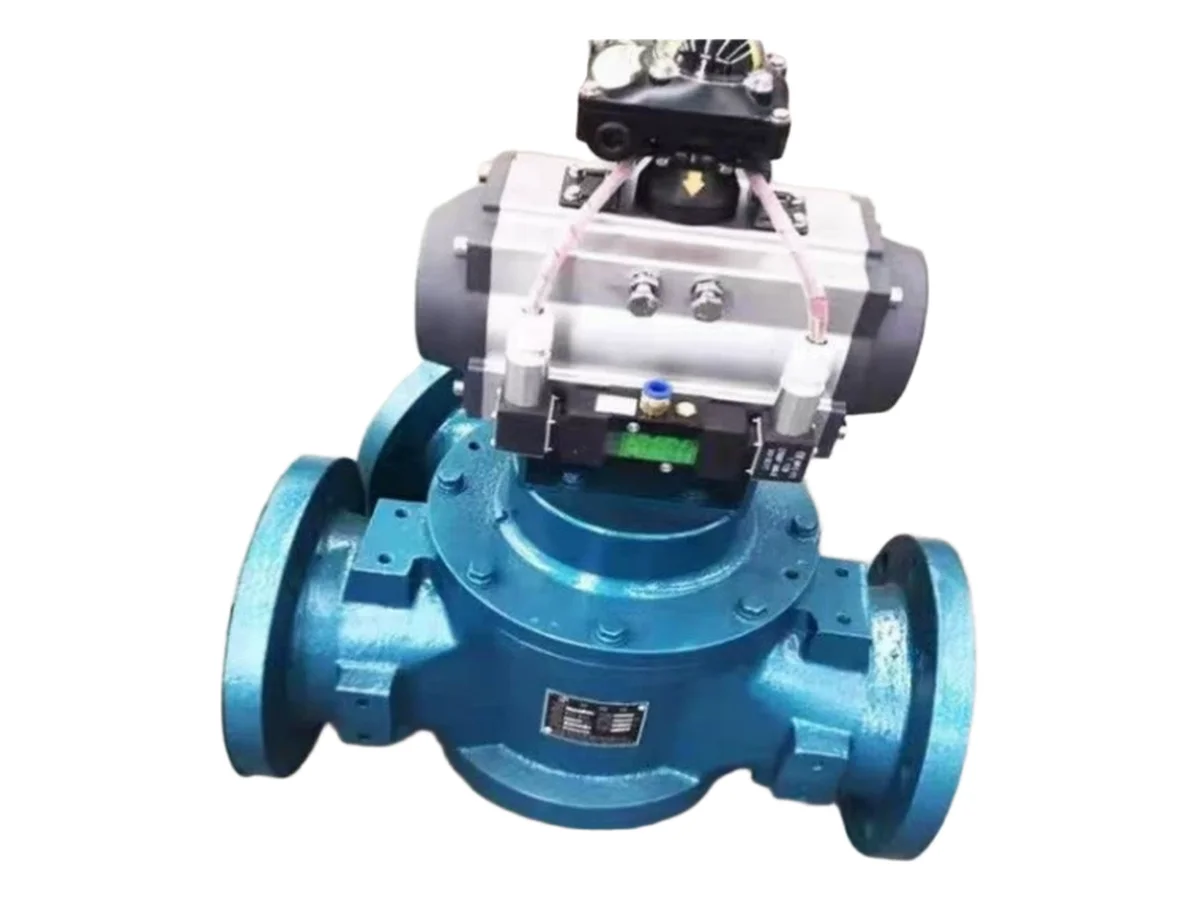
Both phases can be arranged as a positive-pressure system, where the air source pushes product away, or as a vacuum system, where it pulls product toward the receiver. Vacuum is easier to keep dust-tight, because any leak admits air rather than ejecting powder, and it lets a single source serve several pickup points in sequence. Pressure systems reach higher line pressures and therefore higher capability on long or heavy duties, and they are the natural fit for blow-tank dense phase. Many plants end up using both: vacuum for short indoor transfers from multiple intake points, and positive pressure for the long runs to storage or despatch. The air source follows that choice — a roots blower or compressor for pressure, a vacuum blower package for vacuum — and the selection is made from the airflow actually available at the working pressure, not from the free-air rating on the nameplate.
Vacuum suits many intakes; positive pressure suits long, heavy runs
Wear and attrition: where to spend the money
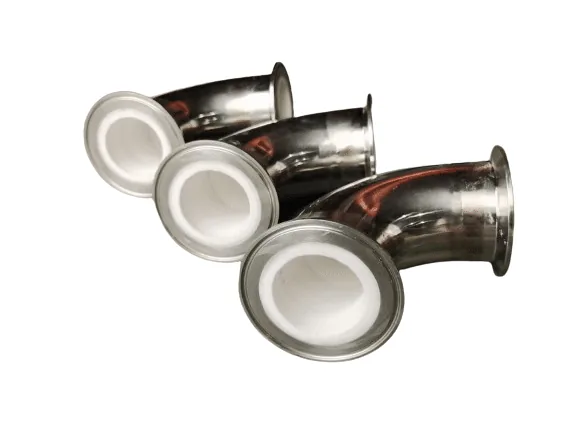
In a dilute-phase line, wear concentrates at the bends, and that is where the budget is best spent. Ceramic-lined pipe and fittings in alumina, from DN50 up to DN300, give many times the life of plain steel on the sharp bends of an abrasive duty, and because the bore stays smooth the pressure drop remains predictable instead of creeping up as the wall thins. The economical arrangement is usually steel or stainless on the straight runs and ceramic only on the bends and the first length downstream of each one — but confirm where velocity actually peaks on your layout before deciding, because a short-radius bend immediately after a vertical drop concentrates far more wear than a long-radius bend on a horizontal run. Attrition is the mirror problem: for friable products the answer is lower velocity and gentler bends, and no amount of harder steel fixes breakage that the air stream itself is causing.
Ceramic lining on the bends, steel on the straights — the usual economical split
What to prepare before requesting a quotation
Pneumatic conveying is sized from a material test and a route survey, so the quality of the answers you supply decides the quality of the proposal. Collect, for each material: name, loose and tapped bulk density, particle size distribution, moisture content, temperature, abrasiveness, and whether it is friable. State the required rate in tonnes per hour and whether it is steady or batch, the horizontal and vertical distances involved, the number of bends, and how many pickup points and destinations there are. Confirm the pressure regime available and whether an inert atmosphere is needed. Finally, ask the supplier to say plainly whether a quoted maximum distance is a typical figure or a guaranteed one for your material — published ranges are useful for orientation, but they are not a commitment.
A proposal is only as good as the material data behind it
When a packaged vacuum conveyor is enough
It is worth knowing when a full pneumatic system is over-engineering. For short indoor transfers — a bag dump station to a mixer, a big bag unloader to a packer, a hopper to a screen — a packaged vacuum conveyor with its own receiver, filter and blower does the job with far less engineering, and it arrives as a unit rather than being built on site. The crossover to a bespoke pneumatic line comes when the route lengthens beyond a few tens of metres, when several sources must feed several destinations through diverter valves, when the rate climbs into the tens of tonnes per hour, or when the material demands a low-velocity regime that a standard receiver cannot provide. Deciding this early avoids paying for a conveying study on a duty that a catalogue unit already covers.
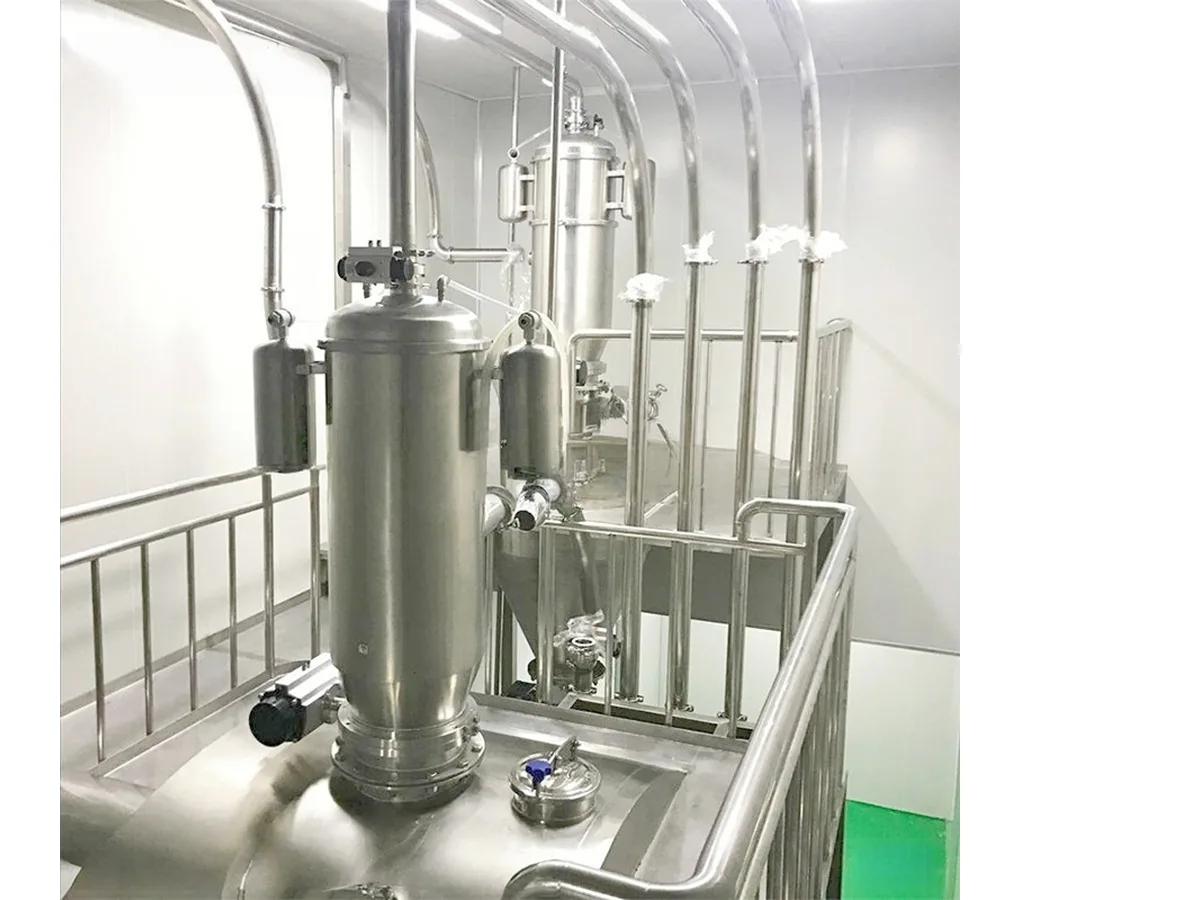
Packaged vacuum conveyors cover most short indoor transfers without a bespoke design
Process Flow
Typical steps covered in this article.
Material Characterization
Phase Selection
System Design
Commissioning
Typical Applications
Abrasive minerals
Fragile pellets
Long-distance transfer
High-capacity lines
Equipment
Related Products
Explore equipment commonly used with the processes described in this article.