Containment at the source beats collecting dust after it escapes.
Enclosed conveying and sealed connections cut fugitive emissions.
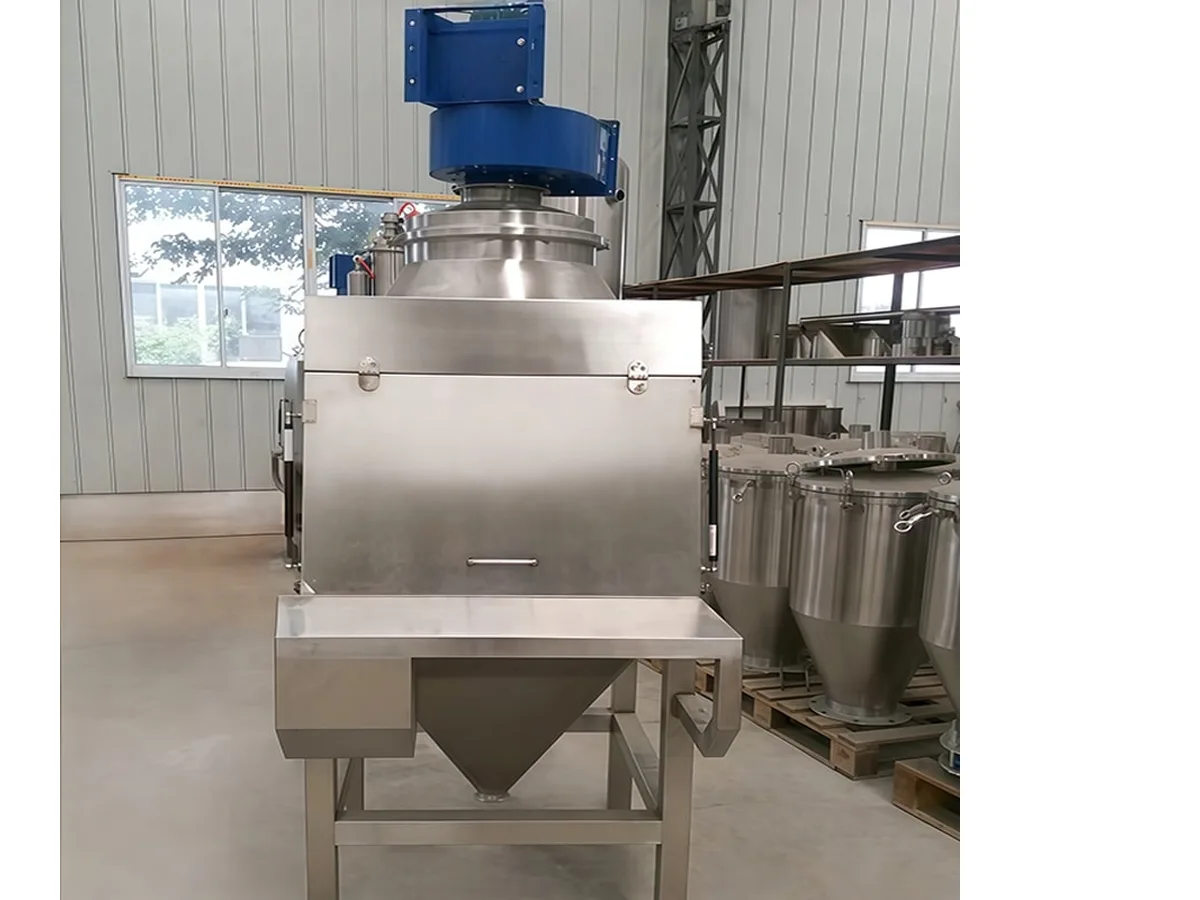
Dust collectors and extraction at dump points protect operators.
Collectors are sized by filtration velocity, not by airflow alone.
For combustible dust, venting only helps if the duct is protected too.
Technical Overview
Control dust at the source
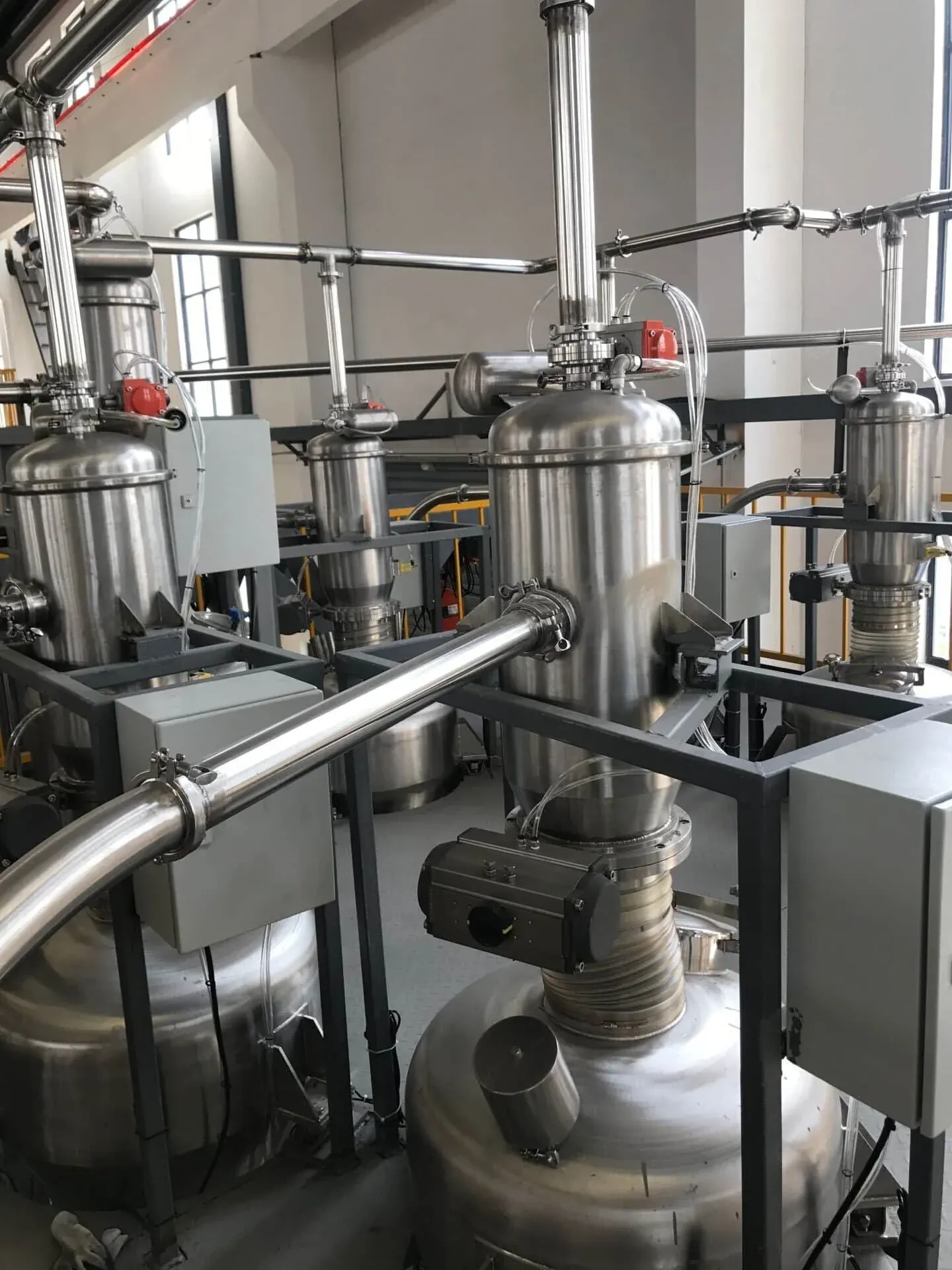
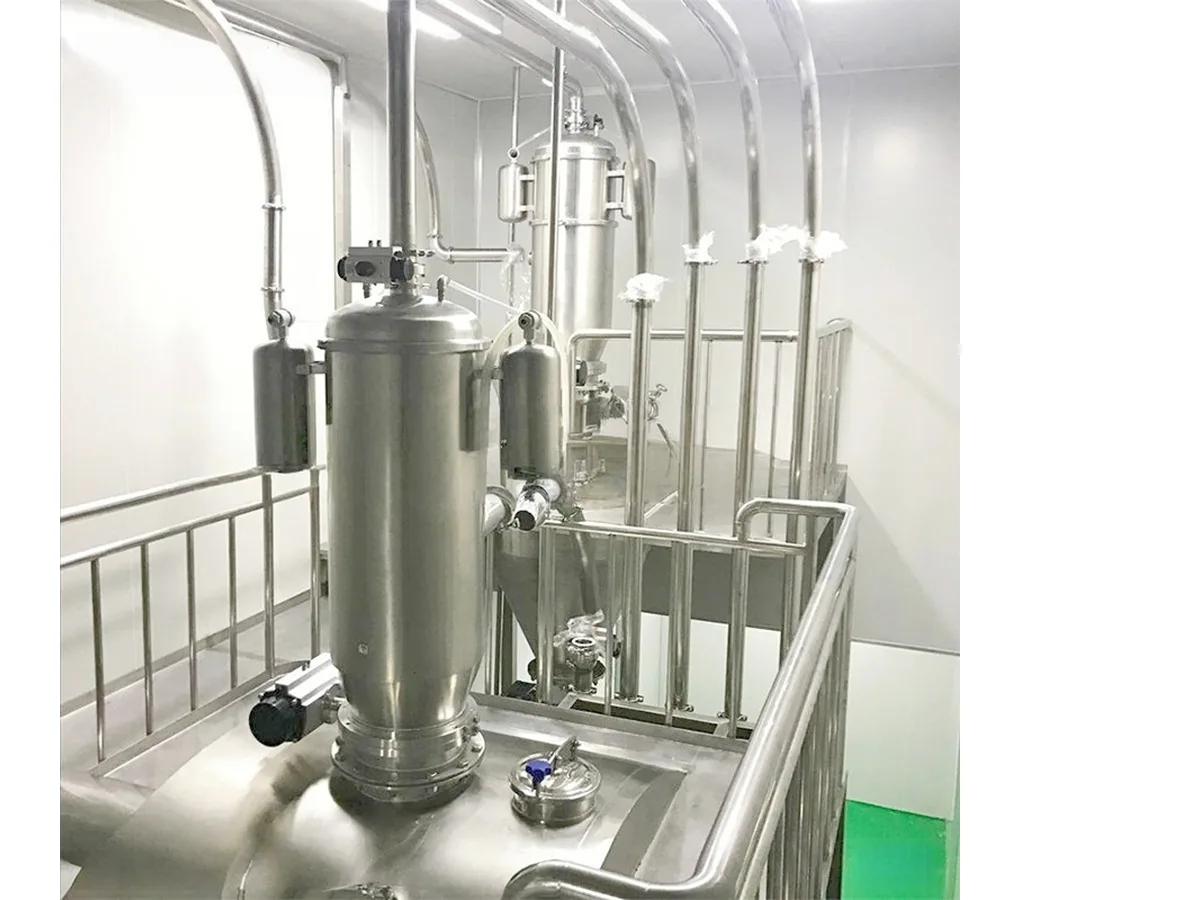
The most effective strategy is keeping powder inside the process: sealed hoppers, vacuum conveying, dust-tight spout connections and closed discharge. Open transfer points are the main source of fugitive dust. The reason source control wins is arithmetic — a kilogram of powder released into a room becomes a very large volume of contaminated air that must then be filtered, ducted and heated or cooled back to condition. Capturing the same kilogram at the point where it tries to escape costs a fraction of that, and it costs it once rather than every hour of operation. The practical consequence is that a plant should be designed around the number of open transfers it contains, and every one of them should have a stated reason for existing.
Every open transfer that can be eliminated removes an ongoing extraction duty
Extraction and filtration
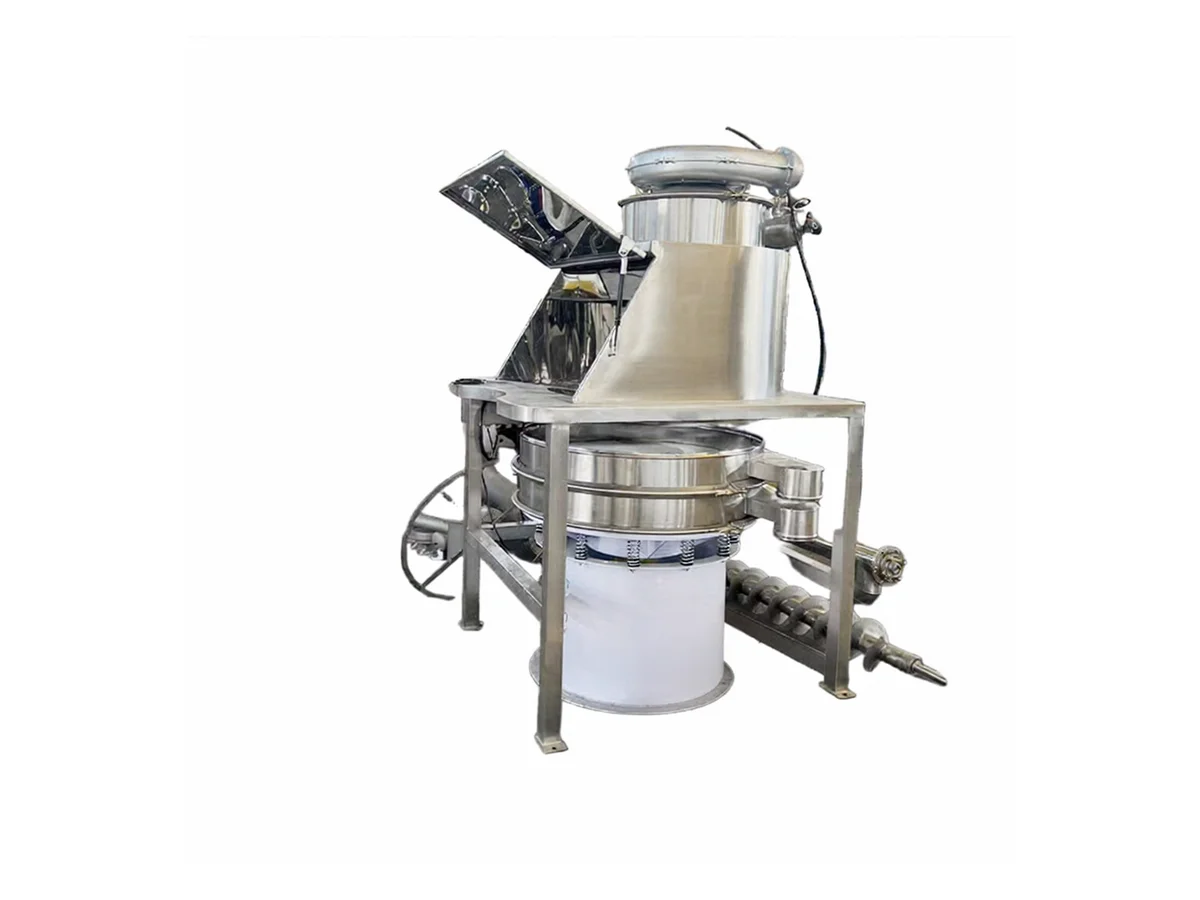
Where openings are unavoidable — sack tipping, sampling, packing — local extraction with cartridge or bag filters captures airborne dust. Match airflow to the opening and material, and maintain filters for consistent performance. The detail that separates extraction that works from extraction that is merely installed is the hood. An extraction hood has to enclose the dust-laden air before the operator's breathing zone does, which means the capture velocity has to be present at the opening and not merely at the duct. A hood mounted too far back, or a duct sized for a fan that has since been throttled, produces a station that looks correct and performs poorly. Extraction airflow is also wasted air: the plant pays to filter, and often to heat or cool, every cubic metre it pulls, so sizing generously is not a free choice.
A hood only works if capture velocity is present where the dust is released
Choosing a collector: what the series names mean
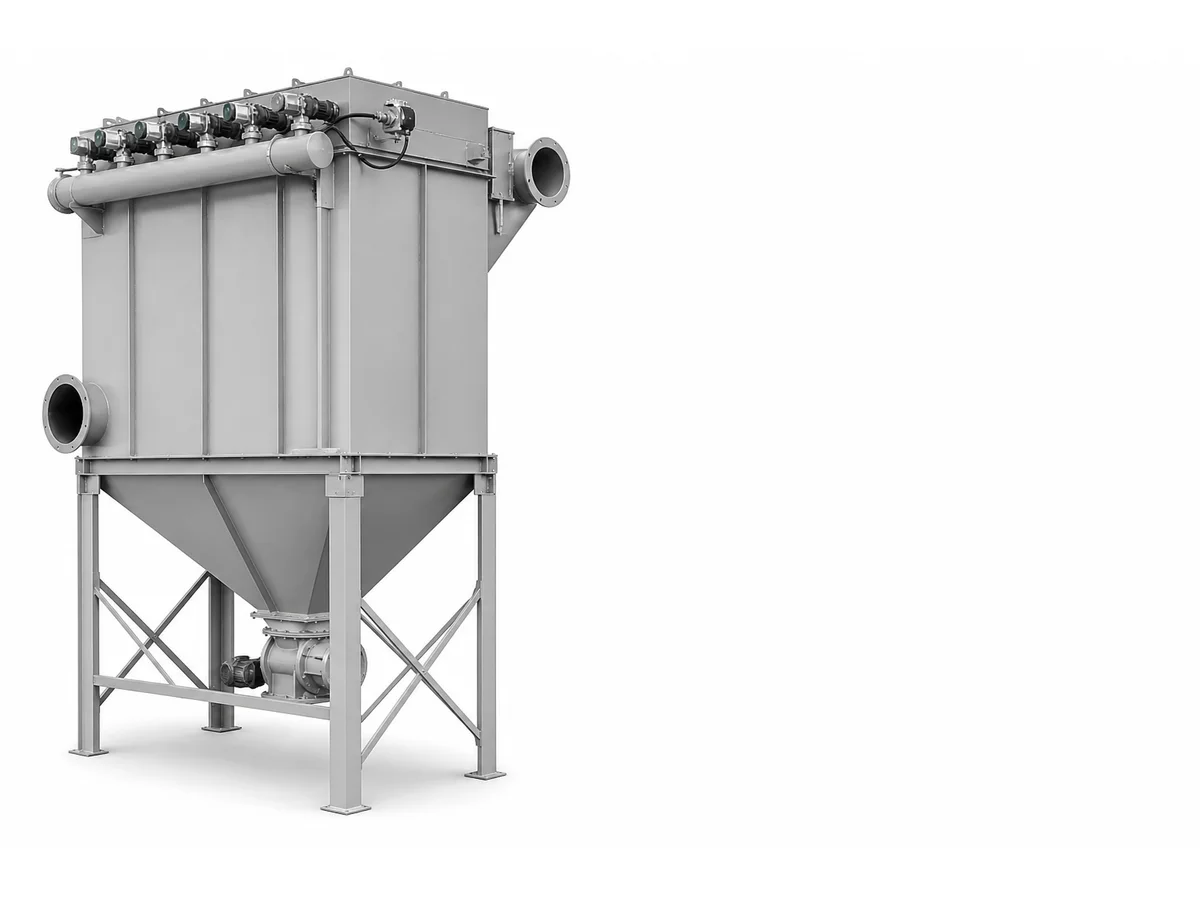
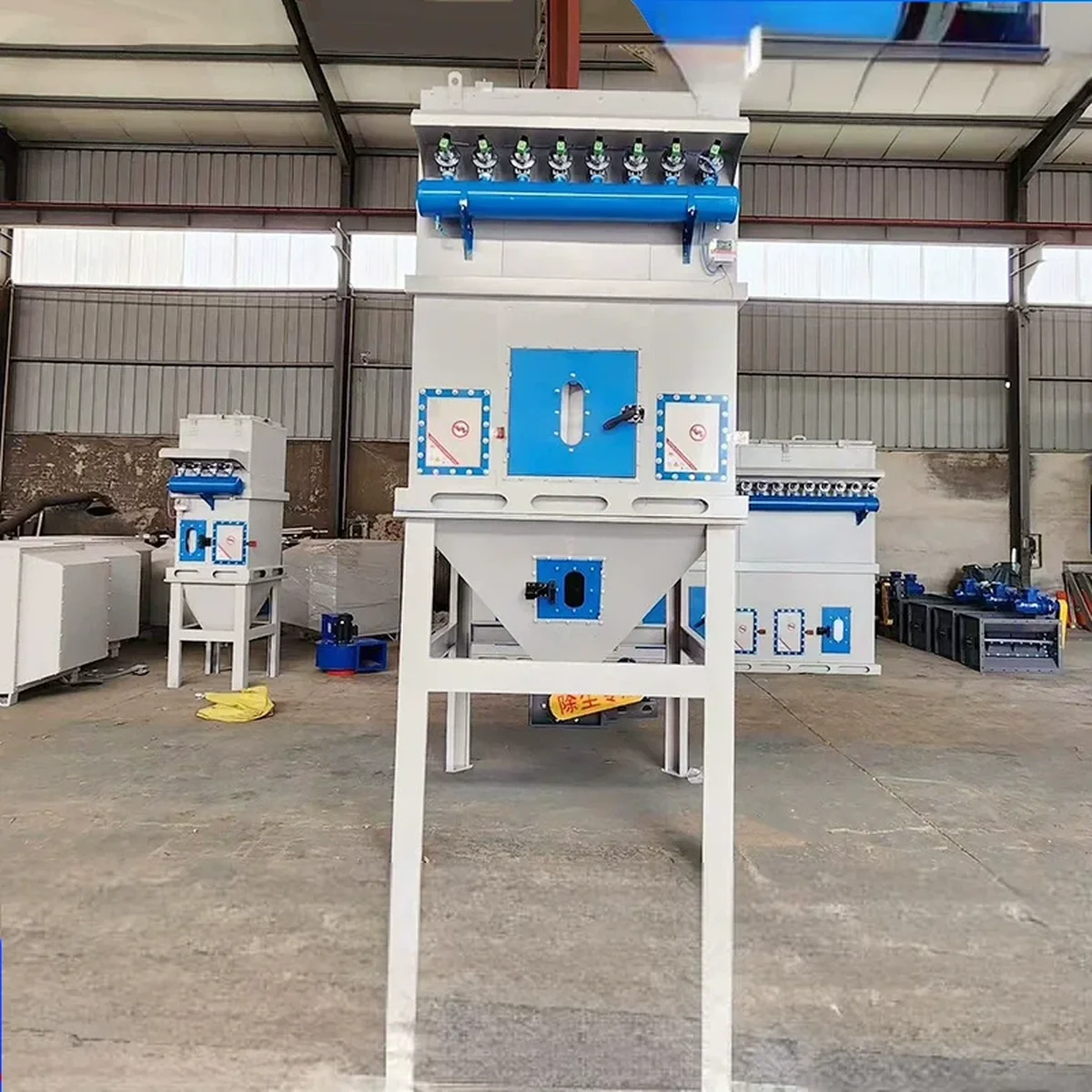
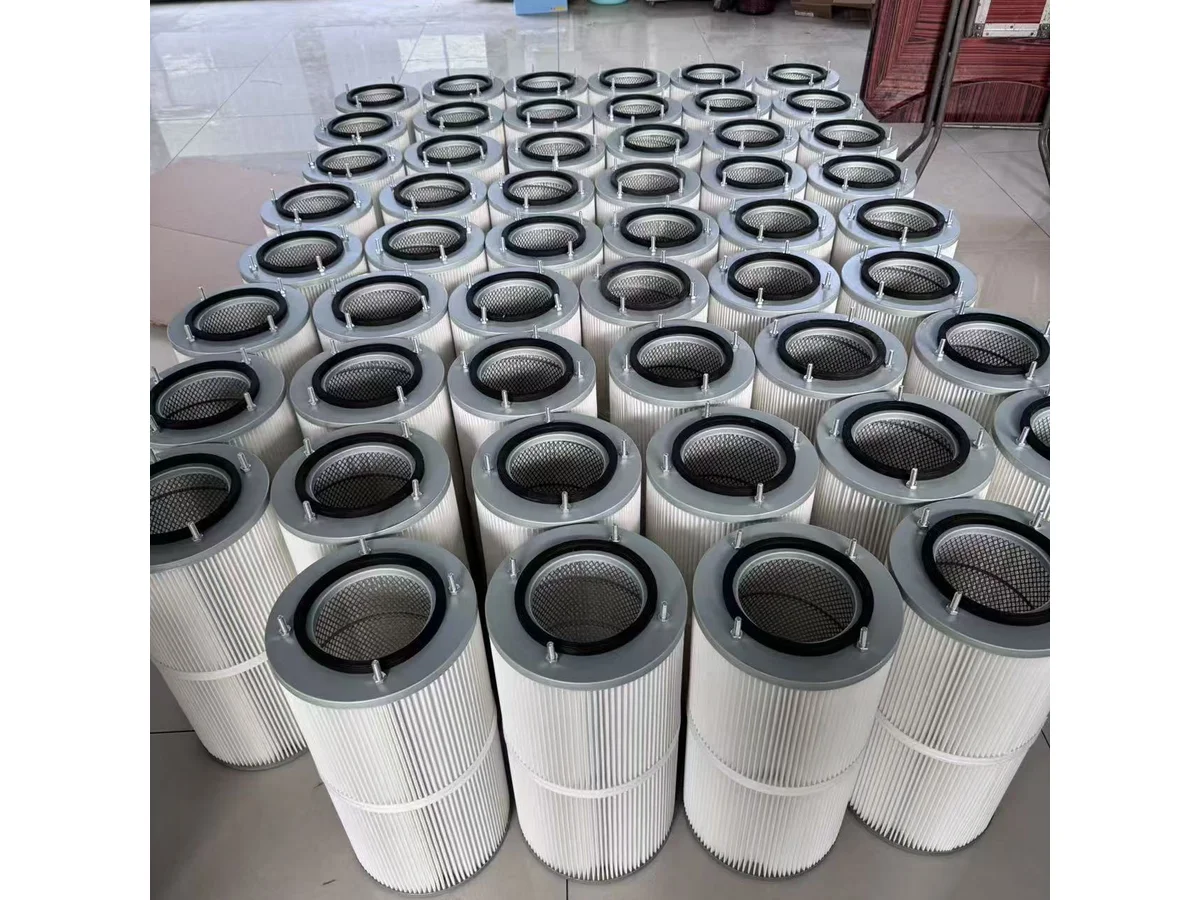
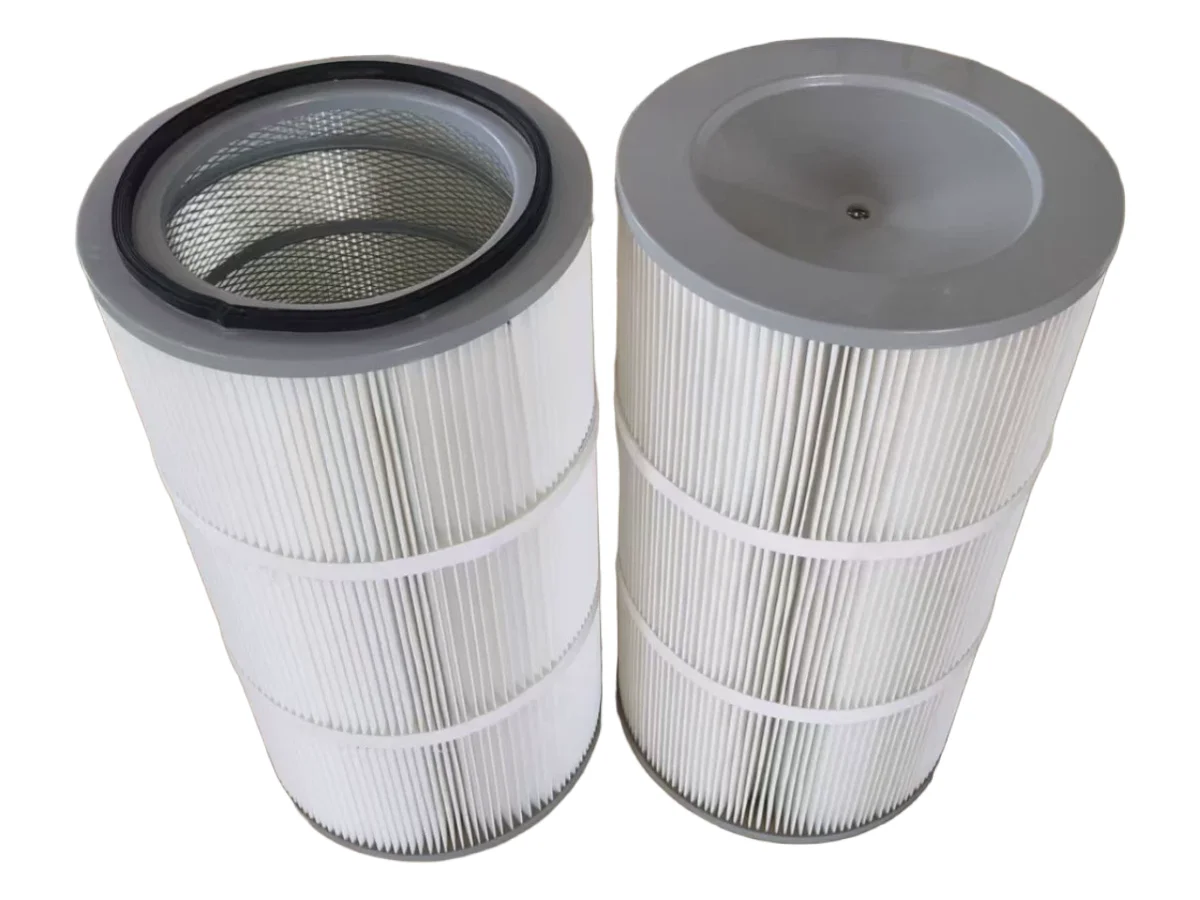
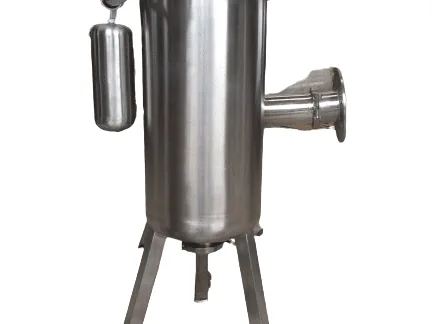
Collectors are not interchangeable, and the series names describe real differences in duty. A single-machine collector is mounted directly on the equipment it serves and handles smaller air volumes, which makes it the economical answer for one mixer or one packer, where a duct run would cost as much as the collector. Pulse-bag units cover larger flows and multiple pick-up points through ducting; the range spans roughly 18 to 99 m² of filter area and 2,160 to 21,600 m³/h of air, which covers most single-station duties in a powder plant. Rotary reverse-blow designs suit situations where compressed air is scarce, or where the dust is sticky enough that a pulse jet would smear it across the fabric. Air-box pulse units are specified where the highest efficiency is needed. A cyclone placed upstream is a pre-separator rather than a substitute: it removes the coarse fraction so the fabric filter is not doing work that a piece of steel could do more cheaply.
Series choice follows the dust and the air volume, not the plant's footprint
Filter media: the choice that decides life and temperature
The fabric decides both the life of the filter and the operating temperature the collector can tolerate. Polyester is the general-purpose choice for ambient food and chemical dusts and is comfortable to around 120 °C. Above that, the options climb through aramid, PPS and P84 to glass media at around 260 °C, each step costing more and tolerating a narrower band of chemistry. Where static is a concern — and in a powder plant it usually is — anti-static media and continuous earthing are the answer. Surface treatment matters as much as the base cloth: a PTFE membrane turns a depth filter into a surface filter so the dust cake releases on the pulse instead of embedding, and calendering or singeing smooths the surface to make that release easier still. Specifying a premium base cloth without a membrane often delivers less than the reverse.
Media sets the temperature limit; surface treatment sets how well it releases dust
Sizing by filtration velocity, not by airflow
Airflow is the number everybody quotes, and filtration velocity is the number that decides whether the collector works. Velocity is airflow divided by filter area, and it is what the dust actually experiences: too high, and particles are driven into the fabric faster than the cleaning pulse can release them, so pressure drop climbs, the effective filter area shrinks and extraction quietly fails. Different dusts tolerate very different velocities, which is why collectors are specified against a velocity rather than a volume — the working band sits roughly between one and four metres per minute depending on the series and the material. The symptom of an overloaded collector is familiar to every plant engineer: the hood used to work, now it does not, and nothing on the machine has changed. Before adding a larger fan, check the filter area against the airflow.
Airflow divided by filter area is what the dust actually experiences
Discharge and disposal of collected dust
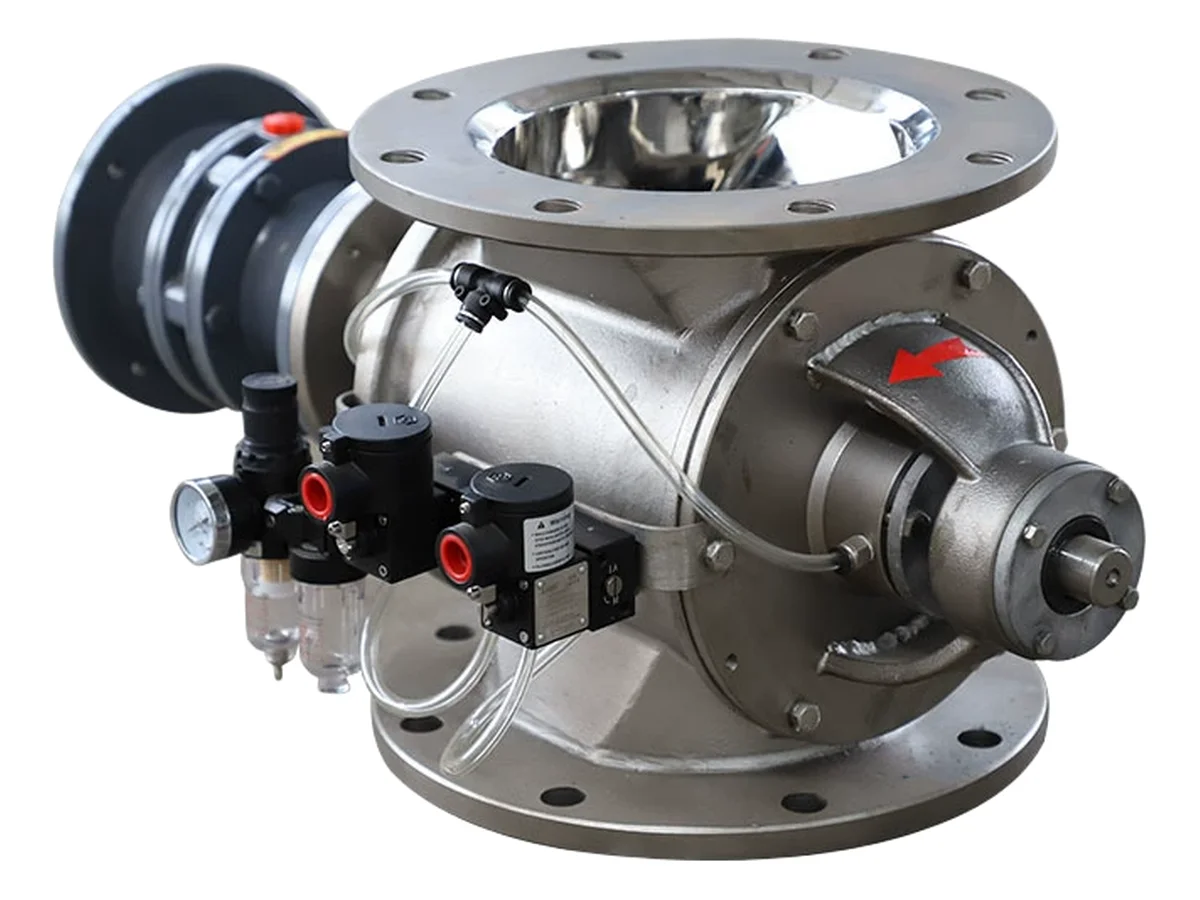
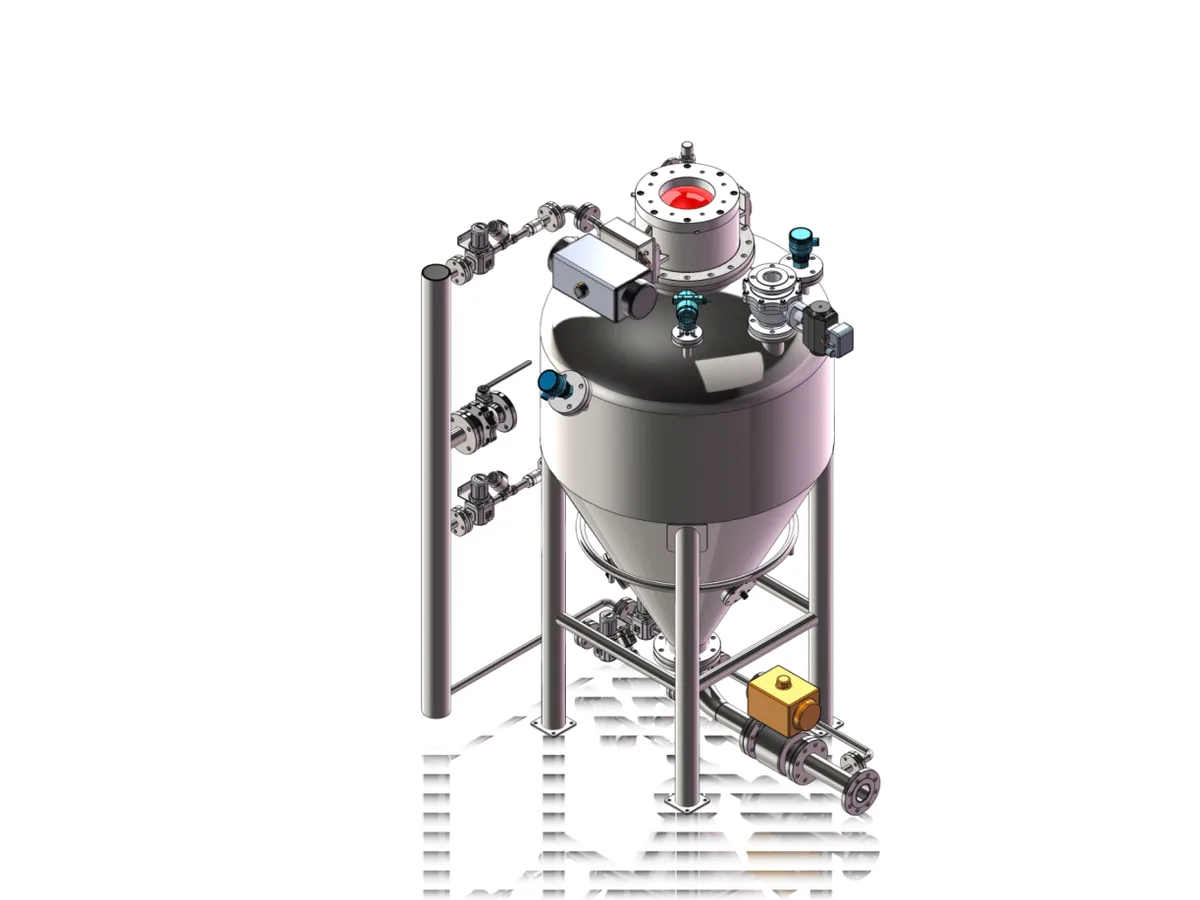
Collected dust has to leave the system, and the discharge arrangement is where designs go wrong most often. A hopper feeding a rotary valve, a double flap valve or a screw conveyor is the normal answer, and the choice follows the material: a double flap valve is simple and inexpensive but leaks slightly by design, while a rotary valve seals better and can feed directly into a conveying line. Fine, cohesive dust bridges in a small hopper outlet, so the outlet should be generous and the hopper walls steep — one of the few places in a powder plant where a larger opening genuinely costs nothing. Where the dust is valuable it can be returned to the process; where it is not, it goes to a bag or a bin, and that changeover should be designed rather than improvised. A collector that must be stopped and opened to be emptied will be emptied late.
A generous, steep outlet is what stops collected dust bridging in the hopper
Combustible dust: containment is not enough
Containment and extraction reduce exposure, but they also concentrate dust in one place, and that place is where an explosion would start. A collector handling a combustible powder is a recognised hazard point, which is why units for those duties are offered with explosion venting, and why the collector is normally sited outdoors or against an external wall with the vent ducted to a safe area rather than into the working room. Earthing must be continuous through the housing, the cages, the ducting and every flexible connection, because an isolated conductive part is exactly what a static discharge needs. Where a risk assessment calls for it, the alternatives to venting are suppression or isolation devices that stop a pressure wave travelling back down the duct into the building. The duct is the path — protecting the collector while leaving the duct open protects very little.
Venting only helps if the duct cannot carry a pressure wave back into the building
Maintenance that keeps extraction working
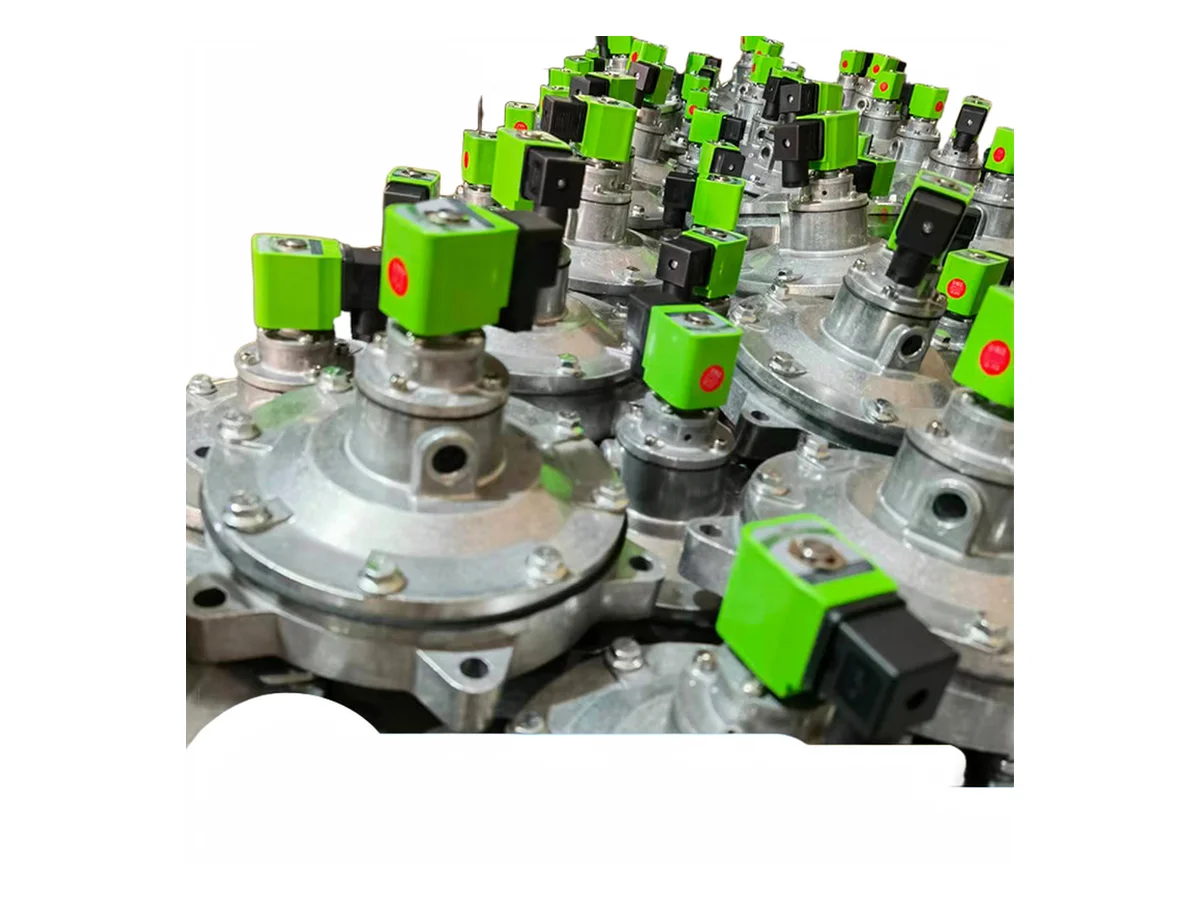
Extraction fails gradually and silently, so it needs scheduled attention rather than reactive repair. Filter elements should be inspected at a fixed interval and replaced once a cleaning pulse no longer restores pressure drop; a differential pressure gauge across the filter turns that judgement into an observation rather than a guess. Pulse valves are the second wear item — a valve that has stopped opening leaves a whole row of bags doing nothing, and the symptom appears as slowly rising pressure drop instead of as an alarm. Ducting should be checked for build-up, particularly on horizontal runs and wherever velocity drops, because settled dust in a duct is both a blockage and a fuel load. And the discharge path should be verified as genuinely discharging, since a hopper that has quietly filled only announces itself when the dust reappears in the room.
A differential pressure gauge turns filter condition from a guess into a reading
Process Flow
Typical steps covered in this article.
Source Containment
Local Extraction
Filtration
Safe Disposal
Typical Applications
Bag dump stations
Mixer loading
Packaging lines
Silo filling
Equipment
Related Products
Explore equipment commonly used with the processes described in this article.