Vibro Sifter Faults: Blinding, Mesh Tearing and Drive Problems
Screen blinding, torn mesh and hot bearings account for nearly every vibrating sifter call-out. Each has a specific cause — and none of them is fixed by turning the machine up.
Blinding and pegging are material-mesh interaction problems, solved by motion, media or moisture control.
Premature mesh tearing almost always traces back to tensioning, impact or worn support rubbers.
Bearing heat and noise in the exciter are the earliest warning of drive failure.
Rising motor temperature usually indicates mechanical resistance or overload, not an electrical fault.
Routine checks at shift start catch most failures before they stop production.
Technical Overview
Why sifters get blamed for material problems
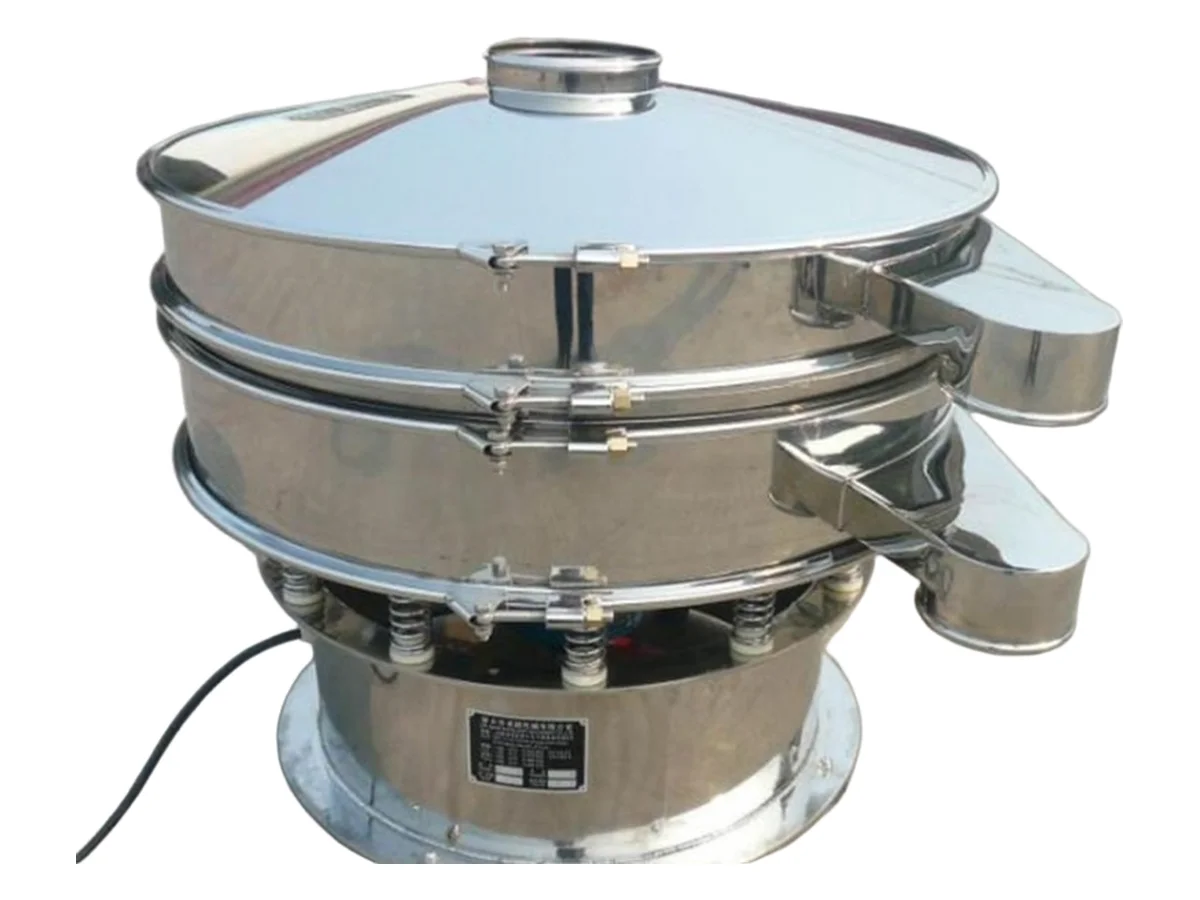
A vibrating sifter is a mechanical device doing one thing: presenting powder to an aperture and letting the small fraction pass. It has no feedback, no control loop and no ability to adapt. When the powder changes — a new lot with more fines, higher moisture, a different particle shape — the sifter keeps doing exactly what it did before, and the symptom shows up as a quality deviation attributed to the machine. The useful diagnostic step is to establish what changed upstream before touching the screen.
Blinding and pegging
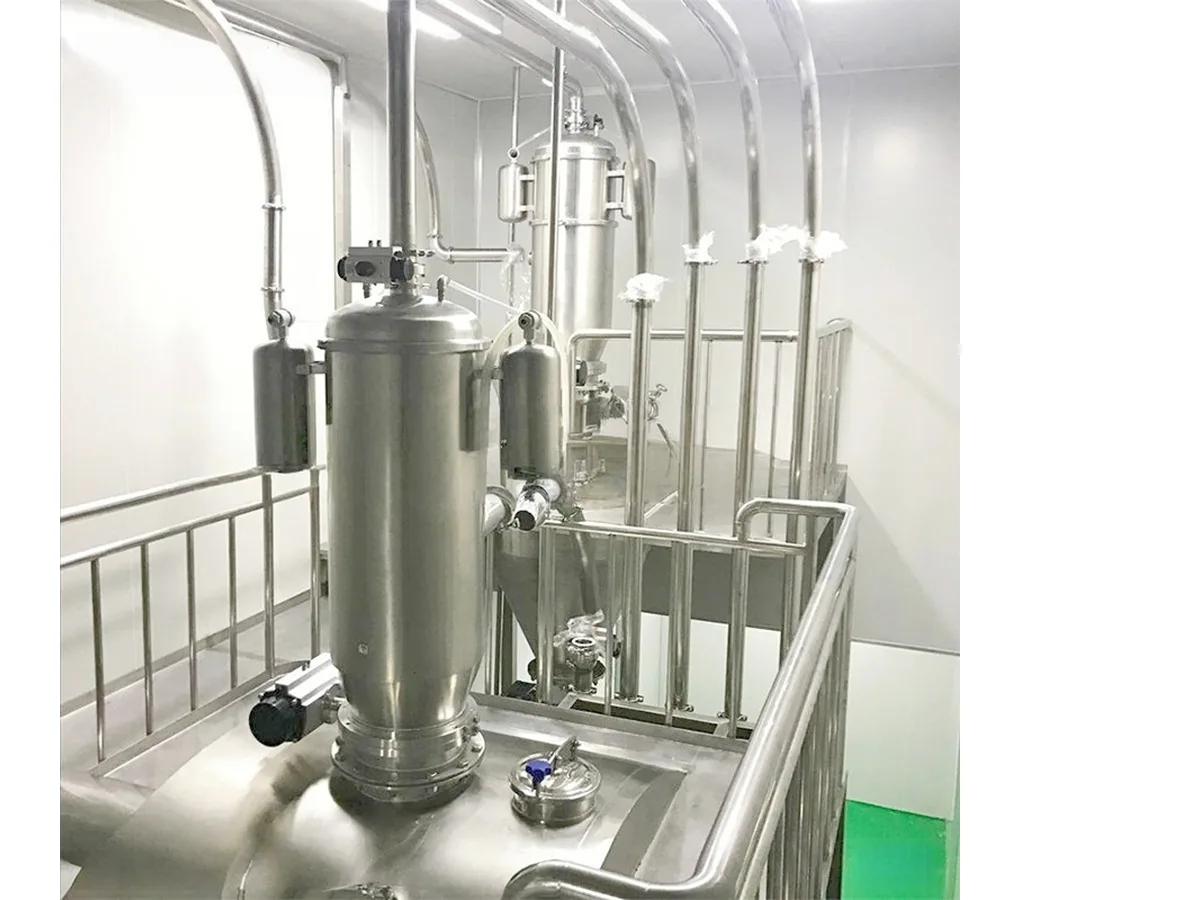
Blinding is the clogging of mesh openings by fine particles; pegging is near-size particles wedging in the apertures. Both cut throughput and both force a stop for manual cleaning. The drivers are moisture, cohesion, electrostatic charge and airflow. Antiblinding measures include ball decks or sliders beneath the mesh, ultrasonic excitation of the screen surface, managing the moisture content of the feed, and making sure the sifter is not being flooded by an upstream surge. Where the sifter is fed by a vacuum receiver, the pulsating discharge is a frequent and overlooked cause of blinding.
Mesh tears before its expected life
Early mesh failure is usually mechanical rather than a defect in the cloth. The common causes are uneven or incorrect tension at installation, material dropped directly onto the deck from height, worn support rubbers letting the deck flex, and a mesh specification that is not suited to the duty. Start by checking tension against the maker's specification and look for an impact plate or feed box if the product lands in one spot. Logging mesh life by deck position makes the outlier obvious and tells you whether the problem is the cloth or the installation.
Excessive vibration and structural cracks
Vibrating machinery that begins to vibrate more harshly is telling you something has loosened. Worn isolator springs, unbalanced exciter weights, loose fasteners and fatigue cracking at welds or supports are the usual sequence. Left alone, the extra vibration accelerates wear on everything mounted to the same structure. Inspect the frame, side plates and spring condition on a fixed interval, torque the fixings, and record the finding even when nothing is wrong — the trend is what makes a future diagnosis fast.
Bearings and motors in the exciter
The eccentric-weight drive runs under continuous load, and its bearings are the first component to go. Contaminated or missed lubrication, damaged seals and misalignment all show up first as a temperature rise, then as noise, then as a seizure. Motor overheating has the same signature but a wider set of causes: overload, blocked cooling and ventilation, or mechanical resistance from a failing bearing. Because the sifter environment is dusty and often hot, check that the motor's ambient rating and enclosure suit the location before assuming an electrical problem.
Dust containment and hygiene
A sifter fluidises the product by design, which means any gap in the lid seal, inlet or outlet flexible connection becomes a dust source. Worn cover seals and clamps, torn flexible sleeves and covers left open after a mesh change are the recurring causes. In food and pharmaceutical work the disassembly time matters as much as the containment: designs that open without tools, with smooth internal surfaces and no ledges, make cleaning validation realistic rather than theoretical.
A maintenance routine that works
Daily: listen and feel for change, check the differential pressure or bed depth, confirm the dust extraction is running. Weekly: inspect the mesh for tears or pegging, verify the flexible connections. Monthly: check spring condition, motor amperage against commissioning baseline, torque the fixings. Annually: full audit, sensor and timer calibration, structural inspection, and a review of how long each mesh actually lasted. Recording even brief notes turns a breakdown history into a specification for the next machine.
Ultrasonic de-blinding and when it pays for itself
For powders that blind persistently, ultrasonic excitation is the usual next step. A transducer drives the screen mesh at ultrasonic frequency through a resonant ring, which breaks the friction bond holding near-size particles in the apertures and keeps the mesh open without raising the amplitude of the main vibratory motion. The attraction is that it addresses blinding directly rather than by increasing mechanical energy, so product degradation and wear do not rise with it. It is not free, and it is not always necessary: for mildly cohesive products a ball deck or a change of mesh specification is often enough. The sensible test is whether blinding is costing measurable throughput or cleaning time. If it is, the payback is usually short; if it is not, the simpler measure is the better buy. Either way, the decision should follow a trial with the actual material rather than a general preference for the technology.