Lump Breaker Selection: How Rotor Speed and Grid Opening Set the Output
Specifying a lump crusher comes down to three coupled choices — how hard the lumps are, how big you need them to end up, and how much fines you can tolerate. Here is how they interact.
Grid opening sets the output lump size; rotor speed and bar geometry set how gently you get there.
Low rotor speed minimises fines — important when the product specification is defined by PSD.
Hard, cemented or frozen lumps need high torque and hard-faced or carbide-tipped bars.
Wet sticky cakes blind the grid; heated bars or a wider opening are the usual answer.
Confirm inlet and outlet flanges against the upstream hopper and downstream airlock before ordering.
Technical Overview
What a lump breaker actually is
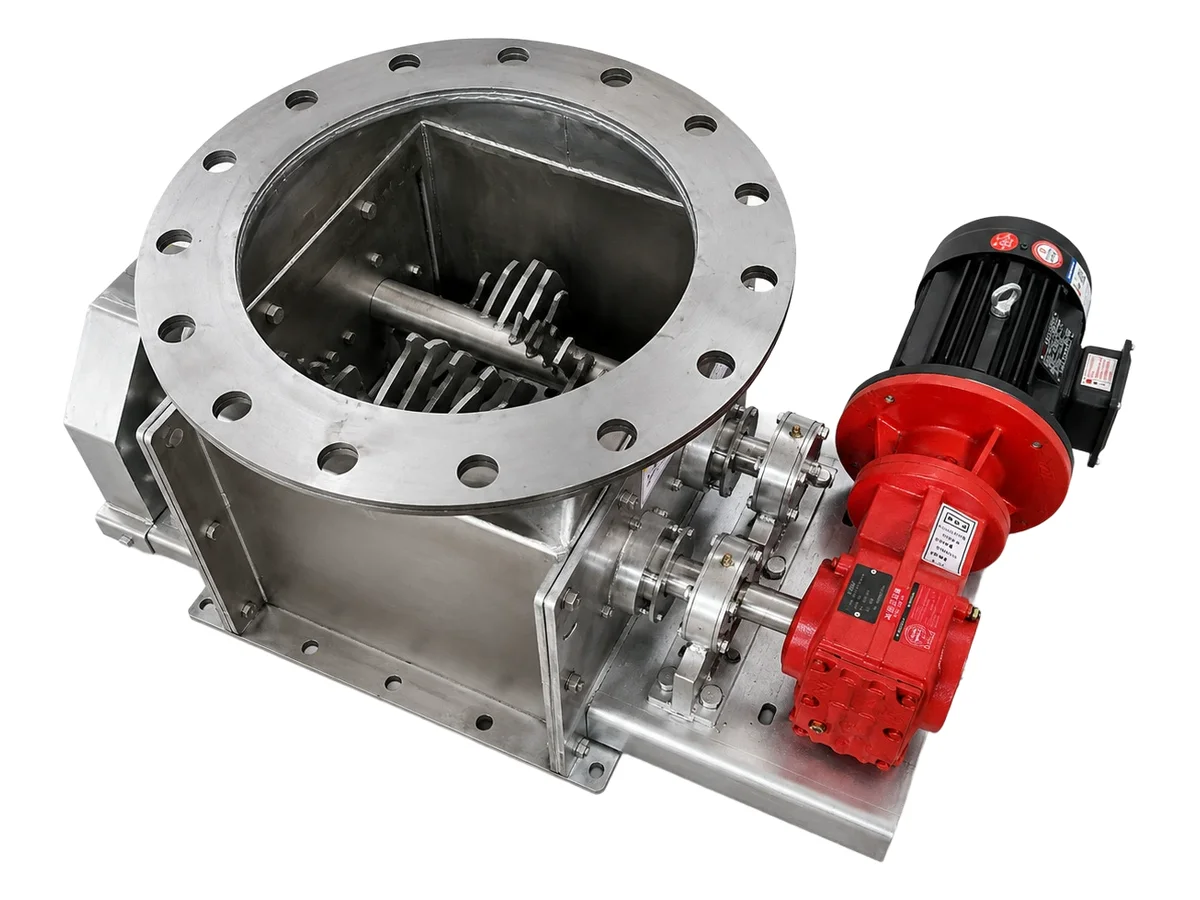
A lump breaker — also sold as a lump crusher, delumper or nibbler — is a low-speed, high-torque size reduction machine. Breaking bars or blades mounted on a horizontal shaft crush oversized material against a sizing grid or breaker plate. It sits upstream of a rotary valve, screw feeder, conveyor or mill, and its job is not to grind the product to a fine powder but to take large hard masses back down to a size the rest of the line can handle. Confusing it with a cone mill or hammer mill is the most common specification error in this category.
Grid opening: the output specification
The sizing grid is the part that sets the result. Interchangeable grids with openings in the low-millimetre range up to tens of millimetres let the same machine serve different products, and the opening should be chosen against the downstream equipment rather than in isolation — a rotary airlock with a given pocket geometry will tolerate a certain maximum lump and no more. Two practical cautions: a grid that is too fine takes disproportionate power and generates fines the process may not want, and a very sticky product will blind the grid regardless of opening, in which case a wider grid plus a second-stage device works better than one fine stage.
Rotor speed and why slower is usually better
Lump breakers run at low rotor speed, typically in the tens of revolutions per minute. The reason is that most of the material passing through the machine does not need breaking at all. Running fast subjects every particle to repeated impact, generating fines, heat, dust and wear for no benefit. Slow, high-inertia rotation with rugged outboard bearings gives a machine that is quiet, smooth and predictable, and it keeps the product's particle size distribution close to where it started. Speed matters most when the product is friable — fragile granules, crystals or food inclusions that must survive the process intact.
Matching bars to the material
The breaking bars take the wear, so their specification follows the product. Standard hardened steel handles most chemical and food powders. Highly abrasive mineral duty calls for hard-facing or tungsten carbide tipping; in severe service, bars on that class of material are a routine consumable with replacement intervals counted in months rather than years. Where the product is corrosive or the line is washed down, stainless bars and a polished housing are required. Wet sticky cakes may need heated bars or a non-stick coating to stop material building up on the bars and grid.
Throughput and drive sizing
Capacity is stated in mass or volume per hour and is entirely dependent on what fraction of the feed actually needs breaking. A machine handling occasional lumps in a free-flowing powder will process far more per hour than the same machine fed a continuous stream of hard cake. Size the drive for the worst realistic case, including start-under-load after the machine has sat full between batches, because that is when motors trip. A gear reducer with an adequate service factor and a soft-start or variable-frequency drive protects both the drive train and the bars through the starts that do most of the damage.
Integration into the line
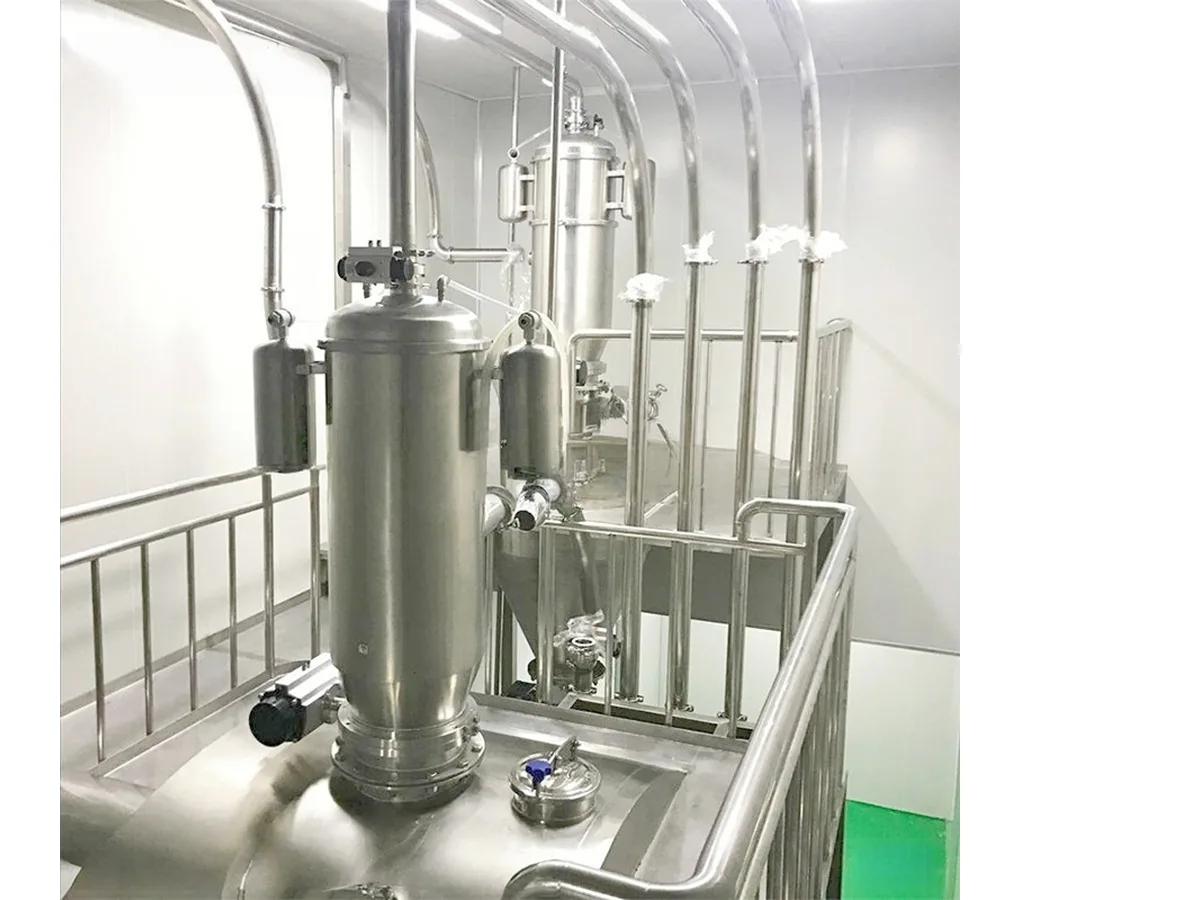
In practice the lump breaker is installed directly above the rotary airlock or screw feeder that meters product into the conveying line, with transition chutes designed so no dust leaks at the joints. It is fed in turn by a bag dump station, big bag discharger, silo outlet or container unloader. Because the machine has a rotating shaft inside a housing, it needs the same explosion-isolation thinking as the rest of the system when handling combustible dust: earthing, correct clearances, and protection determined by a documented assessment. CHUYAO supplies the breaker with the mating flanges and supports to bolt directly to the existing equipment, which removes the most common source of installation dust leaks.
Process Flow
Typical steps covered in this article.
Lump Feed
Breaking Bars Impact
Sizing Grid
Discharge to Conveying
Fines Return to Process
Typical Applications
Breaking filter press cake before drying
Reconditioning caked sugar, salt or starch
Crushing compacted API or granulation masses
Reducing recycled plastics and rubber before grinding