What a Vacuum Powder Conveyor Actually Costs per Tonne to Run
Capital price is the visible half of a vacuum conveyor's cost. The other half sits in kilowatt-hours, compressed air, filter changes and the product you never lose — here is how to put numbers on it.
Energy per tonne, not motor power, is the number that compares two vacuum systems.
Compressed air for reverse-pulse cleaning is a real and often uncounted operating cost.
Filter elements are the dominant consumable; replacement interval drives the maintenance line.
Enclosed transfer recovers product that open handling loses, which often dominates the ROI.
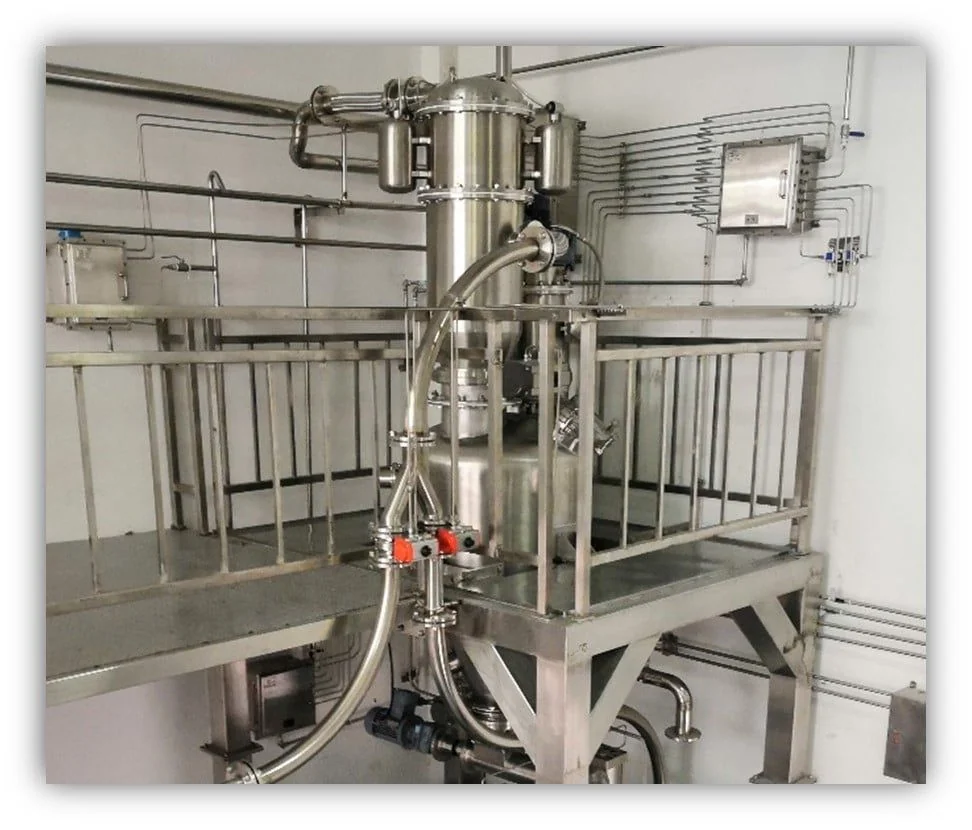
Route geometry — bends, lift height, straight runs — moves energy use more than most specifiers expect.
Technical Overview
Why motor power is the wrong comparison
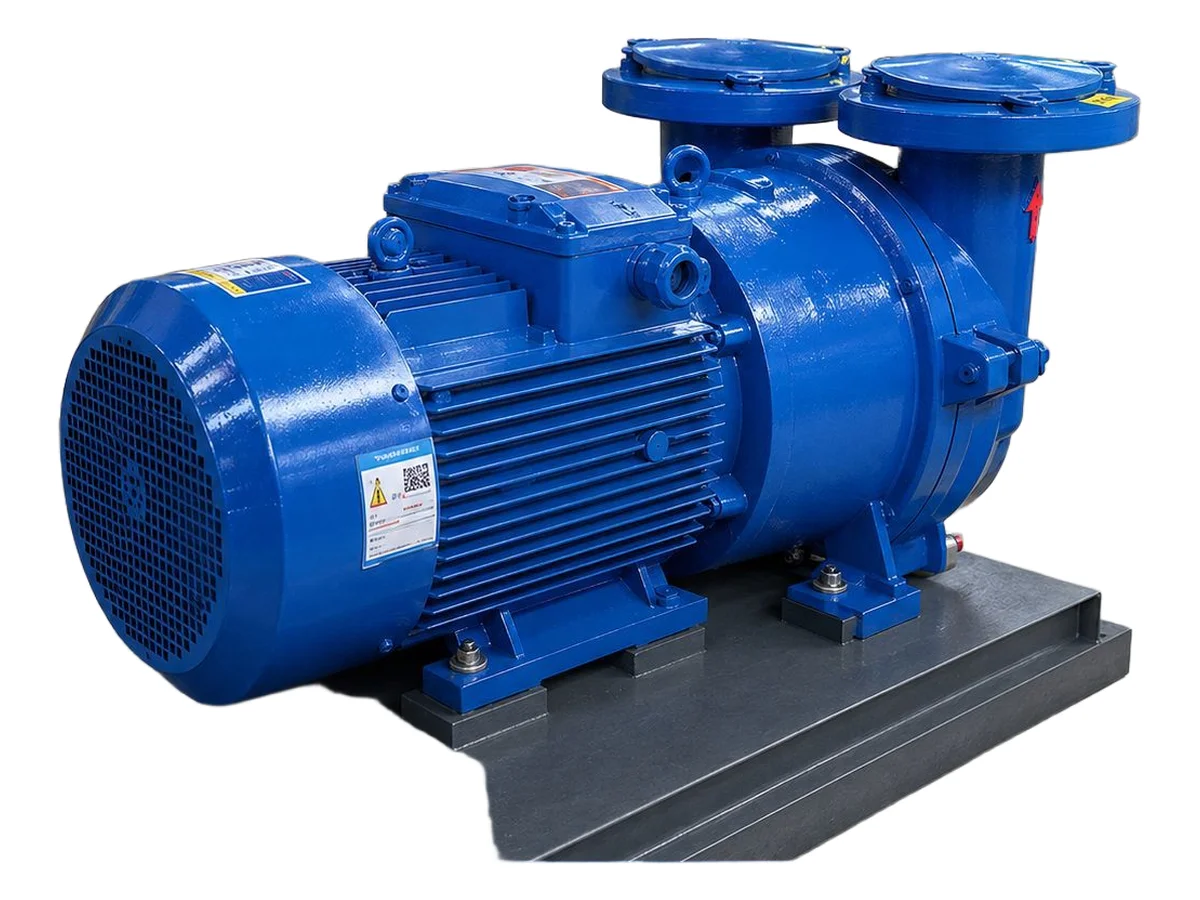
Two vacuum receivers can carry the same nameplate power and differ by a factor of two in energy per tonne delivered. What matters is the airflow the blower must move, the vacuum it must hold, and how much product that airflow carries per cycle. A system with generous pipe diameter and few bends moves the same tonnage at lower velocity and lower differential, which cuts both energy and wear. A system with a restrictive pickup or a loaded filter works the blower much harder for the same result. Comparing machines on motor size alone hides exactly the variable you are trying to optimise.
Where the energy goes
Most of the input energy becomes heat in the conveying air and friction between particles and pipe wall. Two design decisions dominate. The first is conveying velocity: it has to stay comfortably above the saltation velocity or the line plugs, but every metre per second above that minimum costs disproportionately in pressure drop and in bend wear. The second is the number of bends, since each one costs far more pressure than an equivalent length of straight pipe and is also where most wear and particle attrition happens. Adding a straight run after the pickup, before the first bend, is one of the cheapest efficiency measures available.
Compressed air: the hidden line item
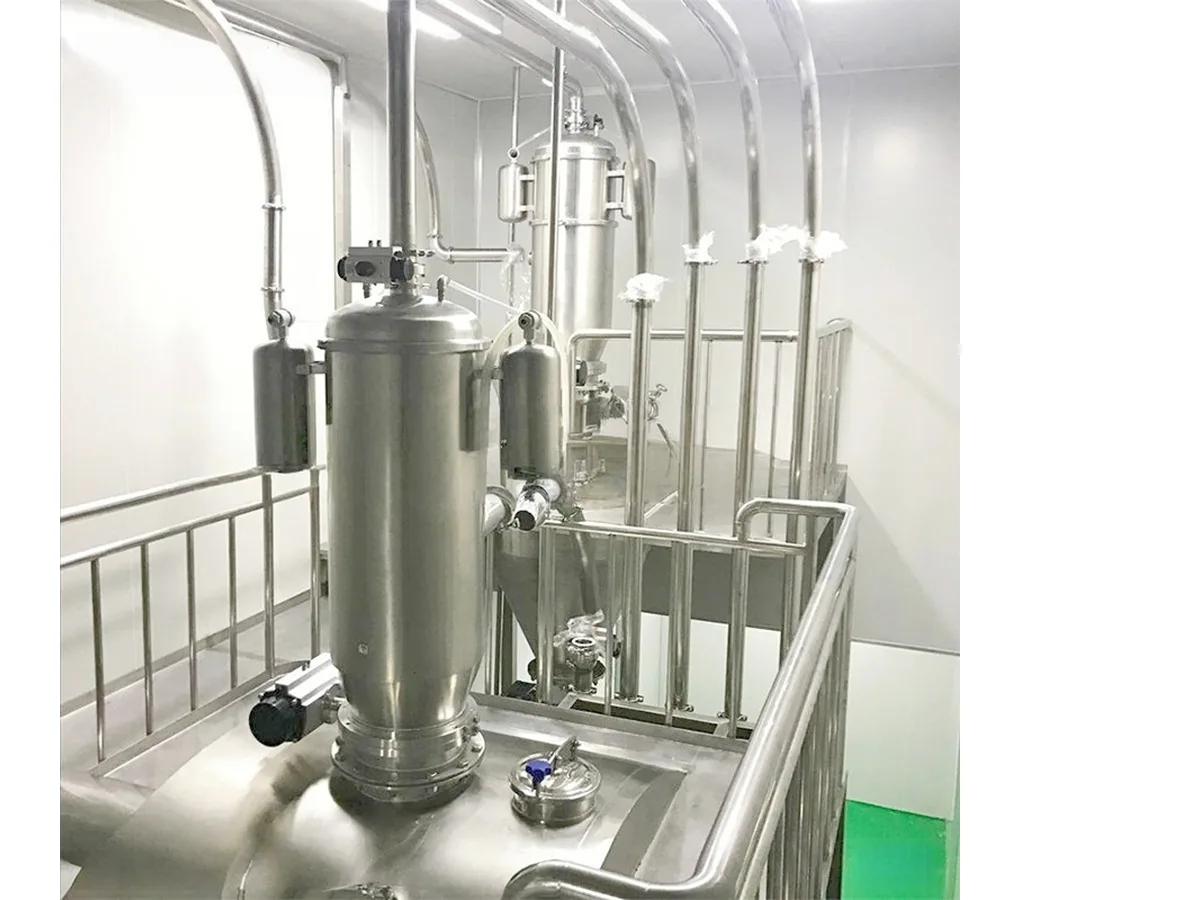
Reverse-pulse filter cleaning consumes compressed air, and in many plants compressed air is the most expensive utility per unit of energy. Cleaning on a fixed timer wastes air when the filter is clean and under-cleans when it is loaded. Cleaning on measured differential pressure uses only what the duty requires and typically cuts air consumption substantially, while also extending filter life by avoiding unnecessary pulsing. The air also has to be dry and oil-free; moisture in the pulse line is a classic cause of caked filter media that presents as a capacity problem.
Filter elements: the consumable that matters
Filter media is where the recurring cost sits. Replacement is driven by differential pressure, not by the calendar — once a full cleaning cycle no longer restores the baseline, the element is finished. The interval depends on dust characteristics, temperature and cleaning regime, and it shortens sharply with abrasive or sticky products. Substituting a lower-grade element to save on unit price is a false economy, because a failed element puts dust straight into the vacuum source, which is a far more expensive repair.
Labour, cleaning and downtime
The cost of enclosed transfer is best measured against the alternative. Manual handling means labour per bag, housekeeping time, exposure controls, and product left in the bag and on the floor. Enclosed vacuum transfer removes most of that and — critically — recovers product. For high-value powders, recovered material over a production year is frequently the largest single contributor to the return, and it is the item most often left out of the comparison. Downtime matters too: a system that cleans down quickly between products earns more than one with a marginally lower purchase price.
Leakage and the cost of a worn airlock
A vacuum system's weakest point is usually the discharge device. Rotary airlock clearance grows with wear, and leakage air is airflow the blower is providing but the conveying line is not using. The symptom is a gradual fall in conveying rate over months, often misread as a blower problem. Measuring clearance at each service and replacing the rotor when it exceeds the design limit is cheap insurance, both for capacity and, where the dust is combustible, for explosion isolation.
How to build the comparison
Ask each supplier for the same four things: airflow and vacuum at the design duty point, compressed air consumption per cycle, filter area and expected element life for your material, and a cycle time breakdown. Then convert to energy per tonne and add the consumables and labour lines. CHUYAO sizes vacuum systems against measured material data and the real route, so the quoted duty point is the one the plant actually gets — and the running cost follows from that rather than from a catalogue maximum.