Jet Milling: Ultrafine Grinding With No Moving Parts in the Grinding Zone
A jet mill has no media and no moving parts where the grinding happens. It grinds powder with powder — which is why it suits abrasive, heat-sensitive and high-purity products.
Size reduction happens by inter-particle collision, not by impact against media or hammers.
Supersonic nozzles convert compressed gas pressure into the kinetic energy that drives collisions.
An integrated classifier wheel sets the top cut and rejects coarse particles back to the grinding zone.
Gas expansion cools the chamber, which is why jet mills suit heat-sensitive products.
Energy consumption per tonne is high — jet milling is not a cheap way to make coarse powder.
Technical Overview
Grinding without media
A jet mill — also called an air jet mill, fluid energy mill or microniser — reduces particle size using high-velocity gas rather than mechanical force. Compressed air or inert gas is accelerated through nozzles arranged around a grinding chamber. Feed material is entrained into these jets and particles collide with one another at high relative velocity. Fracture occurs through impact and shear between particles, not against grinding media, hammers or screens. Because there is no media to wear, contamination from the grinding elements is largely eliminated, which is the main reason the technology is standard in pharmaceutical and high-purity mineral work.
The gas path, step by step
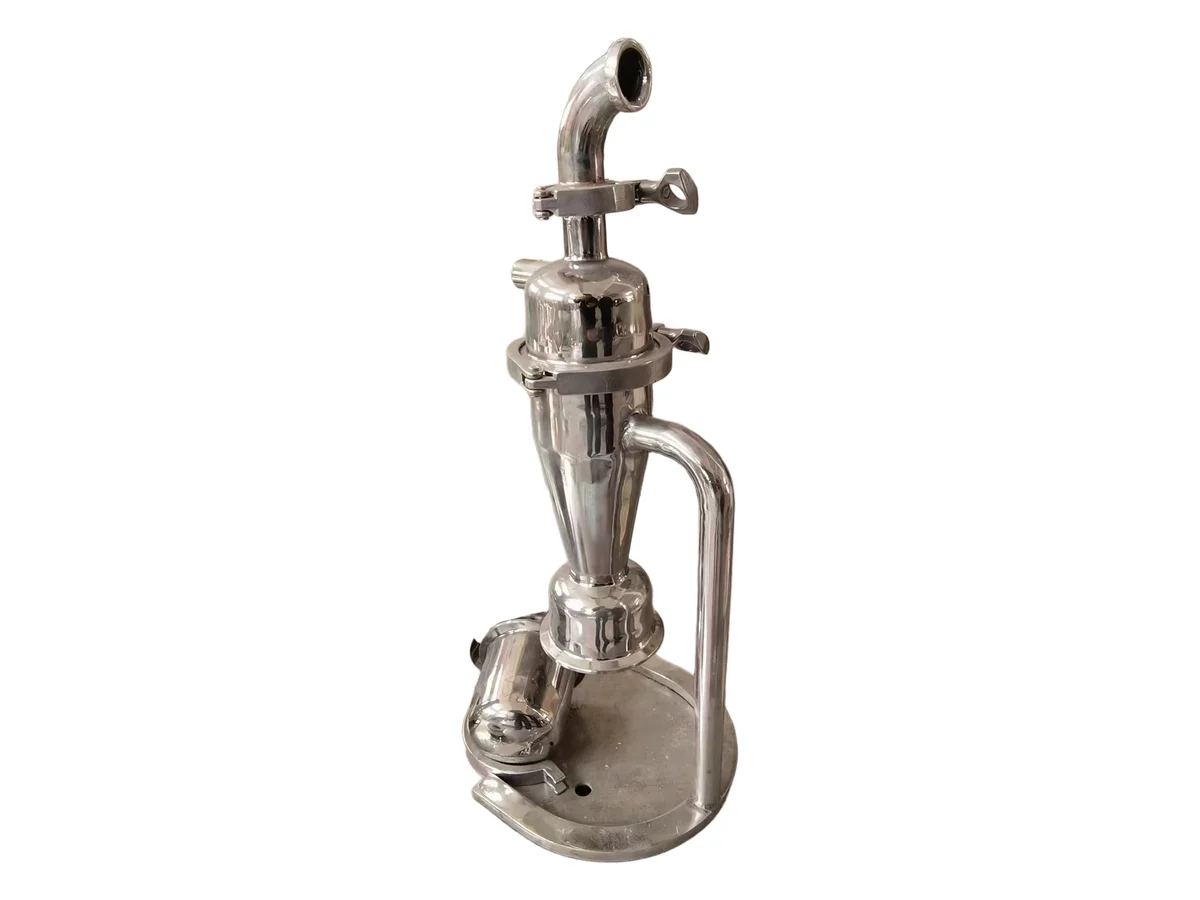
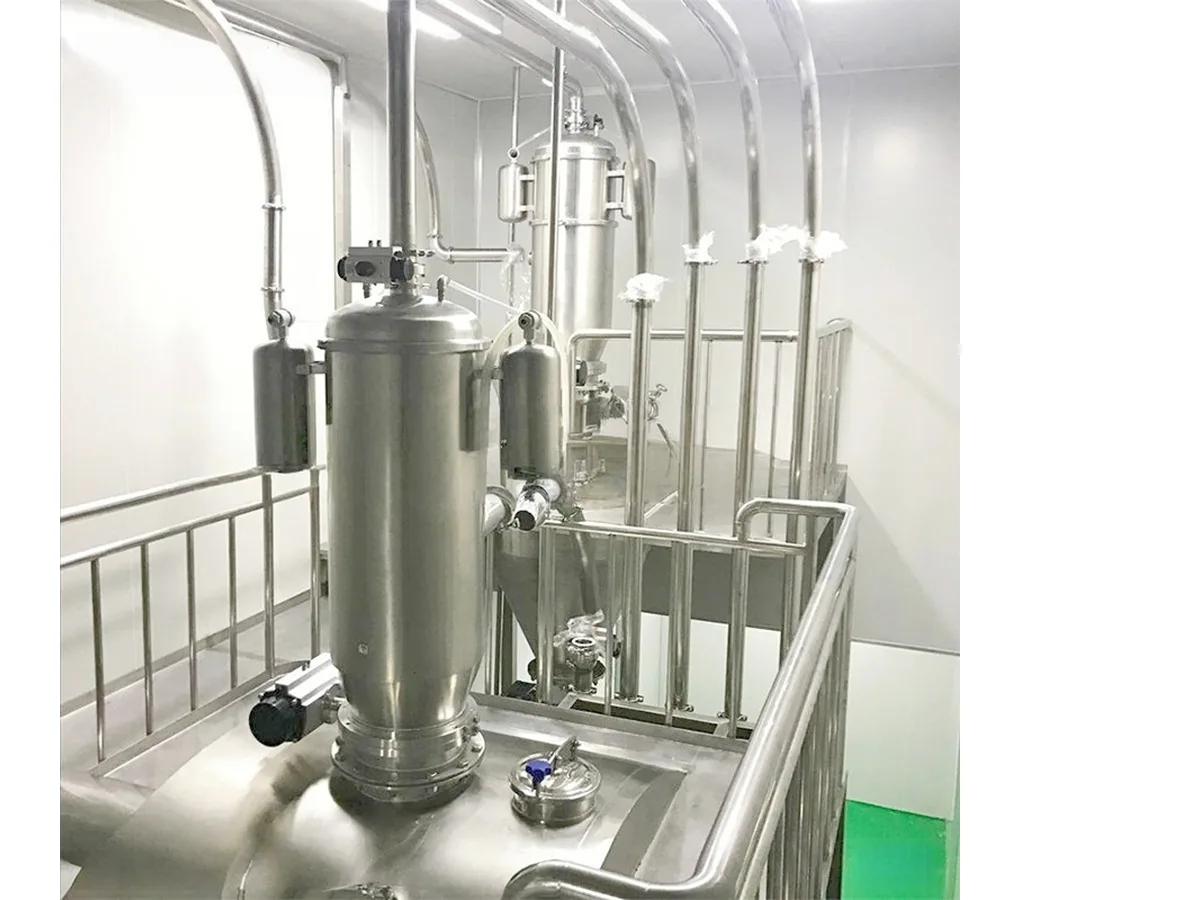
The cycle begins with compressed gas preparation: filtration and drying to remove oil and moisture, since either will contaminate product and foul the nozzles. Clean, dry gas then passes through Laval-type nozzles, which convert pressure into velocity and produce a supersonic jet. Feed metered into the chamber is fluidised by these jets and thrown into the central grinding zone, where particles travelling at different velocities collide repeatedly. Fines migrate upward with the exhaust gas into the classification zone. Oversize particles are rejected by the classifier and returned to the grinding zone. Product is finally collected in a cyclone and a final filter stage.
Classification is what makes the product
In a fluidised-bed jet mill with an integrated classifier wheel, the cut point is set by wheel speed. Particles in the classification zone experience the drag of the gas pulling them inward and the centrifugal force of the wheel throwing them outward. Fine, light particles overcome the centrifugal barrier and pass through to collection; coarse particles are thrown back into the grinding zone. Faster wheel rotation raises the centrifugal force, so only finer particles pass — hence a higher speed gives a finer cut. Because classification is continuous, product leaves as soon as it qualifies instead of being ground past specification.
Particle size depends on more than wheel speed
Wheel speed sets the cut, but the delivered distribution depends on several interacting variables: grinding gas pressure and flow, feed rate and its stability, feed particle size, and the material's hardness, brittleness and toughness. Moisture and cohesion also matter, because a product that packs or smears will not fracture cleanly. This is why the achievable median size and distribution width are established by testing the actual material rather than read from a brochure. Two products described identically on paper can produce very different results in the same mill.
No moving parts means less wear — but not none
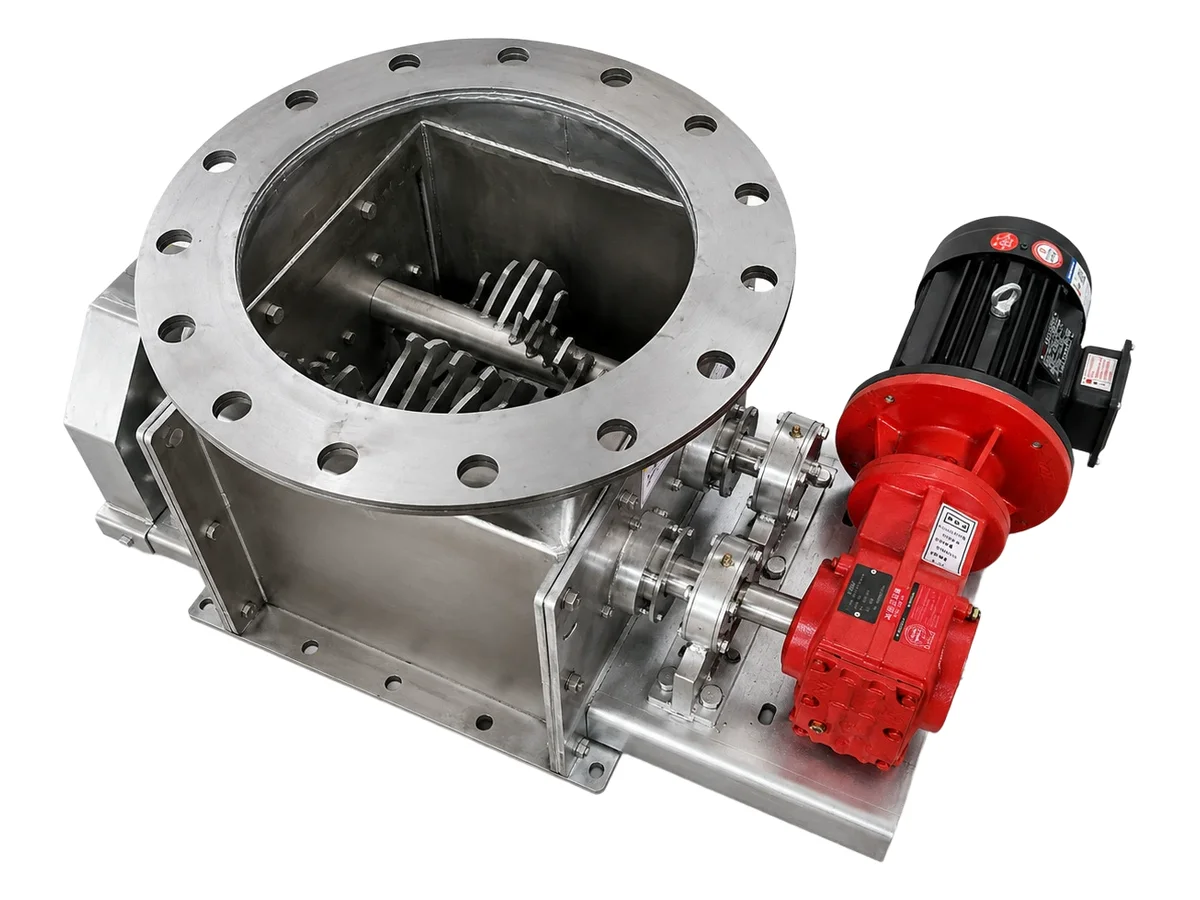
The absence of media eliminates the dominant wear mechanism of mechanical mills, but the nozzles, the chamber walls and the classifier wheel are still exposed to high-velocity abrasive particles. Highly abrasive products wear these components, and the chamber usually carries a wear liner — ceramic, tungsten carbide or a hard-facing — that is inspected and replaced on condition. The classifier wheel and its seals need periodic attention as well. 'No moving parts' refers to the grinding action, not to a maintenance-free machine.
Heat-sensitive and reactive products
Compressed gas expands as it leaves the nozzle, and that expansion absorbs heat — which is why jet milling is described as low-temperature grinding. Products that soften, melt or degrade under frictional heating can often be micronised without thermal damage. Where the product oxidises or is pyrophoric, the circuit can be run on nitrogen or argon in closed loop, with the gas filtered and recirculated. Inert operation needs the oxygen monitoring and shutdown logic that the hazard assessment specifies.
The honest limitation
Jet milling is energy-intensive. Compressing gas is expensive per unit of energy delivered to the particle, so cost per tonne is high compared with mechanical grinding at the same feed size. It also expects a reasonably fine feed — it is a micronising step, not a primary crusher. Used where it belongs — fine, narrow, contamination-sensitive product — it is difficult to beat. Used to make coarse powder it is simply expensive. CHUYAO sizes jet mills against measured material behaviour and target distribution, and will say plainly when a different mill is the better route.