Displaced air during filling is the main dust source and must be extracted, not merely filtered at the end.
FIBC static classification (Type A/B/C/D) must match the earthing provisions on the filler.
Weighing accuracy depends on isolating the bag from the frame, not only on load cell quality.
Combustible dust filling areas are typically classified Zone 21 and need rated components.
Automatic cut-off and interlocked bag release protect both the operator and the batch record.
Technical Overview
Three hazards, one workstation
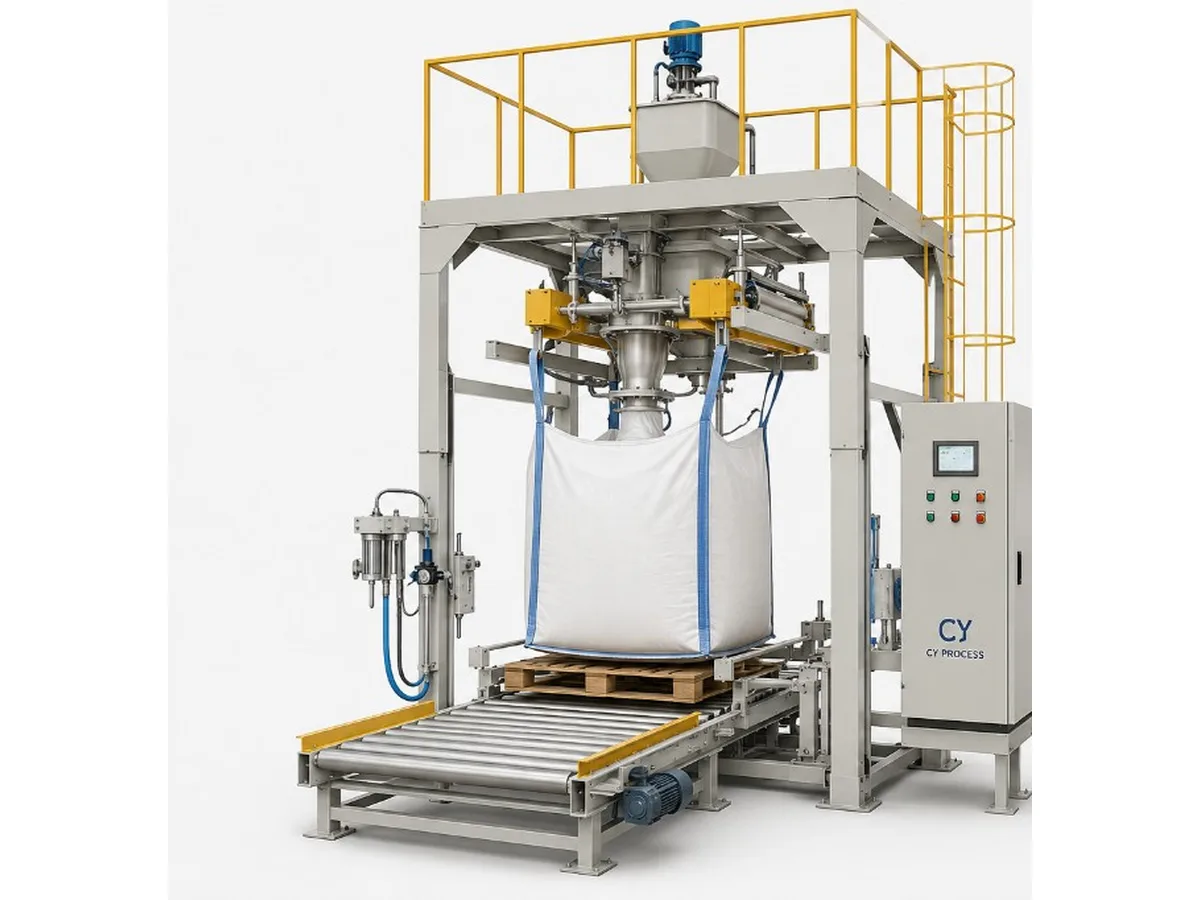
Packing a ton bag looks like a simple fill-and-weigh operation. It is actually the point in a powder line where airborne dust, static charge and a suspended tonne of product arrive together. Air is displaced as the bag fills, and that air carries fines out of the bag neck. Powder moving through fabric and film generates electrostatic charge by contact. And the bag itself, once full, is a heavy load hanging above the operator. Any station design that addresses only one of the three has a gap.
Containment starts at the bag neck
The bag neck connection is where containment succeeds or fails. An inflatable cuff that expands around the bag inlet, or a mechanical clamp of the right size, creates a seal before filling begins. Where the two are combined with a dual-wall fill head — an inner product tube and an outer vent path — the displaced air is drawn away to the collector instead of pushing product back out past the seal. Getting the bag specification into the enquiry matters here, because a spout diameter that does not match the fill head leaks no matter how good the clamp is.
Static control and FIBC types
Powder flowing across polypropylene fabric generates charge, and the FIBC's construction decides what happens to it. Type A bags have no static protection and are only suitable for non-combustible products. Type B prevents propagating brush discharges but is not earthed. Type C is conductive and must be grounded to the filler frame before the spout is opened. Type D is static-dissipative and works without a ground connection. Which type applies, and whether grounding verification interlocks are required, follows from the documented assessment for the specific dust. Continuity should be verified, not assumed — and the connection has to be made before the spout opens, not after.
Weighing and dust-tight discharge
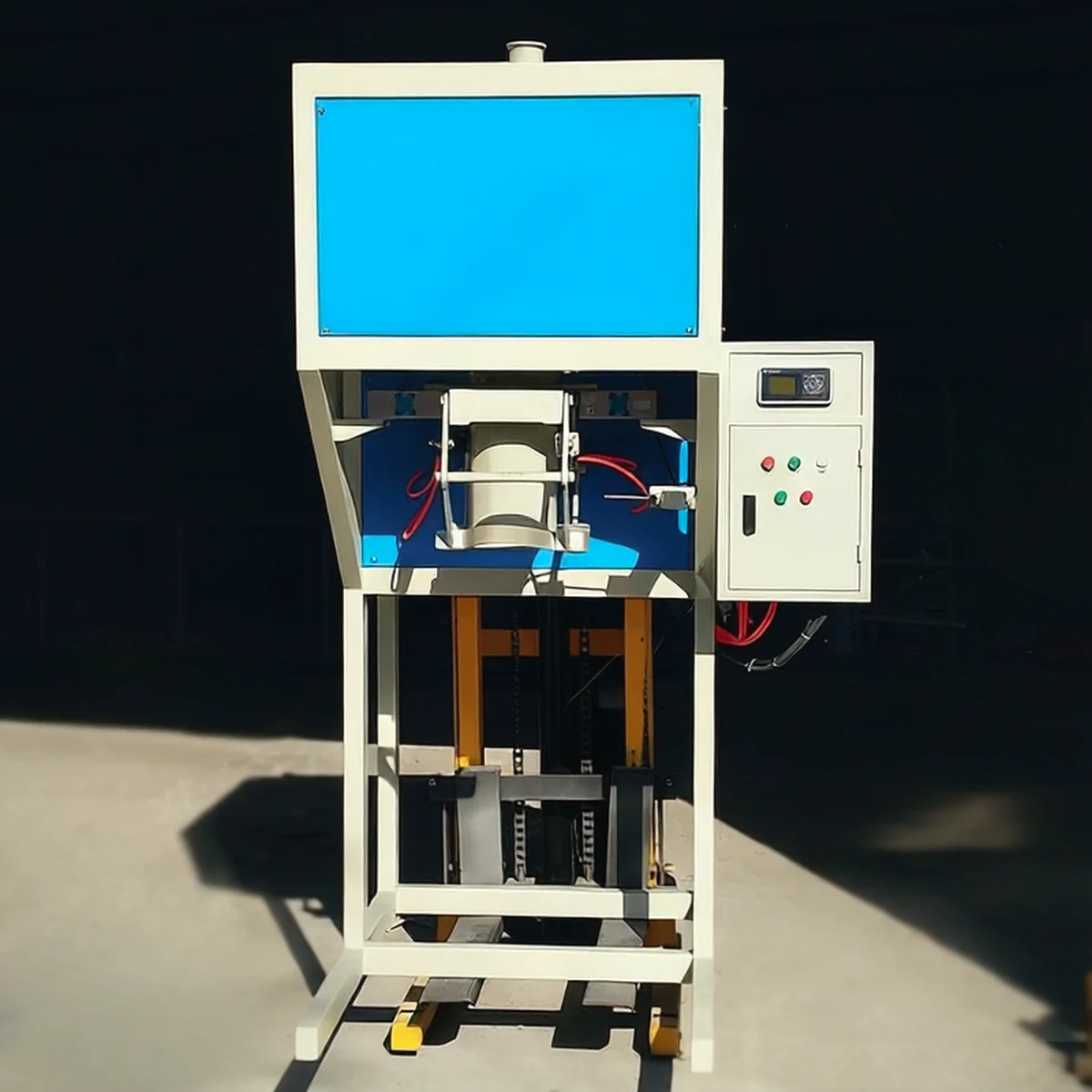
Bulk bag fillers weigh either on a floor scale under the pallet or on an overhead scale carrying the bag. Accuracy depends on the bag being mechanically free of the frame during weighing: fill head seals, guide rails and any safety restraint must not carry load. A vibrating or densification deck settles the product so the bag uses its full volume and stacks squarely, which is as much a logistics requirement as a weighing one. Automatic cut-off on reaching target weight, with a coarse-then-fine feed transition, is what holds the tolerance at speed.
Zoning and protection
Where the product is combustible, the filling area is normally classified as Zone 21, with electrical components, sensors and actuators rated accordingly. Earthing provisions extend to the frame, the fill head and the bag loops. Explosion venting or flameless venting may be required on any connected collector. The practical point is that these provisions are part of the original equipment scope; adding grounding points or changing enclosure ratings after installation is disruptive and sometimes impossible without new equipment.
Ergonomics and the suspended load
The heaviest risk is the simplest: a full bag is a suspended load. Frames should support the bag through its loops without the operator working beneath it, and the removal route — forklift or pallet truck — should be clear of the filling position. Automatic loop release hooks and height-adjustable frames reduce manual handling at both ends of the cycle. Where bags are strapped or liner-sealed before release, those steps should be done at a position where the operator is not under the load.
Hygienic and contained configurations
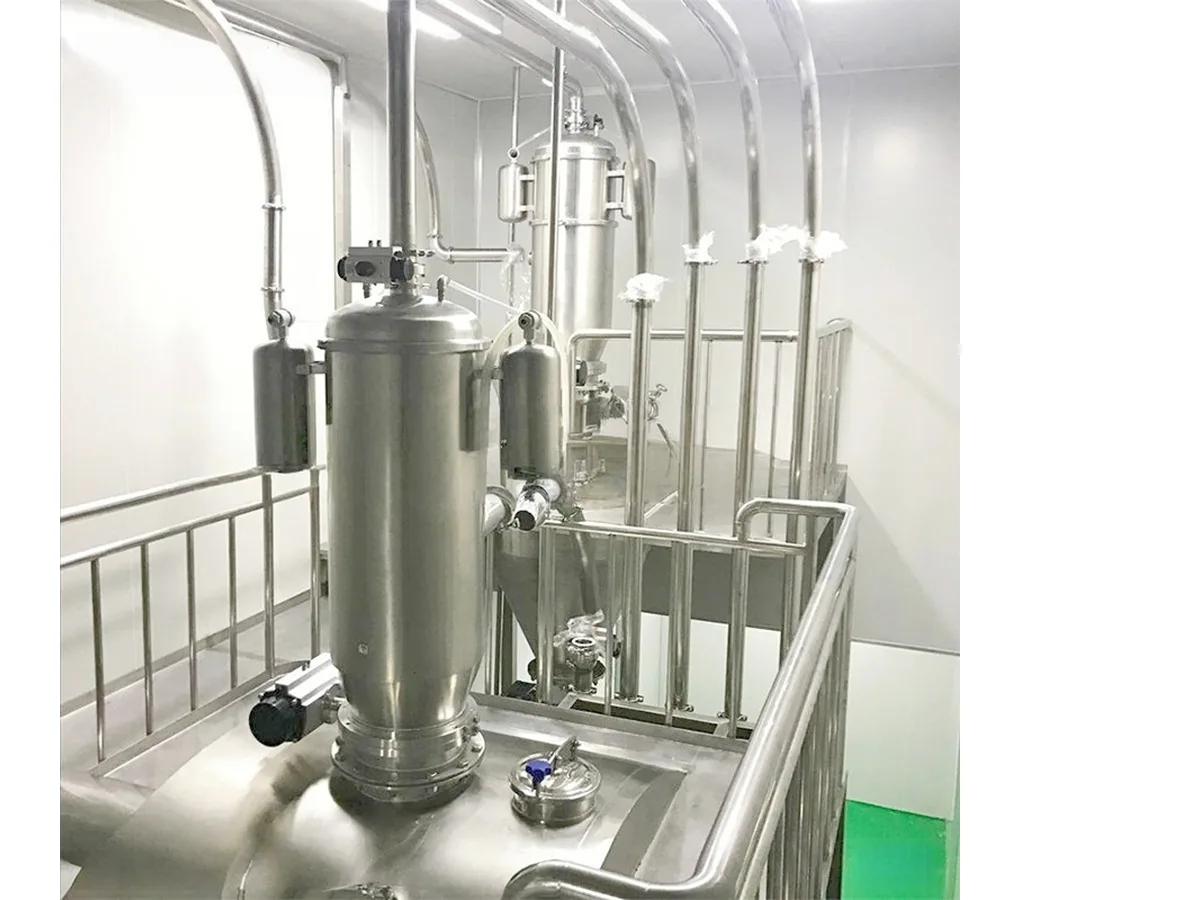
For food and pharmaceutical duty, product-contact parts in 304 or 316L stainless with smooth welds and drainable surfaces make cleaning realistic. Where containment matters — potent compounds, allergens, toxic powders — a sealed liner interface or glove-box arrangement keeps the product inside the system through connection, filling and disconnection. In both cases the design question is the same: what has to be opened for cleaning, how often, and by whom.
What to put on the enquiry
State the product and its bulk density, particle size, moisture and flow behaviour; the target bag weight and the acceptable tolerance; the bag type including loop configuration, spout diameter and whether a liner is used; the filling rate required in bags per hour; the hygiene class and hazardous-area classification; and how filled bags leave the station. With those answers CHUYAO can configure the fill head, seal type, weighing platform, densification and extraction as one package and prove the duty at start-up.
Process Flow
Typical steps covered in this article.
Empty Bag Loading
Spout Sealing
Weighed Filling
Densification
Pallet Removal
Typical Applications
Filling 500–1,500 kg FIBCs with powder or granulate
Cement, dry mortar and tile adhesive packing
Mineral filler, talc and calcium carbonate packing