Weighing Hopper Accuracy: It Is Almost Always the Pipework
Load cells rarely drift on their own. When a hopper scale loses accuracy, the cause is usually a mechanical or pneumatic bridge that only appears after installation.
A load cell measures only vertical force; any horizontal restraint is a measurement error.
Flexible connections must be slack enough to flex and short enough not to balloon under pressure.
Discharging powder displaces air — unvented hoppers read phantom weight.
Vibration from nearby equipment needs mechanical isolation, not just software filtering.
Uneven load sharing between cells causes non-linearity and premature saturation.
Technical Overview
The principle, and why it is fragile
A hopper scale mounts the vessel, its contents and usually the attached feeding equipment on load cells. Strain gauges in the cell body are wired as a Wheatstone bridge and produce a small millivolt output proportional to the applied force. The system is accurate and repeatable — provided the only force reaching the cell is the weight it is meant to measure. That condition is far harder to achieve in a plant than it sounds, because a hopper is almost always bolted to something.
Rigid bridges: the number one cause
Any connection that can carry load between the weighed vessel and the fixed structure creates a parallel load path, and the cells then measure only part of the weight. The usual offenders are rigid pipe spools, conduit, pneumatic hoses that have stiffened, safety stays fitted too tightly, and cables routed without a service loop. Flexible sleeves in rubber, silicone or polyurethane at every inlet and outlet remove the problem, but only if they are installed with enough slack to move and inspected after any maintenance, cleaning or pipe realignment.
Watch the pressure, not just the pipe
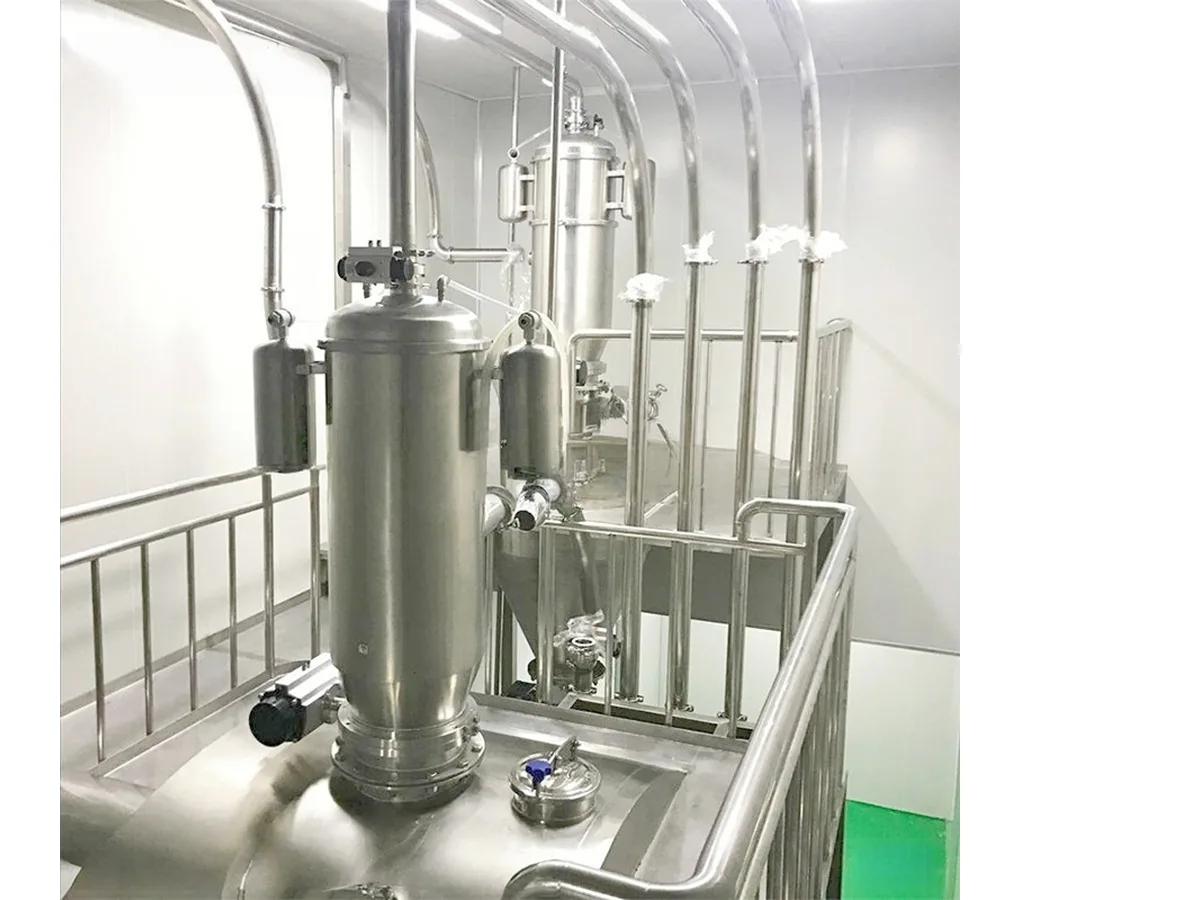
Powder falling into a closed hopper displaces air, and powder leaving one pulls air in. If the displaced air cannot escape, pressure builds inside the vessel and the load cells read it as weight — the classic symptom is a reading that spikes during filling and then slowly settles. The fix is venting: a correctly sized reverse-jet or passive vent filter on the receiving hopper, or a balance line back to the source vessel. This is a design issue, not a calibration issue, and no amount of re-zeroing will correct it.
Vibration and isolation
Mixers, vibrators, conveyors and even nearby traffic put mechanical noise into the structure. Digital filtering in the transmitter suppresses high-frequency content while preserving the slower weight signal, but the filter time constant has to be matched to the process — too aggressive and the system lags, too loose and the reading wanders. Mechanical isolation mounts between vessel and frame do more good than filtering alone. Where vibration is severe, trend-based sampling with statistical averaging works better than a simple low-pass filter.
Mounting, load sharing and environment
The vessel weight should pass vertically through each cell. With three- or four-point mounting, uneven share means one cell saturates before the others and the summed output goes non-linear. Structural misalignment, uneven foundations and thermal expansion all cause it, which is why mounting design and field trimming in the junction box are both part of commissioning. Outdoor vessels add wind and seismic loading, and the base frame should carry those lateral loads through check rods or guides rather than through the cells.
Sizing the cells and keeping them alive
Select capacity with margin for the dynamic loads: starting and stopping the fill, drop impact, and agitator reaction. A cell sized exactly for the static load can be damaged by a single upset. Keep the operating range in the useful part of the cell's span — very low fill wastes resolution, and very high fill risks overload. Verify calibration against known test weights on a regular interval, and repeat after any maintenance that disturbs the mounting. Record zero and span readings, because the trend tells you whether the vessel is settling or the cell is failing.
Specifying the whole weighing station
A weighing hopper is only as good as its installation. State the vessel geometry and weight, the number and type of discharge devices, the connection sizes and what they attach to, the product's bulk density and flow behaviour, the target accuracy and batch size, the environment including wash-down and hazardous-area classification, and the required interfaces to the plant control system. CHUYAO supplies the hopper, load cell mountings, flexible connections, vent filtration and discharge valve as one assembly, so the mechanical isolation is designed rather than improvised on site.
Process Flow
Typical steps covered in this article.
Load Cell Mounting
Flexible Connection Isolation
Fill & Vent
Weigh & Cut-off
Metered Discharge
Typical Applications
Batch weighing of multiple powder ingredients
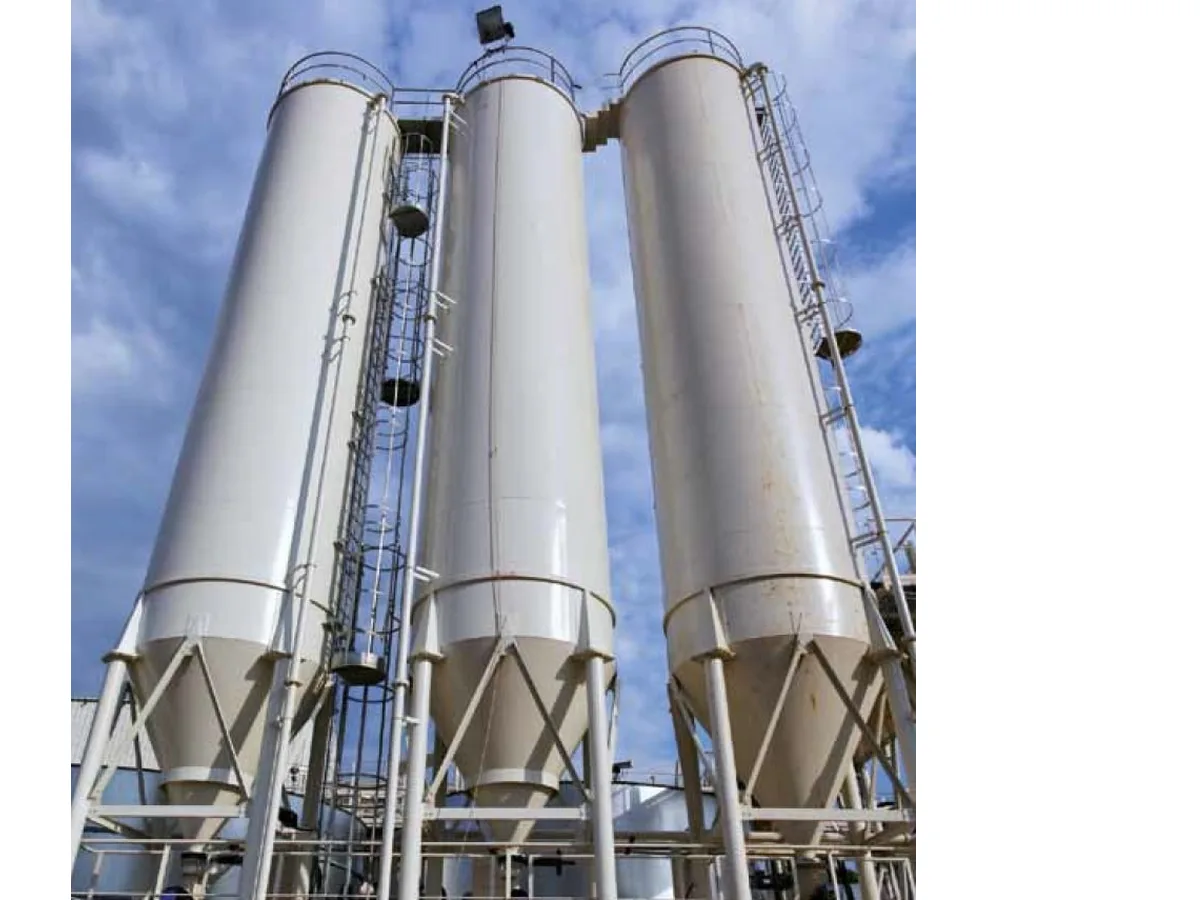
Inventory monitoring in storage silos
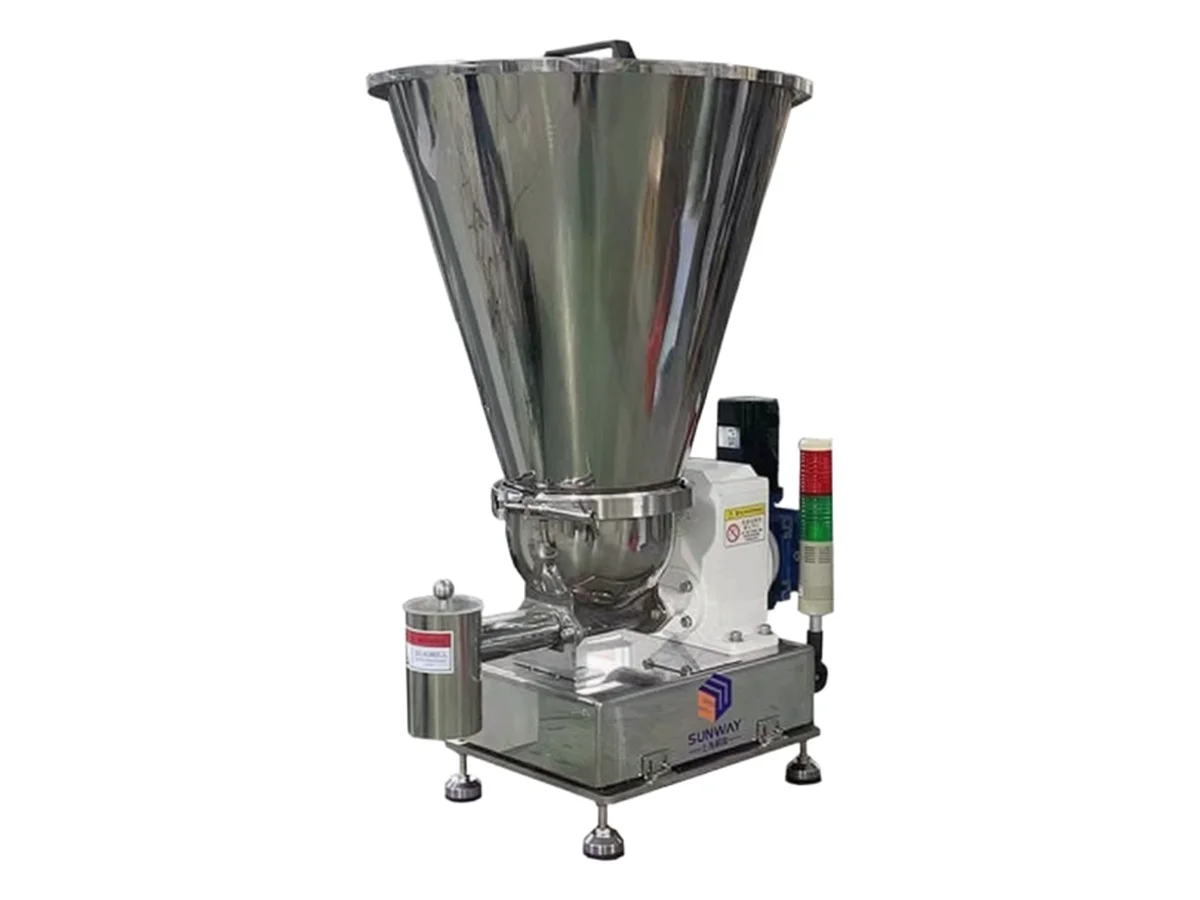
Loss-in-weight feeder hoppers
Filling big bags and small bags to a target weight