Plain felt filters through a dust cake; a membrane filters at the surface.
Membrane media typically runs at lower differential pressure for the same duty.
Fine, sticky or hygroscopic dust is where the premium pays back fastest.
Air-to-cloth ratio must be respected regardless of media choice.
Anti-static construction is part of the media decision where dust is combustible.
Technical Overview
Depth filtration: the cake is the filter
A conventional needle-felt filter bag does very little fine filtration on its own. In the first minutes of operation, particles bridge across the fabric and form a dust cake, and that cake becomes the actual filter medium. Efficiency improves as the cake builds, which is why a brand-new bag often shows slightly higher penetration than a seasoned one. The corresponding weakness is that fine particles also work into the felt over time, embedding in the fibre matrix where pulses cannot reach them.
Surface filtration: what the membrane changes
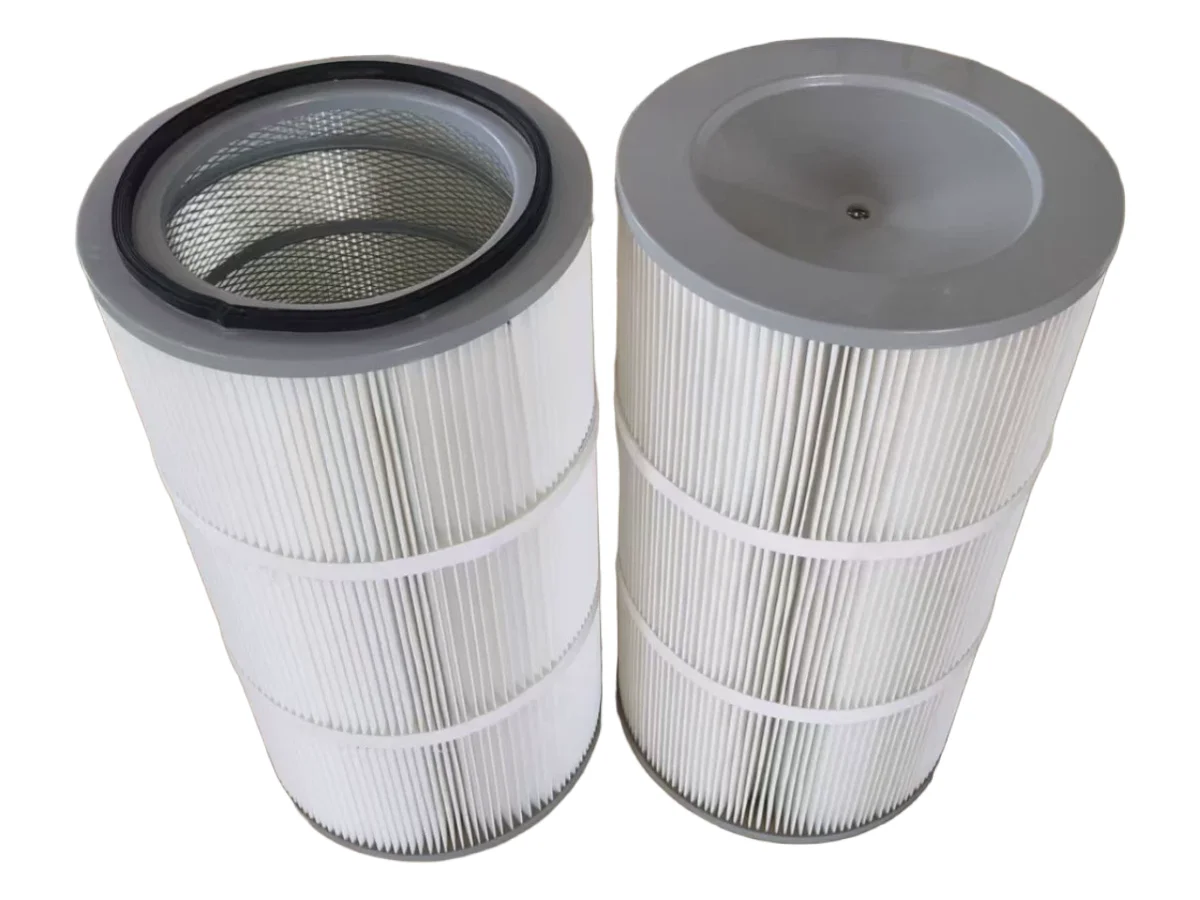
A PTFE membrane filter is a standard felt — polyester, aramid, PPS, glass fibre or PTFE — with a thin expanded PTFE film laminated to the dust-facing side. The film is microporous, so air passes and particles do not. Dust stays on the smooth membrane surface rather than penetrating the felt, and because the surface is non-stick, the cake releases cleanly on every pulse. The practical consequences are a lower and more stable differential pressure, less compressed air per pulse cycle, and a longer service life.
Where the premium pays back
The business case is strongest in four situations. Fine dust that blinds plain felt quickly. Sticky or hygroscopic powder that cakes on ordinary fabric and will not release. Tight outlet emission limits on fine particles, where membrane media reaches concentrations that felt struggles with. And high-value product recovery, where lower pressure drop and cleaner release both improve yield. For coarse, dry, free-flowing dust on a generously sized collector, standard felt is often the correct economic choice.
Air-to-cloth ratio still governs
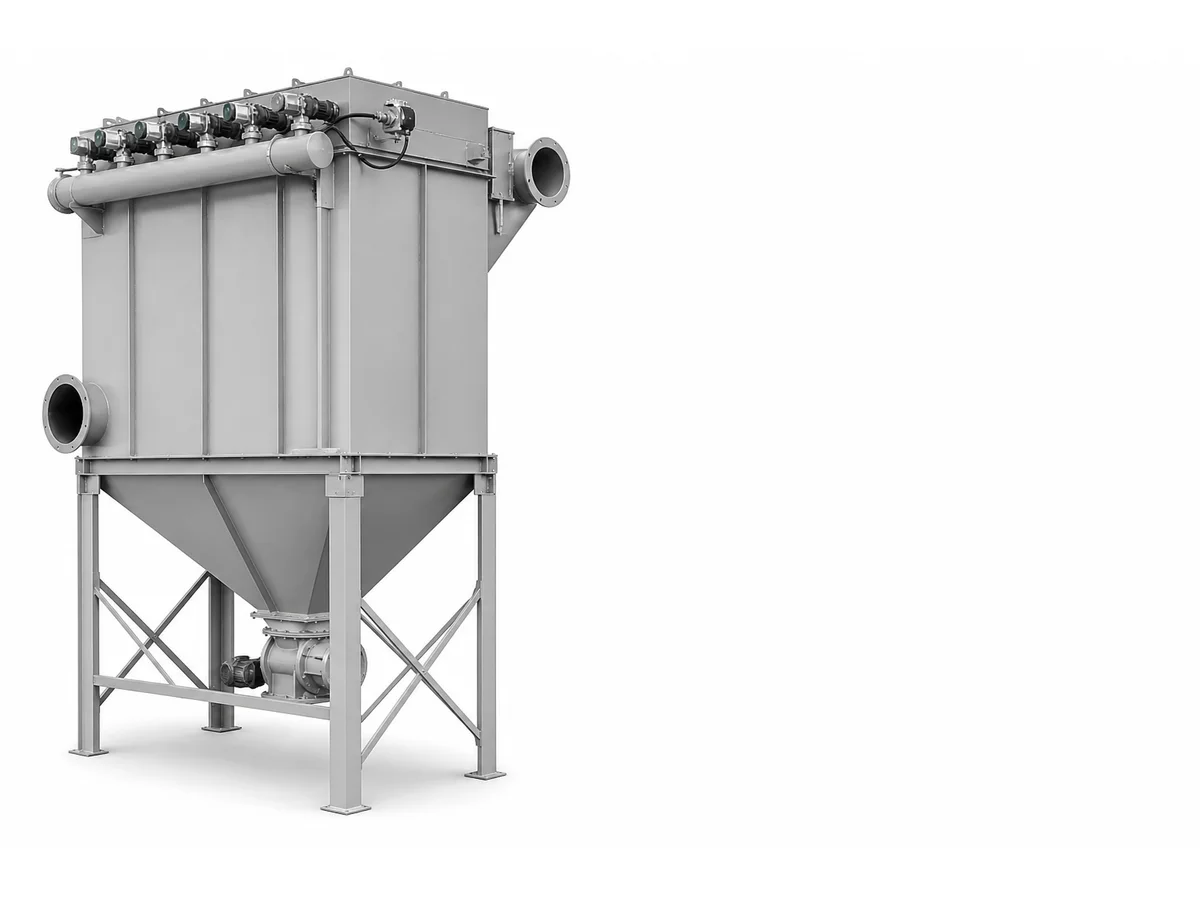
Media choice does not override sizing. The air-to-cloth ratio — airflow divided by total filter area — determines the interstitial velocity through the fabric, and running well above the design ratio shortens element life no matter which media is fitted. Fine dust wants a lower ratio than coarse. Pulse-jet collectors tolerate a higher ratio than shaker or reverse-air designs. When a collector is undersized for the airflow it now handles, changing the media treats the symptom and not the cause.
Temperature, chemistry and moisture
Felt selection starts from the gas conditions. Polyester needle felt covers general duty up to moderate temperatures but hydrolyses in hot humid gas and does not suit acid conditions. PPS and PTFE handle most acid duty. Aramid and P84 extend the temperature range. Glass fibre and PTFE sit at the top. Rate media for the real peak, not the average — a single dryer upset can destroy a complete set. Where the gas regularly crosses the dew point, hydrophobic or membrane media prevents the caking that follows condensation.
Static and combustible dust
Where the dust is ignitable, antistatic or conductive filter media with proper earthing is part of the explosion protection concept, not an accessory. Charge builds on the fabric surface during filtration and during pulsing, and an unearthed element inside a dust cloud is a credible ignition source. Confirm the element, the cage and the housing are all bonded, and verify continuity rather than assuming it. Certification then depends on maintaining that continuity through every element change.
Fit, finish and specification
A high-quality media fails early if the element does not fit. Bag diameter, length, top and bottom style, snap band size, cage diameter and tube sheet hole dimensions all have to match the collector exactly. Too tight and the bag wears against the cage; too loose and it folds, rubs and cleans unevenly; badly sealed at the tube sheet and dust bypasses the media entirely. Send drawings or measurements with the order, and specify the finish — singeing, calendaring, water and oil repellent, anti-static — against the actual dust and gas.
Anti-static media, cages and disposal
Where the dust is combustible, antistatic or conductive filter media with a verified earth path is part of the protection concept. That earth path runs through the element, the cage and the housing, and it has to be maintained through every element change. Cage condition matters for the same reason it matters for bag life: a bent or corroded cage abrades the media from inside. Inspections should therefore check earthing continuity, cage condition and media condition together, and the findings should be recorded so that a developing problem is visible as a trend rather than as a sudden failure.