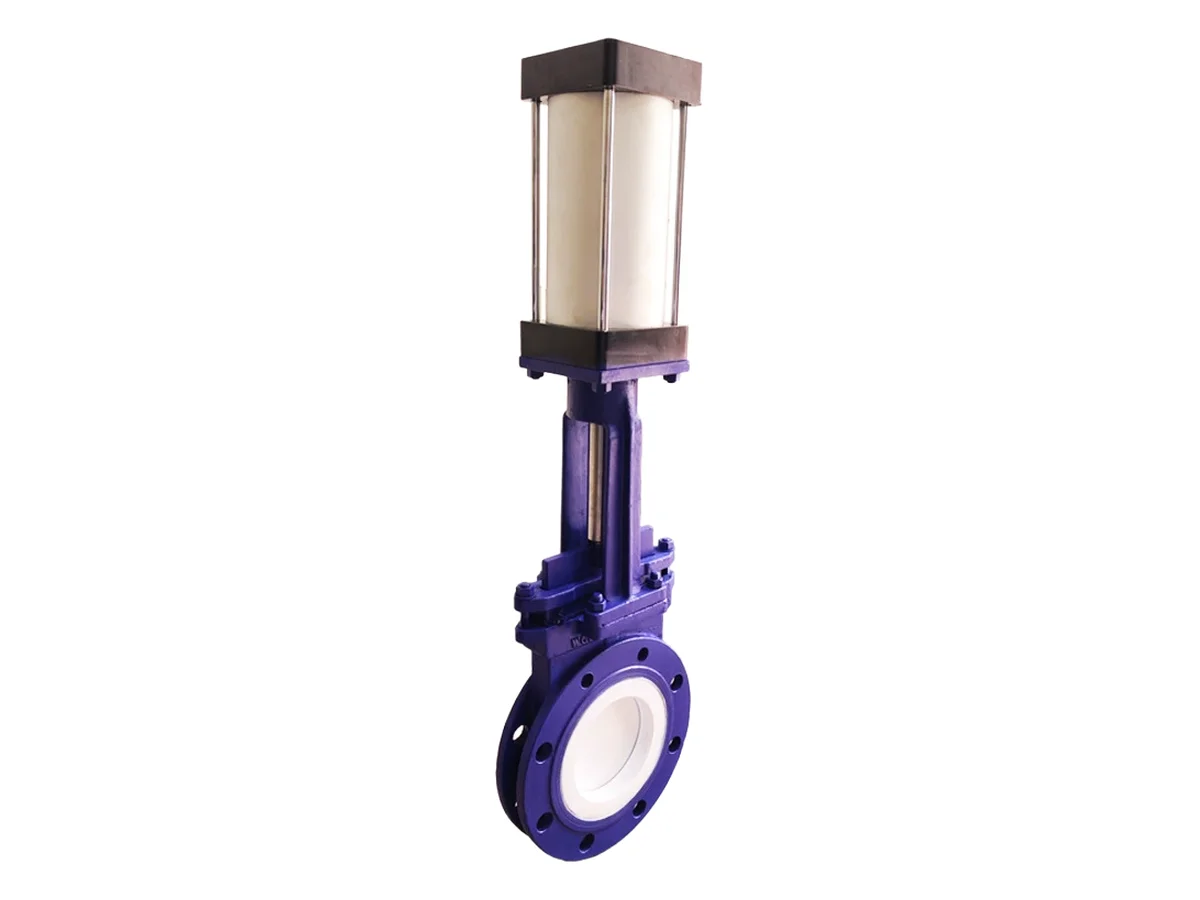
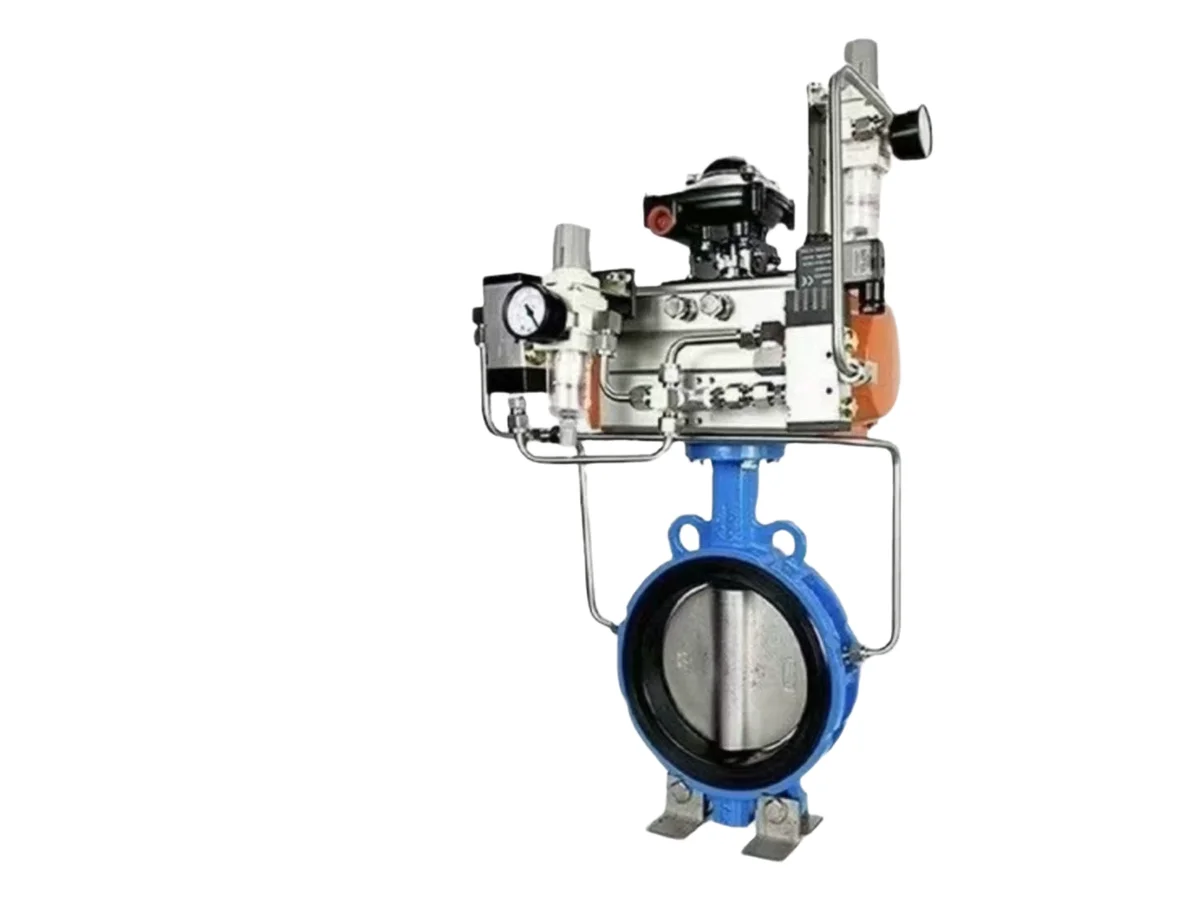
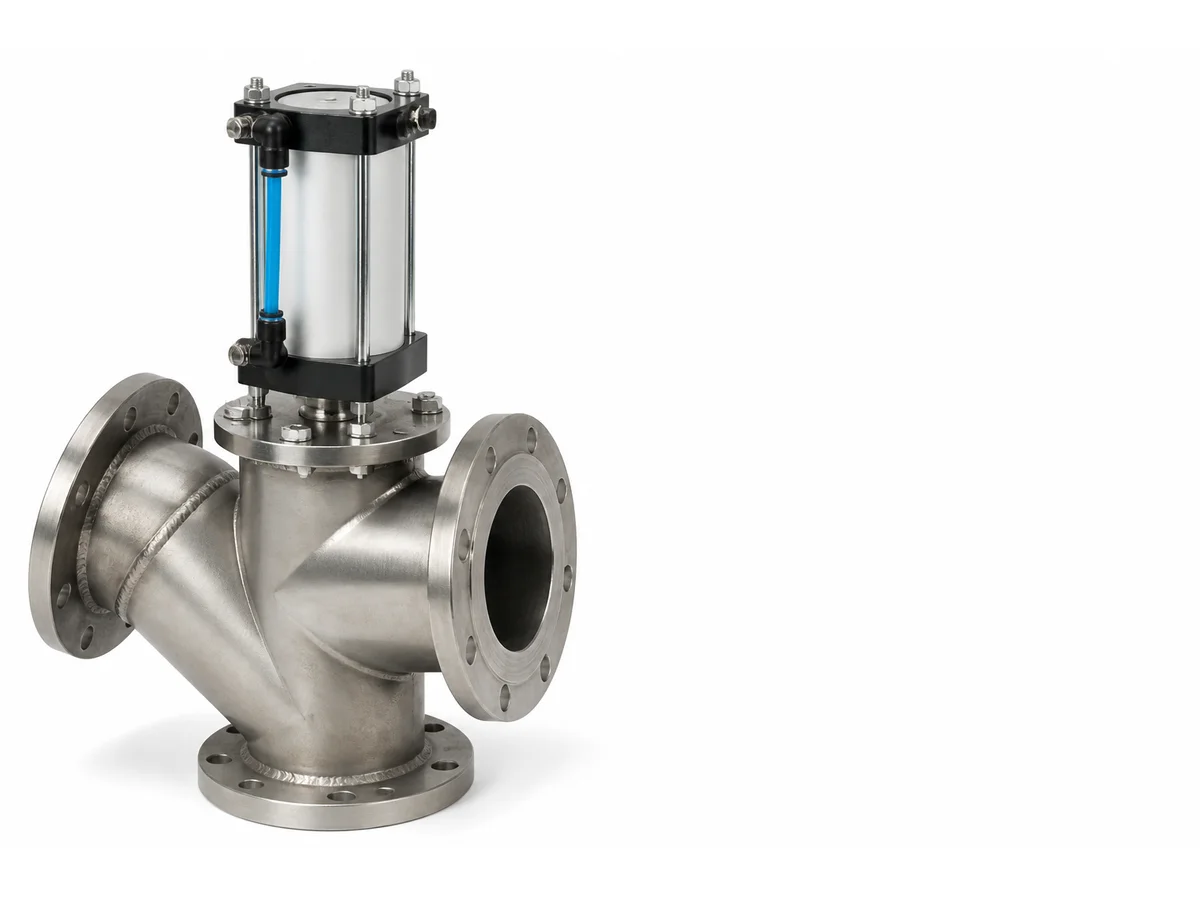
Slide gates close a full-bore material passage; butterfly valves leave a disc in the flow.
Abrasive, coarse or heavy products favour slide gates; fine free-flowing products suit butterfly valves.
Neither type throttles bulk solids well — use a feeder for rate control.
Slide gates are larger and heavier for a given bore; butterfly valves are compact and cheaper.
Most plants use both, matching the device to the position in the process.
Technical Overview
Three jobs, and each has a family
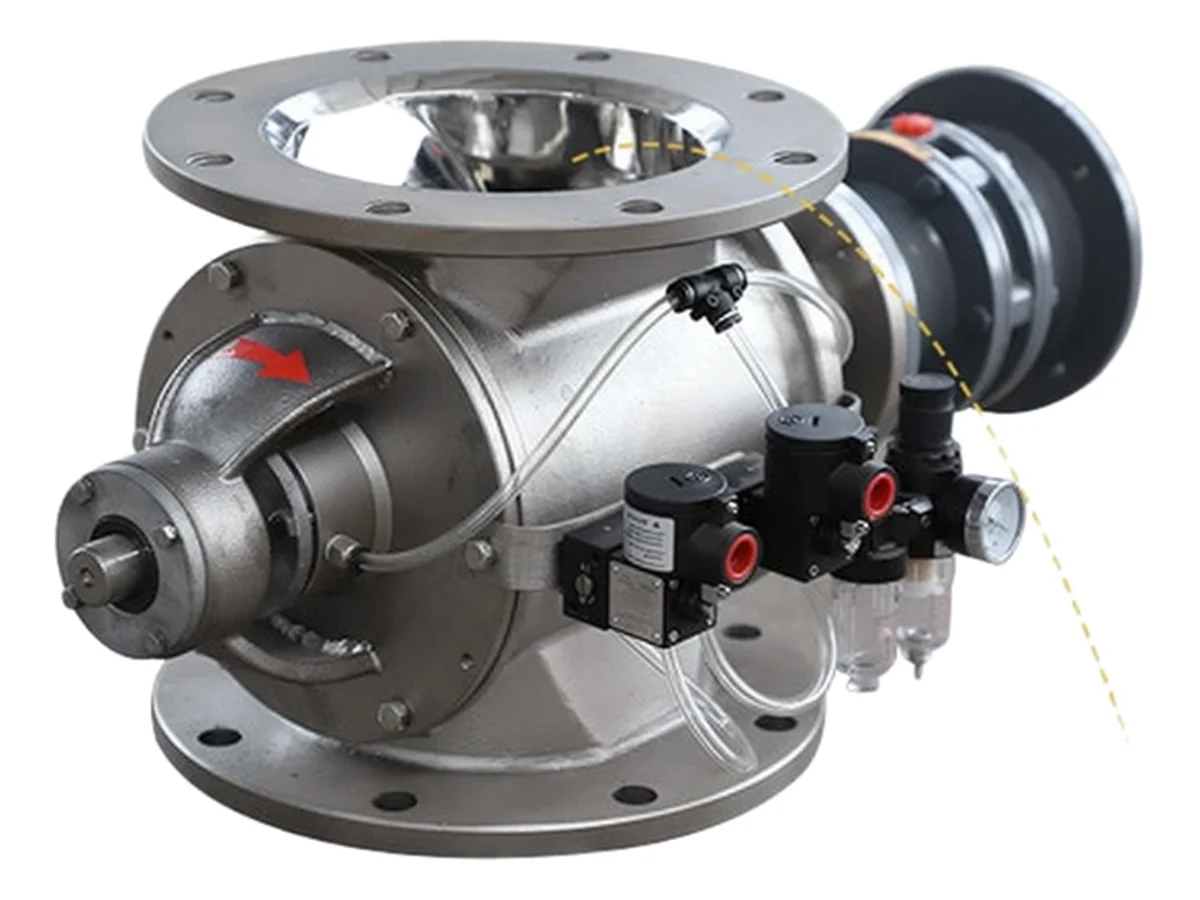
Valves in powder plants do one of three things. They isolate: stop flow completely, hold a pressure difference, seal for maintenance. They control: meter or throttle. Or they transfer between pressure levels: rotary valves, double-flap valves, airlocks. Slide gates and butterfly valves are both isolation devices, and that is where the comparison properly starts. Problems begin when one device is asked to do two of these jobs at once — typically when an isolation valve is used to regulate feed rate.
Slide gate: a blade against a column
A slide gate — also called a knife gate or guillotine gate — moves a flat blade horizontally across the outlet between seals. Fully open, the aperture is unobstructed and material passes through the full bore. Closed, the blade compresses against the seals and gives a dust-tight shut-off. This is why slide gates are the usual choice under silos and hoppers: they are designed to cut through a static column of product rather than to close against a flowing stream.
Butterfly valve: a disc that never leaves the stream
A butterfly valve rotates a disc through 90 degrees. It is compact, light and inexpensive, and it works well in ducts and on finer, free-flowing products. But the disc remains in the flow path when open, which means some restriction, an impingement surface and a place for material to accumulate. On fine powder it tends to seal poorly as the seat wears. That is the honest limitation, and it is a layout and product question rather than a defect.
The failure modes buyers hit
The recurring mistakes are consistent. Specifying a butterfly valve under a cement silo because it is cheaper and more compact — then replacing it repeatedly as fines pack on the disc and the seat abrades. Specifying a slide gate in a high-velocity air duct where a damper is the right device and the blade simply adds resistance. And expecting either type to throttle bulk solids accurately, when a feeder is what the duty actually needs. Each error has a direct correction, and each correction is cheaper at specification stage than at retrofit.
Abrasion decides most of it
Abrasiveness is the variable that usually settles the choice. Coarse, hard or heavy products wear the sealing surfaces of either valve, but they destroy a butterfly disc and its seat far faster than they wear a purged slide gate blade. Where abrasion is severe, specify hardened or replaceable wear surfaces, purged blade guides that keep product out of the sealing area, and a design that can be serviced without dismantling the line. Ignoring abrasion is how a cheap valve becomes an expensive one.
Actuation, space and service
Manual handwheel operation suits valves cycled rarely or with no services at the position. Pneumatic actuation gives fast, repeatable remote cycling and suits automated batching. Electric actuation suits sites without compressed air or where powered positioning is preferred. Choose the body style — flanged or unflanged — to match the existing outlet without adapters. And check that the blade, seat and seals can be reached for service; a valve that has to be removed from the line to change a seal costs far more over its life than the purchase price suggests.
What to send with the enquiry
State the product, its bulk density, particle size, abrasiveness, temperature and moisture; the pressure differential across the valve and whether it must hold vacuum; the bore and connection; cycle frequency and actuation preference; construction materials; and the hazardous-area classification. Given those answers, CHUYAO will recommend the gate type, blade and seat specification, and actuation that fit the duty — including saying so when the simpler valve is genuinely the better buy.
Dust tightness is a material question
A valve that seals acceptably on granules will often leak on a powder an order of magnitude finer. Seal type — packing, inflatable seals or lip seals — together with clearance, the use of purge air and the abrasiveness of the product, set the real leak rate. Where containment matters, such as with potent, toxic or allergenic powders, the usual arrangements are contained transfer systems and split valves that keep the product enclosed through connection and disconnection. Specifying dust tightness without naming the particle size and the product behaviour leaves the requirement untestable, which is how valves get accepted and then leak.