FIBC Discharge Station: Diagnosing Bridging, Dust Leaks and Slow Emptying
When a bulk bag stops discharging, the instinct is to hit it harder. In most cases the fix is a geometry or sealing change, not more force — here is how to tell which problem you have.
Diagnose by symptom first — bridging, ratholing, dust leakage and slow flow have different root causes and different fixes.
Bridging is usually a cohesive powder plus an outlet that is too small or too flat, not a lack of vibration.
Dust escaping at the spout almost always means the seal, the bag-to-spout match or the extraction is wrong.
Never strike a suspended bag or work beneath a loaded one — flow problems must be solved by design.
Refill frequency, bag loop tension and liner management change discharge behaviour more than most operators expect.
Technical Overview
Start from the symptom, not the machine
A bulk bag discharger looks like a simple frame, so when it misbehaves the assumption is usually that the equipment is undersized. In practice most complaints fall into four groups, and each group points at a different cause. Flow stops completely with material still in the bag: that is bridging. A channel empties down the middle while the sides stay put: that is ratholing. Powder appears around the spout or on the floor below: that is a sealing or extraction fault. Discharge is simply slower than the line needs: that is usually a discharge-aid or outlet-sizing issue. Working through the symptom first avoids replacing parts that were never the problem.
Bridging — the arch above the outlet
Bridging happens when powder forms a self-supporting arch over the discharge spout. Cohesive products, damp material and anything that has compacted during a long transport leg are the usual candidates. The arch is held by the powder's own strength, and the mistake is to try to break it with more aggressive vibration from outside the bag — which compacts the material further and can stress the fabric and lifting loops. The durable fix is to change how the bag presents material to the outlet. A conical or tapered bag base funnels product toward the spout. A spout with a larger diameter reduces the span the arch has to bridge. Mechanical massage paddles working from below break bridges at the point where they form. Where a liner is fitted, correct attachment stops the film from wrinkling into the outlet and creating a new restriction.
Ratholing — when only the middle empties
Ratholing is the quieter cousin of bridging: a vertical channel drains through the centre while product around the walls stays in place. The discharge rate looks acceptable for the first half of the bag and then collapses, and a heel of material is left in the corners. Ratholing points at the bag not being held in a shape that promotes mass flow. Automatic top-tensioning arrangements that pull the loops upward as the bag empties keep the fabric extended, and a conical bottom does the same job mechanically. Where the product is very cohesive, controlled aeration through pads combined with mechanical massage is more effective than either alone.
Dust leakage at the spout interface
Even a small leak at the spout becomes a recurring cleaning problem and an exposure issue. The causes are remarkably consistent. The seal has worn or is set at the wrong pressure. The bag spout diameter does not match the connection — common when a plant changes bag supplier without rechecking the specification. The bag is misaligned at setup, so the clamp bites unevenly. Or the discharge releases material faster than the local extraction can handle, and the enclosure pressurises. The corrective actions follow directly: a dust-tight inflatable or mechanical clamp sized to the actual spout, better alignment, an airtight connection, and extraction capacity matched to the displaced air rather than to a nominal figure.
Flow aids, used carefully
Massage paddles, vibration, agitation and controlled aeration all work, but they should be engineered into the discharger rather than improvised. Over-aerating a fine powder can flood the downstream feeder and destroy dosing accuracy. Sustained high-frequency vibration against a full bag can fatigue the fabric and the lifting loops. The right combination is decided by testing the actual material through the actual transport cycle, because a product that flows well straight after filling can behave very differently after two weeks stacked in a humid warehouse.
Handling and safety around suspended loads
The one rule that should never be broken: nobody works underneath a suspended, loaded FIBC. Tempting as it is to poke the cone to restart flow, that is a crush hazard. Flow problems get solved by changing the bag specification, the discharge geometry or the flow-aid package — not by manual intervention under the load. Frame design should also account for the lifting method, since rough lifting stresses the loops and sharp contact points wear the fabric, which turns a flow problem into a spillage problem.
Putting it on the enquiry
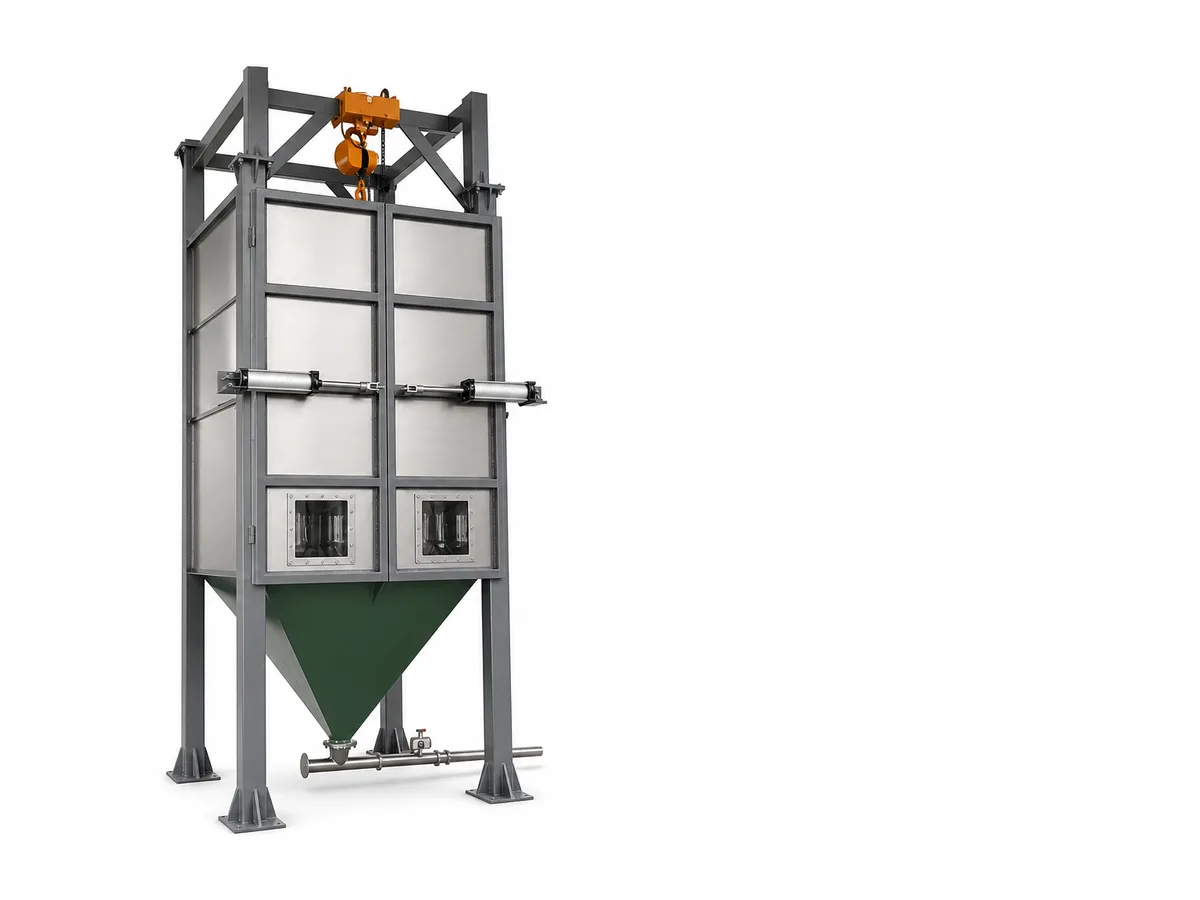
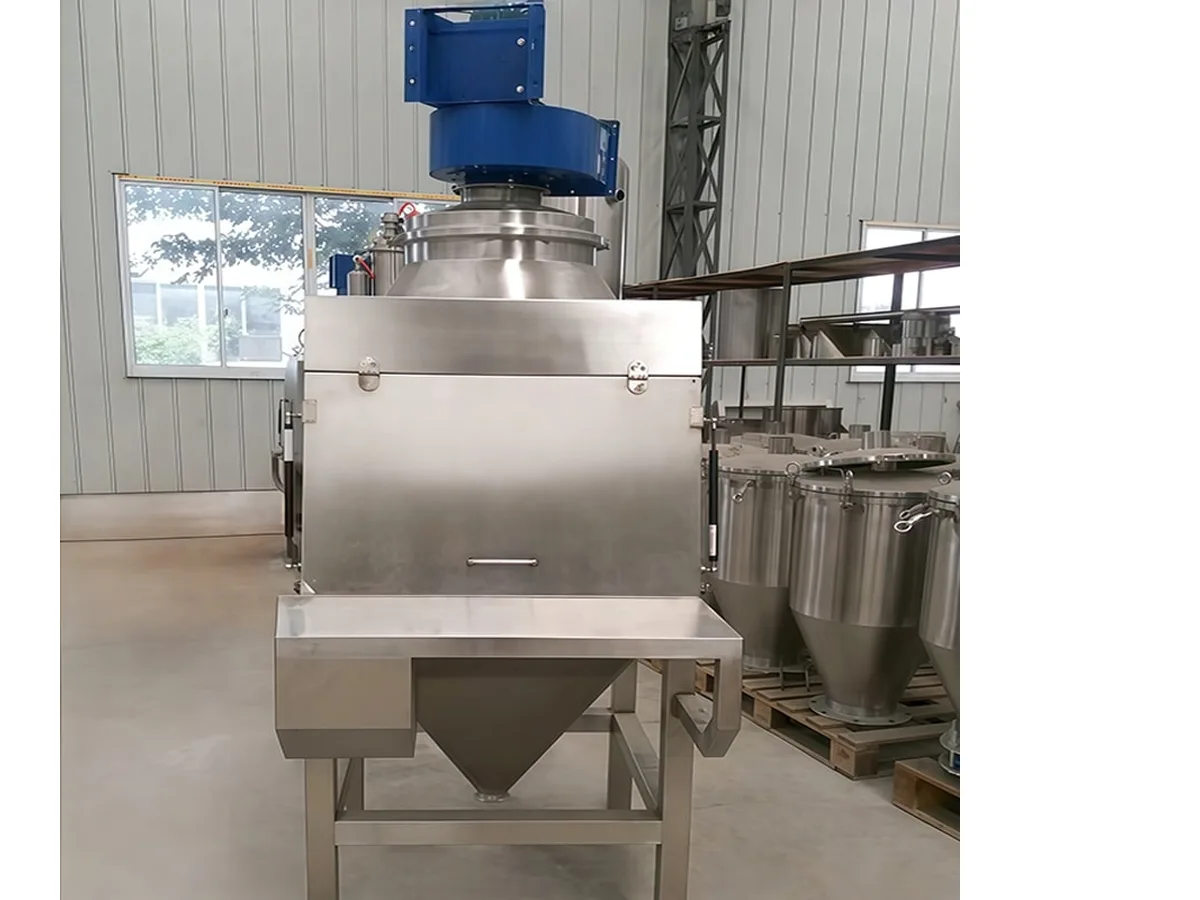
Most of these issues can be designed out before manufacture. For a bulk bag discharge station, the enquiry should state the product and its bulk density and particle size, whether the material bridges or compacts, the required discharge rate, the receiving equipment, the bag specification including spout diameter and closure, whether a liner is used, and which flow aids the station is expected to provide. CHUYAO configures each discharge station against those answers rather than shipping a standard frame and hoping the material cooperates.
Process Flow
Typical steps covered in this article.
FIBC Loading
Spout Clamping
Controlled Discharge
Flow Assistance
Empty Bag Removal
Typical Applications
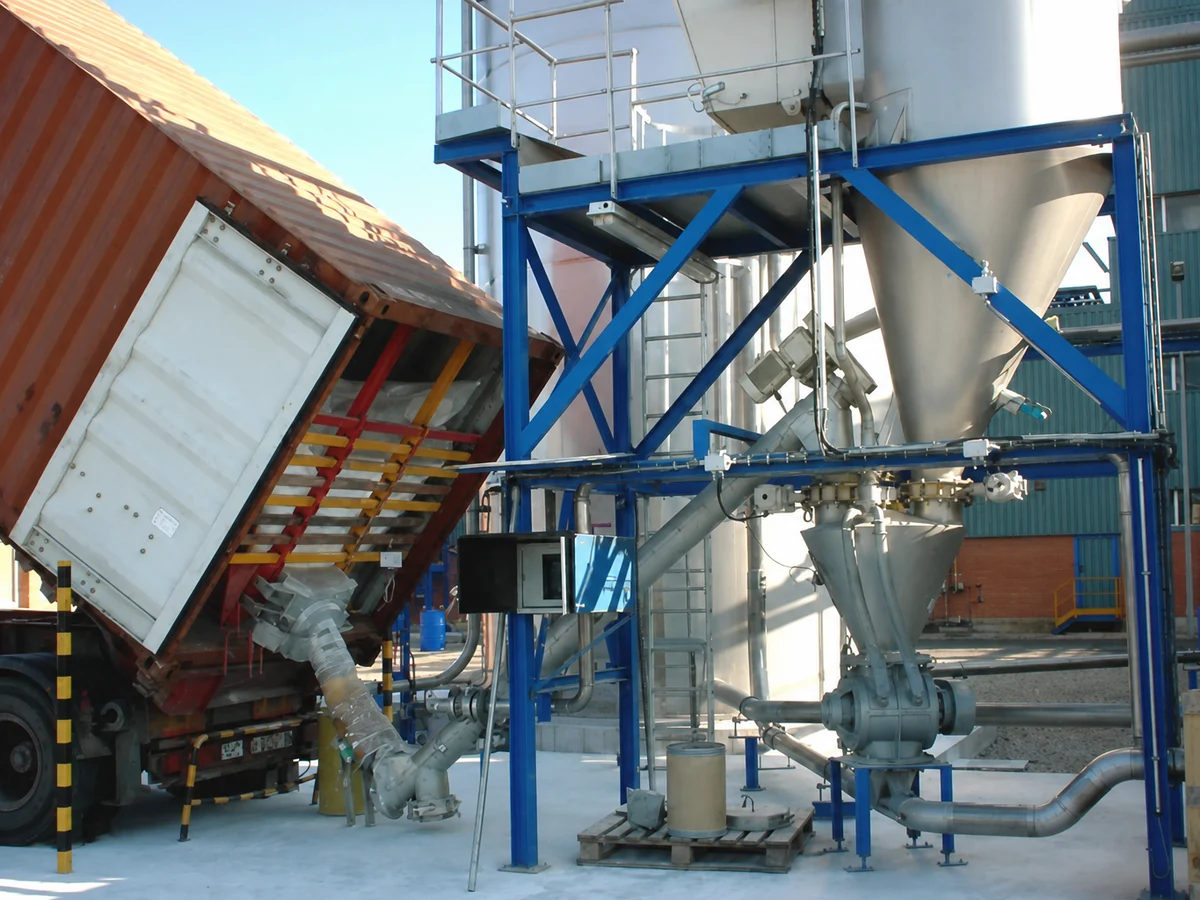
Discharging 500–1,000 kg FIBCs into a process hopper