Dense-Phase Blow Tanks: How Plug Flow Moves Powder Without Destroying It
Dense phase is not simply 'slower conveying'. It is a different flow regime, built around material permeability, and it only works when the product can hold a plug together.
Dense phase moves material as discrete plugs, not as a dilute suspension.
Permeability and cohesiveness decide whether a product can be conveyed in plug flow at all.
Air injection along the line keeps plugs moving without raising system pressure.
Low velocity cuts bend wear and particle attrition dramatically versus dilute phase.
Batch vessels cycle; continuous duty usually means two vessels in tandem.
Technical Overview
The two regimes, and where the line falls
Pneumatic conveying divides into dilute phase — high velocity, low solids loading, particles fully suspended — and dense phase — low velocity, high solids loading, material moving as concentrated plugs separated by air gaps. The real dividing line between them is the solids loading ratio, not the pressure. Dilute phase systems typically run at low mass ratios of solids to air, while dense phase runs many times higher. That single distinction explains almost every performance difference between the two, from energy per tonne to bend life.
How a blow tank cycle runs
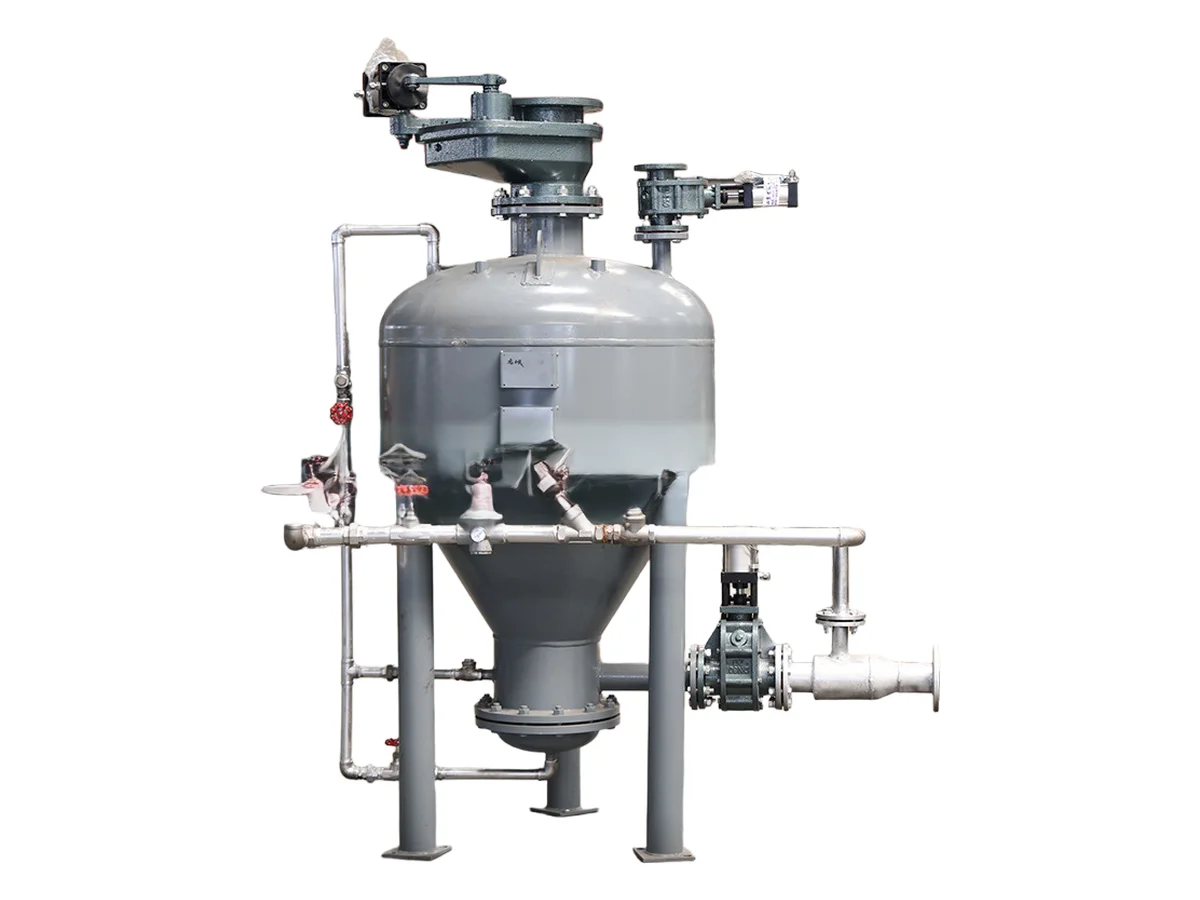
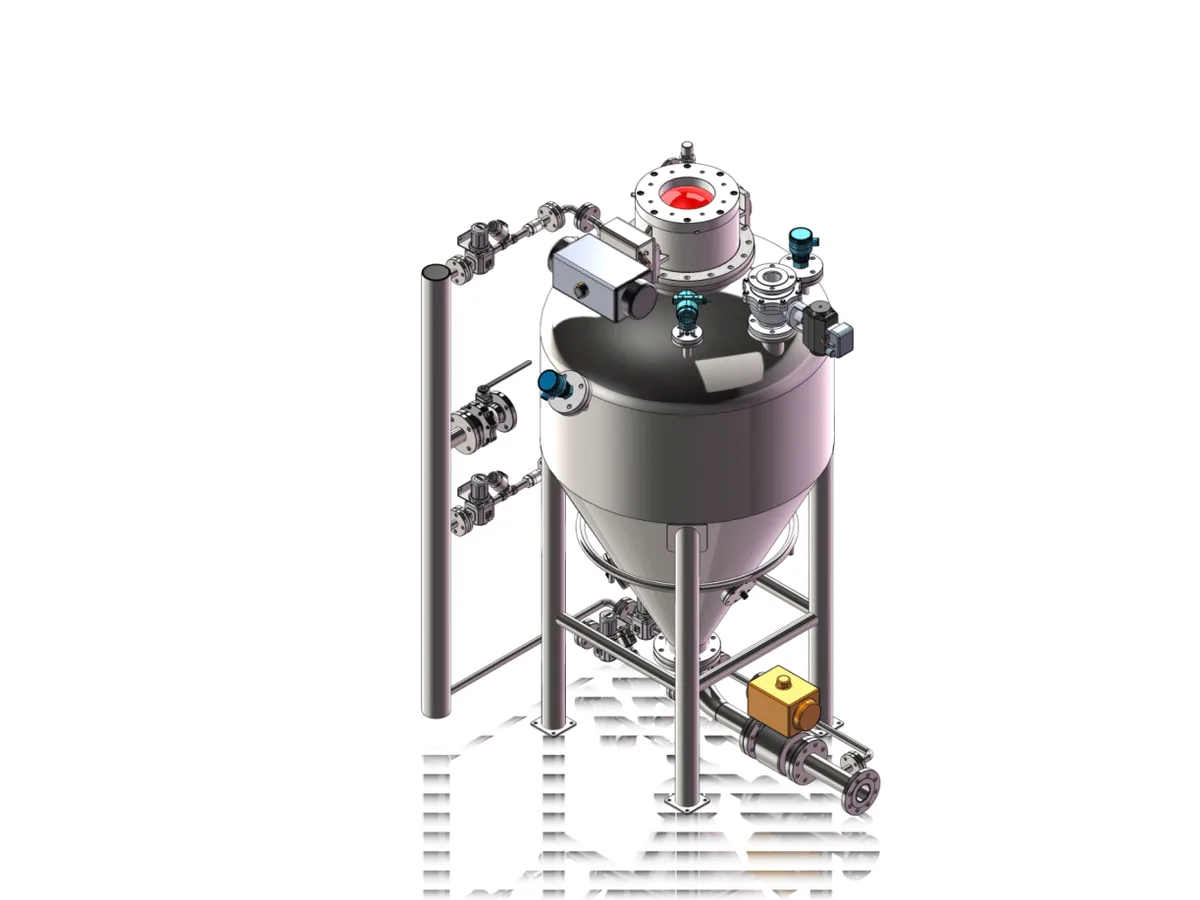
A blow tank is a pressure vessel that works in batches. Material is admitted from the silo or hopper above through an inlet valve. The vessel is sealed, then pressurised with compressed air. A discharge valve opens and product is pushed into the conveying line, moving along as a series of plugs. When the vessel empties, it vents and the cycle repeats. The vessel must be rated for the working pressure of the system, and the sequence of inlet, vent, pressurise and discharge has to be interlocked so two steps can never be open at the wrong time. Two vessels working alternately turn a batch process into a steady feed.
Why permeability decides everything
Whether a product can be conveyed as plugs depends largely on how easily air passes through it. A powder with low permeability holds the pressure behind each plug and gets pushed along as a coherent mass — which is what makes plug flow possible. A highly permeable bed lets air blow straight through, and the material will not form stable plugs. Plastic pellets are the classic borderline case: permeable, but cohesive enough to hold together under the right conditions. This is why material testing before specification is not a formality. Two products with the same bulk density can behave completely differently in the same line.
Boosters and controlled air injection
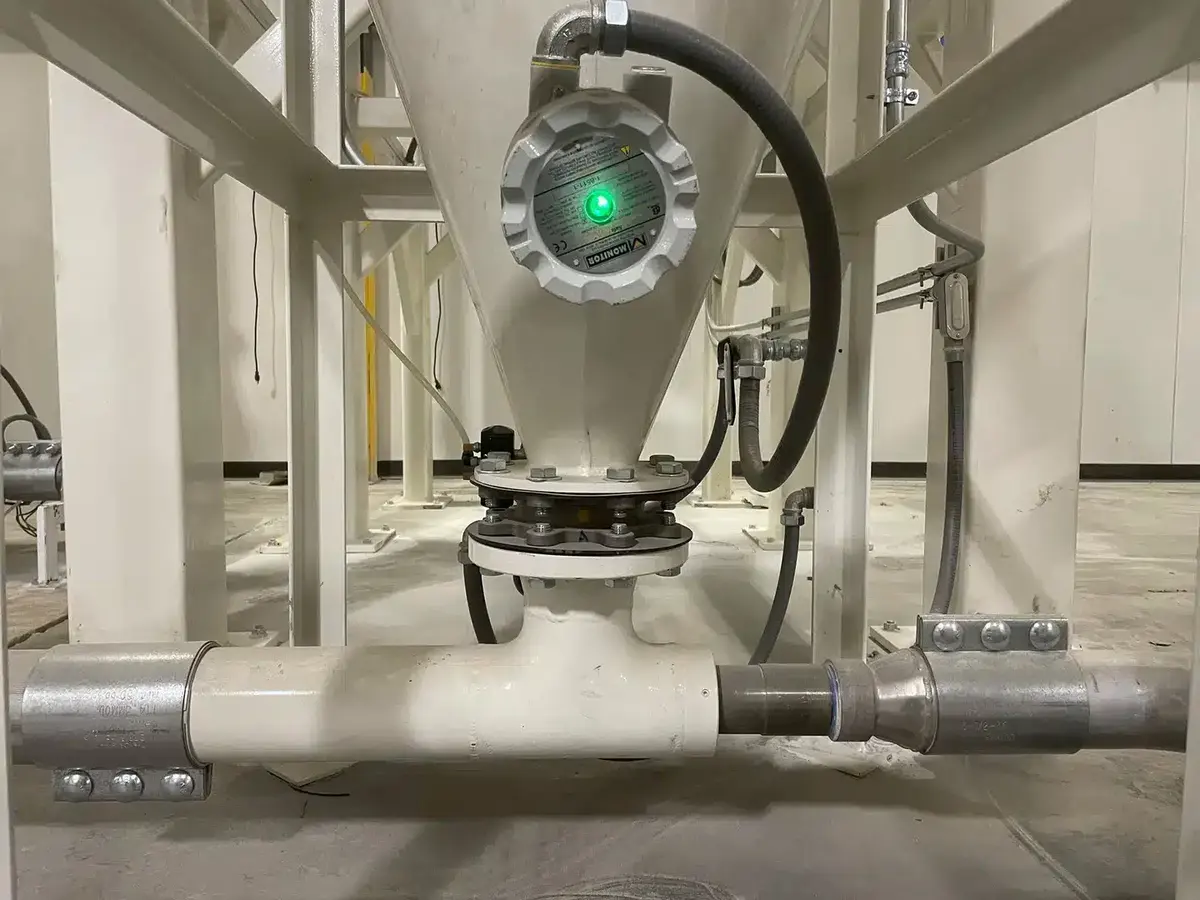
Long lines and frictional products need help along the route. Booster or air-injection points add small, controlled amounts of air at intervals, which keeps the plugs moving without demanding a higher pressure at the vessel. Done well, this stabilises the flow, reduces blockage risk and lowers the required system pressure. Done badly — too much air, or injectors in the wrong places — it breaks the plugs up and the system slips back into dilute-phase behaviour with all the wear that implies.
Where dense phase earns its cost
Dense phase equipment costs more: a pressure vessel, rated valves, a compressor rather than a blower, and a more involved control sequence. It pays for itself when the product is abrasive, when the route is long, or when particle breakage is unacceptable. Cement, fly ash, silica sand and mineral fillers punish high-velocity lines; food powders, pharmaceutical actives and plastic pellets lose specification if they are attrited. Where the route is short and the product is robust, dilute phase remains the simpler and cheaper answer.
Bottom discharge or top discharge
The vessel's discharge arrangement affects how material enters the line and how gently it is handled. Bottom-discharge vessels feed product down into the line and suit most free-flowing and moderately cohesive products. Top-discharge arrangements lift material out through a pipe and can be gentler for fragile products, at the cost of a more complex internal arrangement. The choice belongs in the original specification, because it is difficult to change once the vessel is built and piped.
What to put on the enquiry
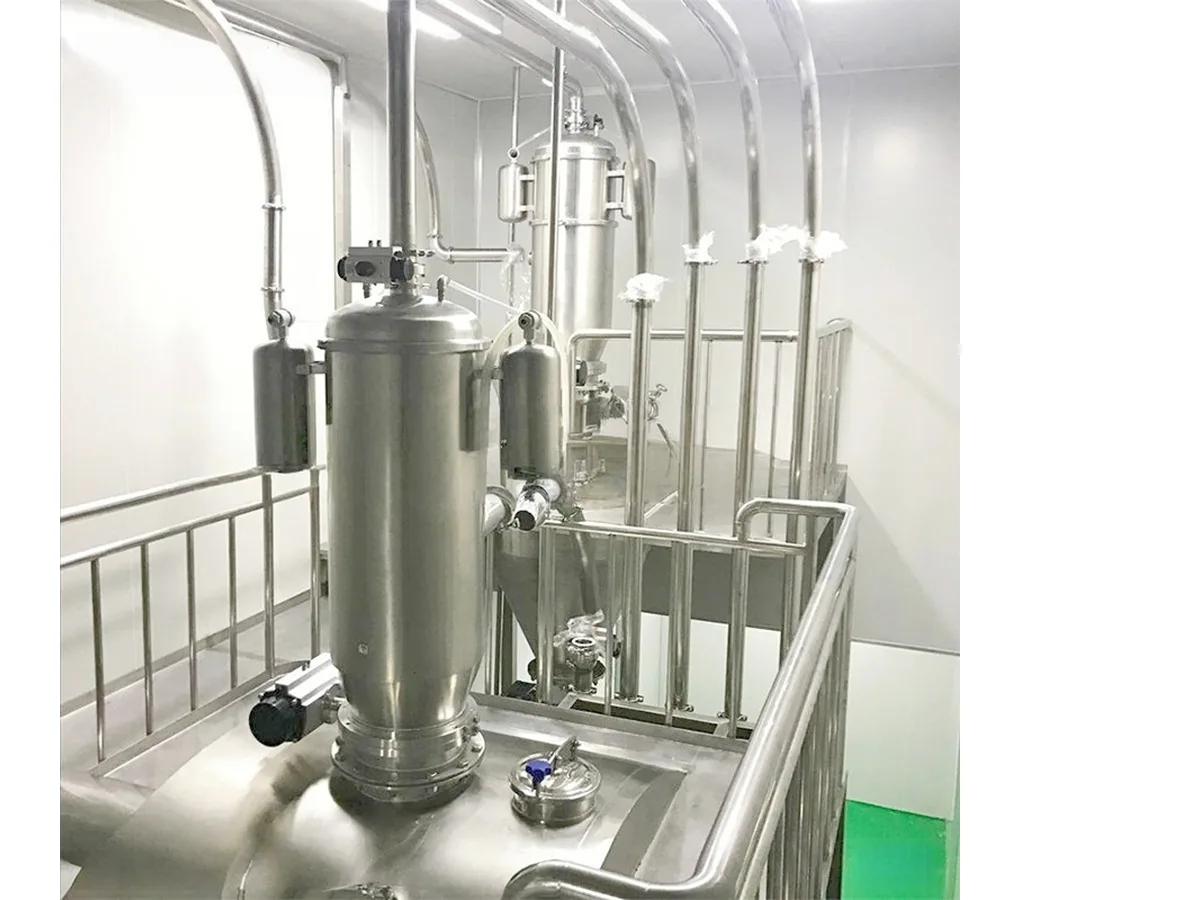
To get a meaningful quote, supply the product and its bulk density and particle size distribution, the required throughput and whether demand is steady or intermittent, the full route including horizontal and vertical distances and every bend, and the number of pickup points and destinations. Add the environment — hygiene class, ATEX zone, inert gas, ambient conditions — and any weight or space constraints at the installation position. CHUYAO sizes dense-phase systems against measured material behaviour and the real route, then proves the duty at commissioning rather than leaving it to be discovered in production.
Process Flow
Typical steps covered in this article.
Vessel Filling
Sealing & Pressurising
Plug Discharge
Booster Air Injection
Receiving Silo Venting
Typical Applications
Long-distance transfer from import silos
Abrasive minerals, cement, fly ash and alumina
Fragile granules and pellets that must not break
High-value powders where attrition is a quality loss